
 1 month ago
83
1 month ago
83
TLDR
- Gold prices increased 0.2% Monday to approximately $4,024 per ounce following a 2%+ decline during the previous week
- U.S.-Iran tensions escalated with attacks on a Kuwaiti oil installation
- Brent crude surpassed $90 per barrel, intensifying concerns about inflation driven by energy costs
- Federal Reserve rate hike probability for the July 29 meeting peaked at 40% before dropping to approximately 10%
- ANZ forecasts the Fed will maintain current rates and projects gold support within the $3,800–$4,000 corridor
The gold market is maintaining its position near the $4,000 threshold as traders weigh escalating geopolitical tensions against the possibility of elevated interest rates continuing to constrain the precious metal’s upside.
Spot gold prices advanced 0.2% during Monday trading to reach $4,024.09 per ounce. Gold futures contracts posted comparable gains, settling at $4,028.32. These increases followed a decline exceeding 2% during the prior week’s trading.
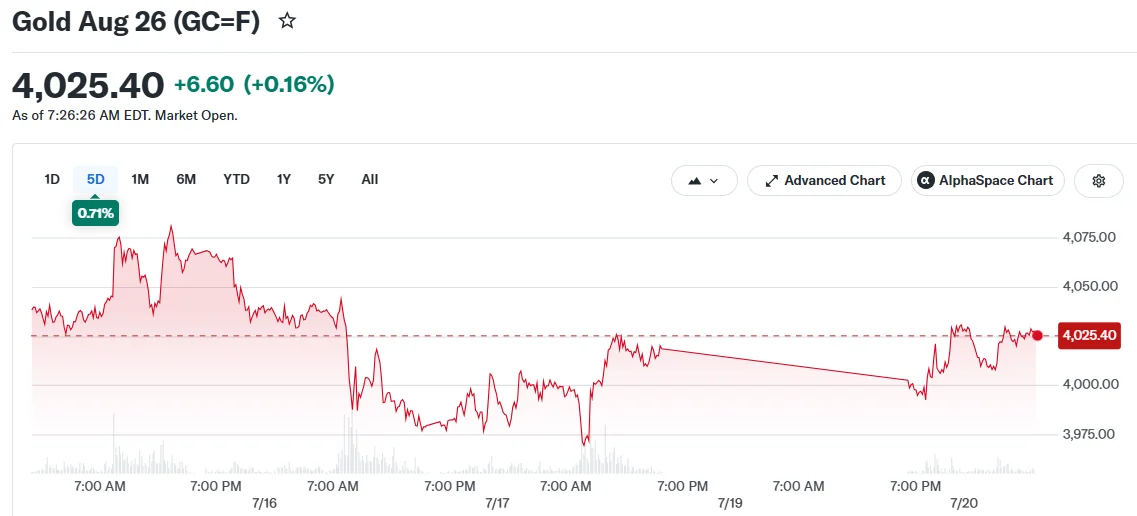 Gold Aug 26 (GC=F)
Other precious metals also recorded gains, with silver advancing 1.8% to $56.97 per ounce. Platinum saw a modest 0.2% increase to $1,598.45.
U.S.-Iran Confrontation Propels Energy Markets
Hostilities between Washington and Tehran intensified throughout the weekend. A significant assault targeted a crucial petroleum facility in Kuwait, while additional strikes affected maritime vessels navigating the Strait of Hormuz, a critical chokepoint for international oil transportation.
Iranian officials declared the ceasefire arrangement with the United States had essentially collapsed. The confrontation has now entered its fifth month, maintaining persistent uncertainty in energy markets.
Brent crude prices surged beyond the $90 per barrel threshold following these developments before moderating slightly. Rising petroleum costs amplify worries that inflationary pressures could persist longer than market participants anticipated.
Nevertheless, diplomatic channels haven’t completely closed. U.S. Secretary of State Marco Rubio indicated Washington’s willingness to pursue dialogue with Tehran. Iranian Foreign Minister Abbas Araghchi similarly suggested negotiations might commence following the achievement of “strategic gains.”
Federal Reserve Policy Trajectory Creates Headwinds
The primary challenge confronting gold currently stems from uncertainty surrounding the Federal Reserve’s monetary policy direction. Elevated petroleum prices could sustain inflation above the central bank’s 2% objective, potentially compelling officials to maintain restrictive rates for an extended period.
Higher borrowing costs typically strengthen the U.S. dollar and increase Treasury yields, diminishing the appeal of non-interest-bearing assets such as gold among portfolio managers.
Market pricing for a Federal Reserve rate increase at the upcoming July 29 policy meeting temporarily spiked to 40% during the previous week as hostilities intensified. Current probability assessments have retreated to approximately 10%.
Analysts at ANZ indicate the threshold for additional monetary tightening remains substantially elevated. They anticipate the Fed will disregard temporary energy price spikes unless they trigger widespread inflation throughout the broader economy.
ANZ further projects gold will establish a price floor within the $3,800 to $4,000 band as rate increase expectations diminish.
The yellow metal has consolidated within a tight range centered around $4,000 throughout recent weeks. It experienced a 14% decline during Q2, marking its weakest quarterly showing since 2013, as interest rate anxieties consistently overshadowed safe-haven buying.
Latest U.S. inflation metrics and employment figures have indicated some economic deceleration, though market participants remain cautious about whether rising energy expenses will alter this trajectory before the Federal Reserve convenes on July 29.
The post Gold Prices Steady Around $4,000 Amid Middle East Turmoil and Surging Oil appeared first on Blockonomi.




 English (US) ·