
 1 hour ago
14
1 hour ago
14
Gold caught a bid on Wednesday after touching its lowest level in six months, but the bounce came with an asterisk. Rising expectations for a Federal Reserve rate hike are capping any meaningful recovery, leaving bullion investors stuck in what has become a genuinely painful stretch.
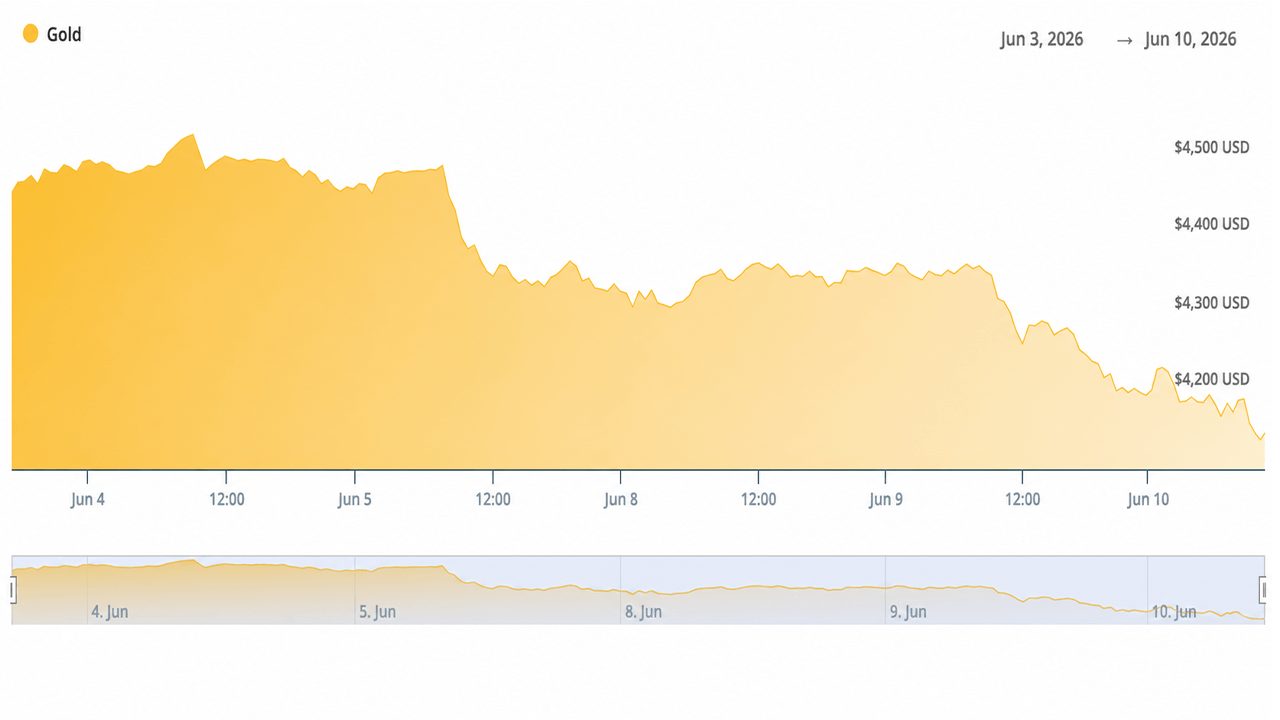
Spot gold hit an intraday low of roughly $4,023 per ounce on June 11, a price that would have seemed unthinkable at the start of the year. From there it climbed back into a range between $4,079 and $4,334 during the session, driven largely by short-covering rather than any fresh wave of conviction buying.
How gold ended up in bear market territory
Gold is now down more than 20% from its January 2026 peaks. The metal has also slipped below its 200-day moving average for the first time since 2023.
The culprit behind this slide is straightforward: the US economy refuses to cooperate with the rate-cut narrative that gold bulls were banking on. Stronger-than-expected jobs data from May shifted the entire interest rate picture in a matter of weeks. December rate-hike odds jumped from around 14% to somewhere in the 43% to 72% range within a single month. Markets are now pricing in a greater than 70% probability that the Fed raises rates by December.
When interest rates rise, holding an asset that generates zero income becomes more expensive relative to alternatives like Treasury bonds. Gold’s appeal as a store of value doesn’t disappear, but its opportunity cost climbs, and investors start doing the arithmetic.
Geopolitics add a wrinkle, not a lifeline
Tensions between Iran and Israel have been escalating, and oil prices have risen in response. Higher oil prices feed into inflation expectations. Higher inflation expectations give the Fed more reason to hike. And more rate hikes pressure gold.
The bounce from $4,023 was partly attributed to haven demand as traders weighed the risk of further escalation. The decline of more than 13% over the previous month alone underscores how quickly sentiment has shifted.
What this means for investors
If the Fed follows through on what the market is pricing, the opportunity cost of holding non-yielding bullion only increases from here. Trading below the 200-day moving average tends to attract momentum sellers and systematic funds that follow trend signals.
Central bank purchases have been a persistent source of demand throughout 2025 and into 2026. If central banks continue accumulating at the pace they’ve maintained, it could put a floor under prices even as the macro backdrop deteriorates.
The key levels to watch are clear. If gold can hold above $4,000 per ounce, the six-month low becomes a potential support zone that might attract value buyers. A break below that threshold, however, would open the door to accelerating losses and likely force a broader repricing of where gold belongs in a higher-for-longer rate environment.
Disclosure: This article was edited by Editorial Team. For more information on how we create and review content, see our Editorial Policy.







 English (US) ·