
 1 month ago
56
1 month ago
56
- Solana has lost more than half its value over the past year, but historical July performance offers a reason for optimism.
- Previous market cycles show July has consistently been one of SOL’s strongest months, though history is no guarantee.
- Rising interest rates and shifting investor capital could still limit any recovery in the months ahead.
Solana hasn’t had an easy ride.
The cryptocurrency is heading into the second half of 2026 after one of its toughest stretches in recent memory. Over the past month alone, SOL has fallen nearly 13%, and compared to a year ago, it’s down more than 50%.
That sounds discouraging, and honestly, it has been.
But if history is any guide, July has often marked a turning point for Solana. Whether this year follows that pattern is another question entirely.
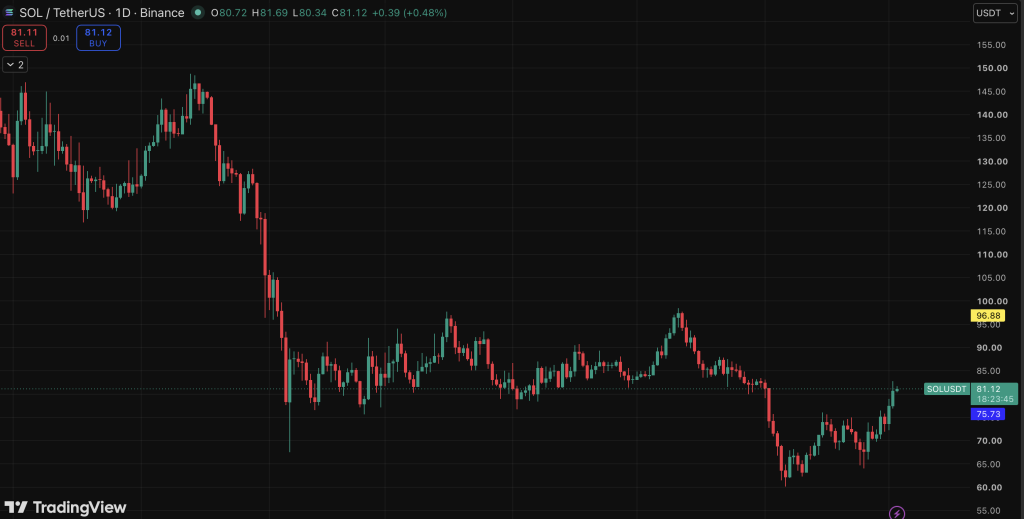
July Has Historically Been Solana’s Strongest Month
Looking back at Solana’s trading history reveals an interesting trend.
June has generally been one of the weakest months for SOL, finishing lower in all but two years since the cryptocurrency launched. July, however, tells a completely different story.
In every previous July, Solana posted positive returns.
Across those six years, the median gain has been roughly 21%, making it one of the network’s strongest seasonal periods. Sometimes the rally followed months of heavy losses. Other times, it simply extended existing momentum.
Either way, buyers consistently returned.
The picture becomes a bit more mixed after that.
August has been unpredictable, producing both impressive rallies and painful corrections exceeding 20%. September, meanwhile, has generally leaned positive, with only Solana’s first trading year finishing in the red and a historical median gain close to 7%.
Taken together, the data suggests that Solana’s difficult stretch could ease during the second half of summer.
Still, investors should be careful not to place too much weight on seasonal patterns alone.
After all, six years of historical data isn’t a particularly large sample size.
History Doesn’t Always Repeat
Seasonality can be interesting, but it shouldn’t become the foundation of an investment strategy.
Markets rarely follow the exact same script twice.
While Solana has historically performed well during July, each cycle unfolds under different economic conditions, and this year brings several headwinds that weren’t present during previous recoveries.
That’s what makes the current setup a bit more complicated.
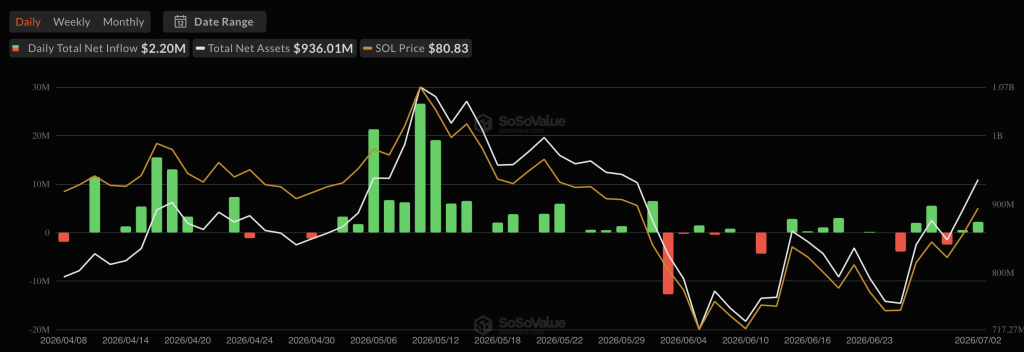
Macro Conditions Could Keep Pressure on SOL
The biggest challenge facing Solana isn’t necessarily coming from inside the crypto market.
It’s coming from the broader economy.
Following the Federal Reserve’s June policy meeting, interest rates remained unchanged. However, financial markets have increasingly begun pricing in the possibility of another rate hike later this year if inflation remains stubbornly high.
Higher interest rates generally reduce liquidity across financial markets.
When borrowing becomes more expensive and investors can earn better returns in lower-risk assets, speculative investments like cryptocurrencies often struggle to attract fresh capital.
At the same time, another trend has been quietly unfolding.
Investor money has increasingly shifted toward artificial intelligence, semiconductor companies, and major technology IPOs. Those sectors have absorbed a significant share of new investment dollars that might otherwise have flowed into digital assets.
Even Solana’s own ETF launch highlights that disconnect.
Since spot Solana ETFs debuted in October 2025, they have accumulated roughly $1.1 billion in net inflows. Yet despite that institutional demand, SOL still dropped to fresh lows earlier this year.
That suggests ETF demand alone hasn’t been enough to offset broader macroeconomic pressure.
A Long-Term Opportunity, But Not Without Risk
None of this necessarily means Solana’s long-term story is broken.
Far from it.
The network continues attracting developers, expanding its ecosystem, and growing its role within tokenized assets and decentralized finance. Those fundamentals remain part of the broader investment case.
At the same time, investors should recognize that short-term price action will likely remain heavily influenced by macro conditions rather than seasonal trends alone.
If July delivers another strong rally, it wouldn’t be without precedent.
But if economic uncertainty continues weighing on risk assets, history may not be enough to carry Solana higher this time around.
For long-term investors, the recent weakness could present a gradual accumulation opportunity rather than an all-in buying signal. Patience, more than anything, may prove to be the most valuable strategy while the broader market searches for its next direction.
Disclaimer: BlockNews provides independent reporting on crypto, blockchain, and digital finance. All content is for informational purposes only and does not constitute financial advice. Readers should do their own research before making investment decisions. Some articles may use AI tools to assist in drafting, but every piece is reviewed and edited by our editorial team of experienced crypto writers and analysts before publication.






 English (US) ·