
 4 months ago
55
4 months ago
55
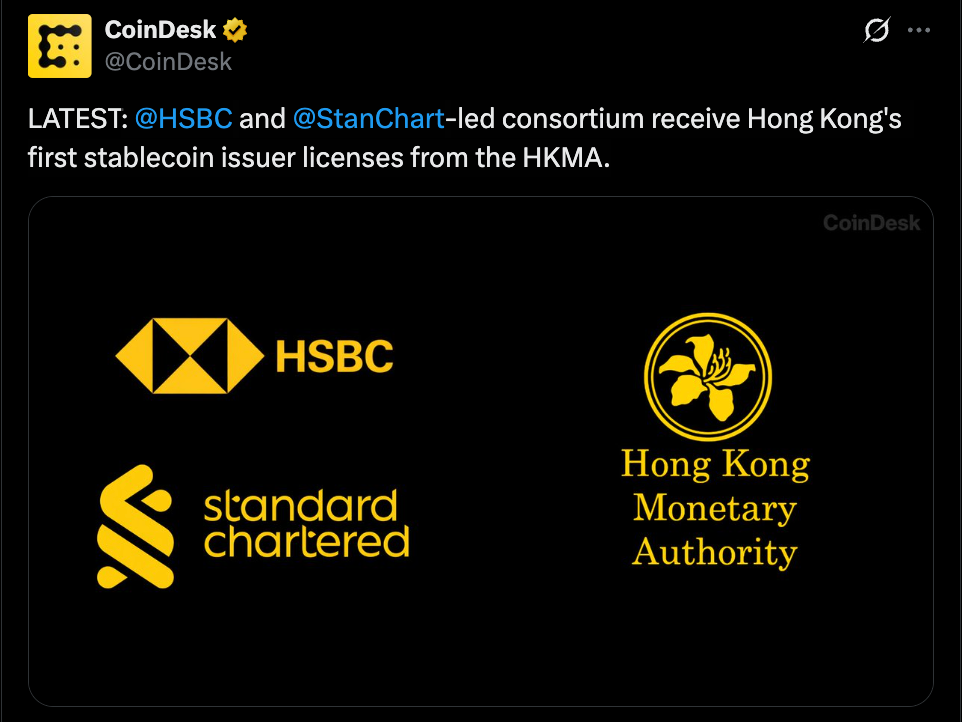
- HSBC and Standard Chartered-led group получили first stablecoin licenses
- Only 2 out of 36 applicants were approved by regulators
- Strict compliance rules make these unlike USDT or USDC
Hong Kong just made its stance on stablecoins very clear, and it didn’t leave much room for interpretation. Instead of opening the door to a wide range of crypto-native players, regulators handed the first licenses to HSBC and Anchorpoint Financial, a Standard Chartered-backed venture tied to Animoca Brands and HKT. That choice feels deliberate, almost calculated, especially considering both banks are already authorized to print Hong Kong dollar banknotes.
It’s not really about experimentation anymore. Hong Kong seems to be saying that if digital money is going to exist within its system, it should be controlled by institutions that already manage traditional money. That’s a very different approach from the more open, market-driven stablecoin ecosystem seen elsewhere.
A Selective Approval Process With a Clear Bias
The numbers tell part of the story. Out of 36 applicants, only two were approved, which is about as selective as it gets. From the beginning, the Hong Kong Monetary Authority made it clear that approvals would be limited, with a strong focus on risk controls, reserve quality, and compliance infrastructure.
Some applicants reportedly failed to meet technical requirements, which hints at how high the bar was set. But beyond that, the outcome suggests regulators were always leaning toward institutions with existing credibility and infrastructure. This wasn’t a wide-open competition, it was more like a filtered selection.
These Stablecoins Come With Heavy Restrictions
What’s being built here doesn’t look like the stablecoins most people are used to. Under HKMA rules, transfers can only happen between wallets that have been fully verified. On top of that, the travel rule kicks in for transactions above HK$8,000, adding another layer of oversight.
In practice, that likely means compliance embedded directly into how these tokens function. That’s a sharp contrast to assets like USDT or USDC, which can move more freely across wallets. Here, control is part of the design, not just an external requirement.

Institutional Control Over Crypto Speed
Hong Kong is effectively making a bet, and it’s a pretty clear one. Instead of prioritizing speed, openness, or decentralization, it’s prioritizing trust, control, and institutional backing. Whether that trade-off works is still uncertain, and maybe that’s where things get interesting.
The global stablecoin market is already massive, sitting around $300 billion, with projections pointing much higher in the coming years. But scale alone doesn’t guarantee adoption, especially if usability is restricted by strict compliance layers.
The Real Question Is Adoption
The big unknown is whether these tightly controlled stablecoins can actually gain traction. A system where every wallet is verified and every transfer is monitored might satisfy regulators, but it could limit organic growth and network effects.
Still, Hong Kong isn’t trying to replicate existing models. It’s trying to build something that fits within its financial system from day one. Whether that approach attracts capital or pushes it elsewhere is something the market will figure out soon enough.
Disclaimer: BlockNews provides independent reporting on crypto, blockchain, and digital finance. All content is for informational purposes only and does not constitute financial advice. Readers should do their own research before making investment decisions. Some articles may use AI tools to assist in drafting, but every piece is reviewed and edited by our editorial team of experienced crypto writers and analysts before publication.





 English (US) ·