
 3 weeks ago
53
3 weeks ago
53
Howard Lutnick, the US Commerce Secretary, is forecasting that interest rates will stabilize and decline over the next six months. The prediction fits neatly into the broader Trump administration’s ongoing campaign to pressure the Federal Reserve into more aggressive easing, but Lutnick is framing it less as political wishcasting and more as an inevitability driven by economic fundamentals.
His argument boils down to a simple premise: US credit quality is strong, inflation sits around 2.7%, and economic indicators are trending positive. Rates, in his view, are simply too high for those conditions.
The case for lower rates
The US is paying more to borrow money than its economic profile warrants, and every percentage point cut in rates could save the federal government hundreds of billions in annual interest payments.
Lower borrowing costs don’t just reduce the deficit directly through cheaper debt service. They theoretically spark economic activity, which generates more tax revenue, which further closes the gap. Lutnick has projected US GDP growth exceeding 5% in the first quarter of 2026, with the possibility of hitting 6% for the full year.
He also points to lower energy prices and tax policy support as drivers of his optimism, alongside the downstream effects of reduced borrowing costs. Lutnick additionally cites the housing market as a key beneficiary, where mortgage rate declines would unlock demand held back by affordability constraints.
Where the Fed actually stands
The Federal Reserve, now chaired by Kevin Warsh, has implemented several quarter-point rate cuts through 2025, bringing the federal funds rate down to a range of 3.5% to 3.75%. But the central bank has paused further cuts heading into 2026, reflecting divided opinions within its monetary policy committee about the appropriate pace of easing.
Treasury yields have actually been trending upward, which tells a somewhat different story than Lutnick’s forecast might suggest.
Lutnick’s background gives his commentary a different texture than the typical cabinet secretary opining on monetary policy. Before joining the administration, he spent decades on Wall Street and is best known for rebuilding Cantor Fitzgerald after the firm lost 658 employees in the September 11 attacks.
What this means for markets
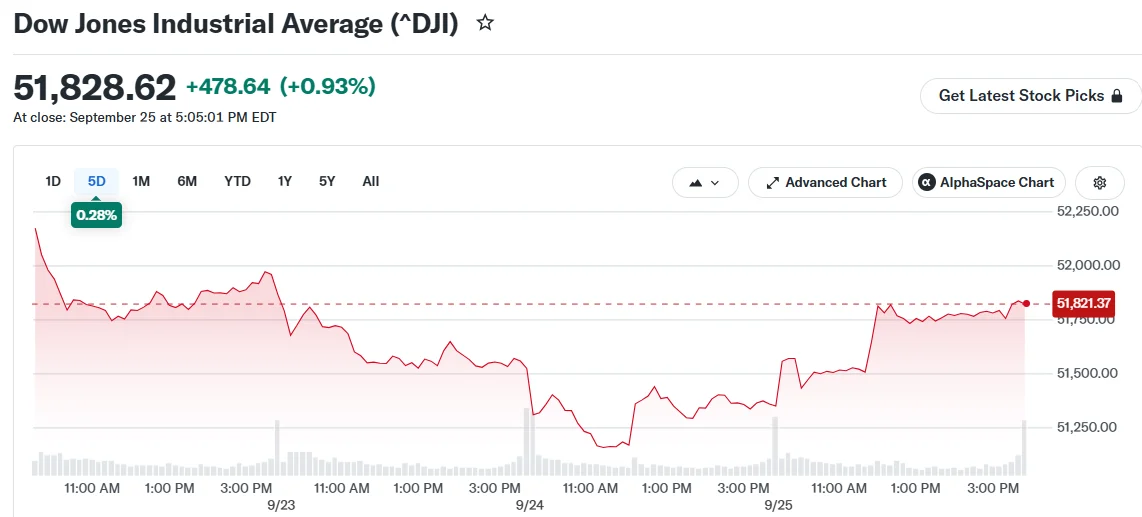
If Lutnick’s prediction proves correct and rates do stabilize before declining over the next six months, equities tend to perform well in easing environments, as cheaper capital boosts corporate earnings and makes stocks more attractive relative to bonds. Real estate benefits from improved affordability and increased transaction volumes.
The US dollar could weaken in response to lower rates, making American exports more competitive but increasing the cost of imports, potentially creating a feedback loop that nudges inflation back upward.
For now, the Fed’s steady posture at 3.5% to 3.75% suggests the central bank isn’t in a hurry to validate the administration’s timeline. Bond markets, with their upward-trending yields, seem similarly unconvinced. Lutnick is essentially betting that the data will force the Fed’s hand before the end of the year, a bet that depends on inflation staying contained while growth accelerates.
Disclosure: This article was edited by Editorial Team. For more information on how we create and review content, see our Editorial Policy.








 English (US) ·