
 4 months ago
71
4 months ago
71
- Hyperliquid launches mobile MVP, bringing DeFi trading to phones
- Move helps reclaim user access amid rising fake app risks
- Signals shift from desktop-native DeFi to everyday mobile usage
Hyperliquid finally making the jump to mobile might seem overdue, but it’s actually a bigger moment than it looks. For a platform processing billions in daily volume, staying desktop-only was never going to hold. At some point, trading has to move into real life, not just browser tabs.
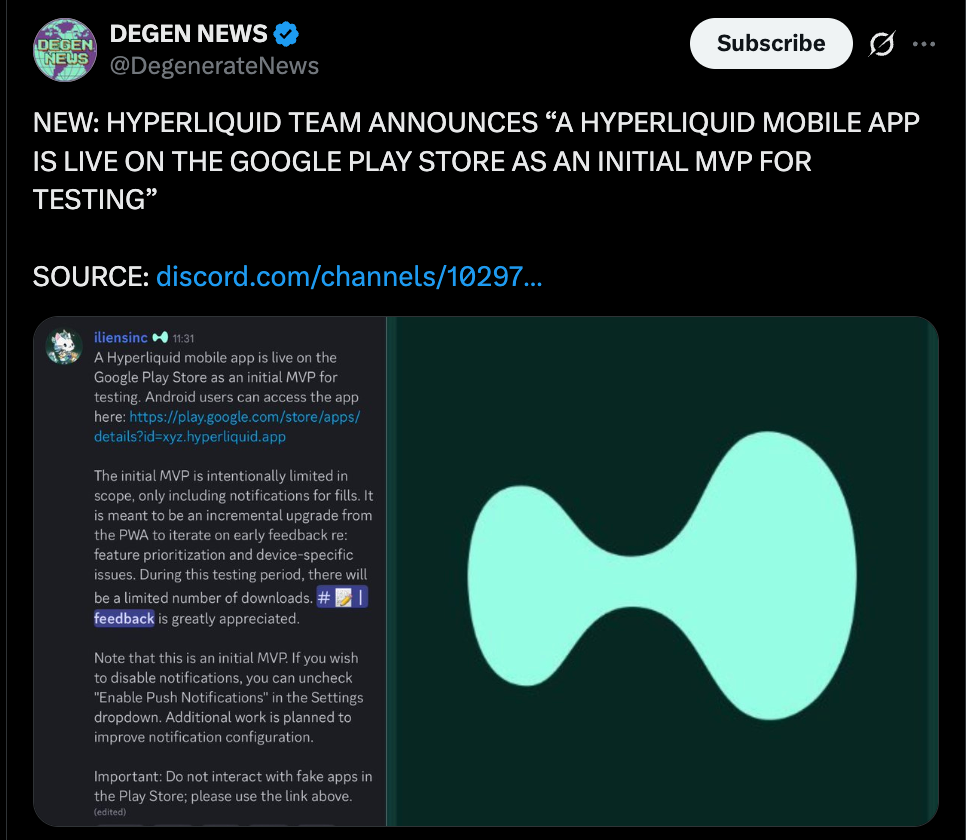
That’s what this mobile MVP represents. Not a finished product, not a full rollout, just the first attempt at compressing a high-speed onchain trading experience into something that fits in your pocket.
DeFi Is Moving Into Everyday Behavior
This shift changes how people interact with DeFi. Trading isn’t something you schedule anymore, it becomes something you do casually, in between everything else.
That matters more than it sounds. Frequency increases when access becomes easier. And in markets like crypto, more frequent interaction tends to drive more liquidity and engagement.
But getting there isn’t simple. Hyperliquid built its edge on speed and execution, and translating that into a mobile environment without breaking the experience is… not trivial.
The MVP Label Says a Lot
Calling it an MVP is intentional. It signals that this is an early version, not the final product. The team is testing behavior, gathering feedback, and likely avoiding overpromising too early.
In crypto, where rushed launches often backfire, that kind of caution stands out. It suggests they’re prioritizing stability and performance over hype.
This Is Also About Control
There’s another angle here that’s easy to miss. Before this release, there were already warnings about fake Hyperliquid apps circulating.
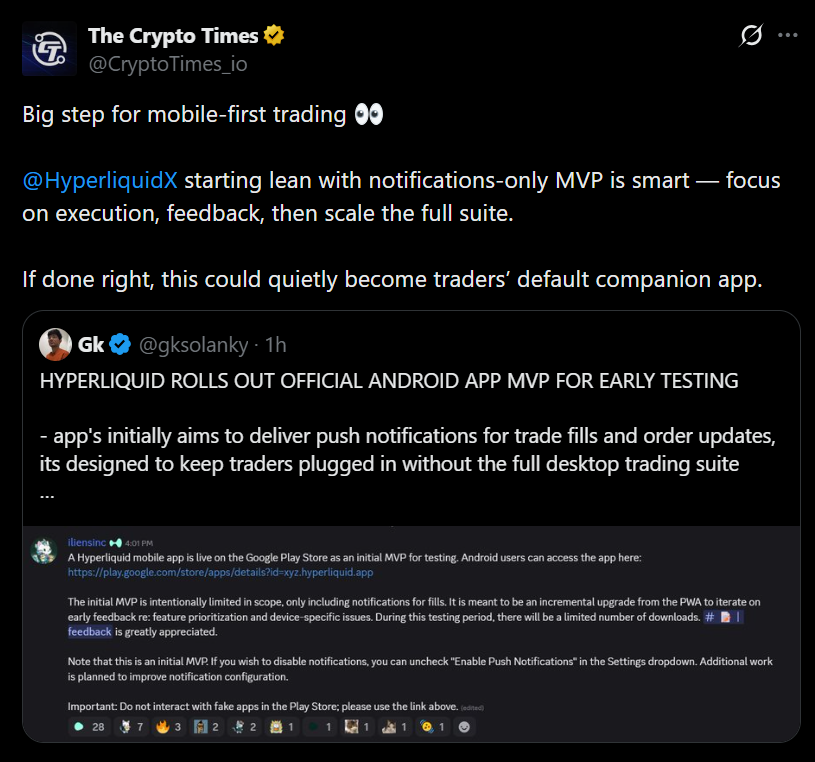
Without an official mobile presence, users were exposed to scams filling that gap. Launching even a basic version changes that dynamic. It gives users a verified entry point and lets the team control how people access the platform.
Mobile isn’t just about convenience, it’s about owning distribution.
Expectations Are Higher on Mobile
DeFi apps have historically felt like tools, functional but not always user-friendly. Mobile changes that expectation completely.
Users now expect smooth interfaces, biometric login, real-time notifications, and seamless interactions. That’s standard across most apps in 2026.
If Hyperliquid can deliver its performance within that kind of experience, it stops being a niche trading platform and starts becoming something people use daily.
A Bridge Between Two Worlds
This move also sits at an interesting intersection. Hyperliquid is known for degen-level trading, fast, high-risk, high-frequency activity.
Mobile brings that behavior closer to mainstream patterns. It lowers the barrier, making it easier for more users to participate without needing a full desktop setup.
That’s where the real growth potential comes from.
A Subtle but Important Shift
This isn’t just a product update. It’s a signal that DeFi is evolving past its early phase.
If trading becomes something people do casually on their phones, the ceiling for user growth expands significantly. Not because the product changed dramatically, but because the context around it did.
And that’s usually how adoption actually happens.
Disclaimer: BlockNews provides independent reporting on crypto, blockchain, and digital finance. All content is for informational purposes only and does not constitute financial advice. Readers should do their own research before making investment decisions. Some articles may use AI tools to assist in drafting, but every piece is reviewed and edited by our editorial team of experienced crypto writers and analysts before publication.









 English (US) ·