
 3 hours ago
16
3 hours ago
16
- News
- Technology
- In 1984, NASA Sent 3,301 Bees to Space and They Built Comb in Seven Days
Published:Sep 16, 2026, 1:30 AM EDT
3,301 honeybees rode aboard NASA’s STS-41C mission, launched April 6, 1984, to see whether a colony could build hexagonal comb in microgravity. After early disorientation, the bees produced about 200 cm² of functional comb with thicker walls and smaller cells, while the queen laid roughly 35 eggs that did not hatch after the flight.
Published: Sep 16, 2026, 1:30 AM EDT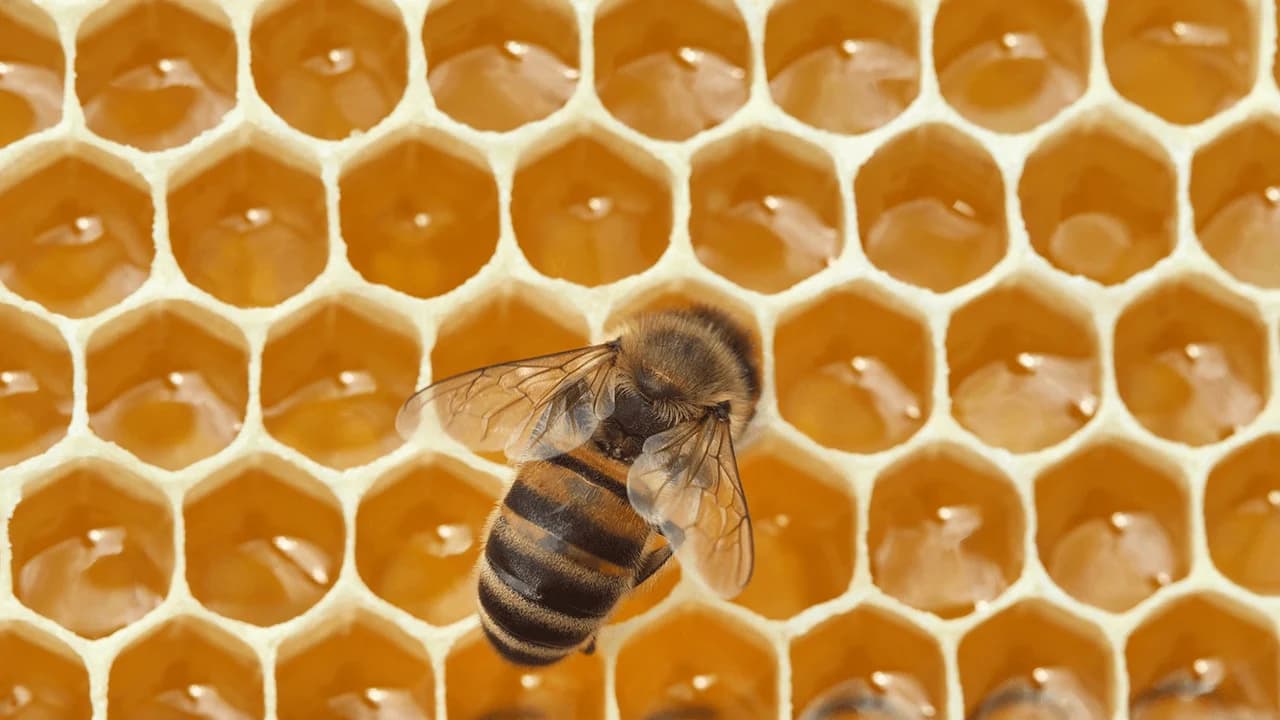
Key Takeaways
- NASA’s STS-41C carried 3,301 honeybees into microgravity on April 6, 1984.
- Challenger’s bees adapted within 2 days and built about 200 cm² of functional honeycomb.
- NASA’s queen laid roughly 35 eggs, but none hatched after STS-41C returned to Earth.
On 04/06/1984, Challenger lifted off on STS-41C carrying a passenger list that included 3,301 bees. The point was simple and oddly daring: see whether a hive could still build hexagonal cells in zero-gravity. The first hours were messy, with bees crashing into the enclosure’s walls, until they adapted to microgravity and got to work. By seven days, they had produced 200 cm² of comb, thicker-walled and tighter than usual, while keeping the colony’s routines intact from ventilation to moving dead bees.
A small stowaway story from the Space Shuttle era
Some experiments announce themselves with titanium hardware and big budgets. Others ride along quietly, tucked into a corner of a mission already packed with history. In April 1984, NASA flew one of those side projects aboard Challenger (STS-41C), and it involved a very Earthly creature: honeybees. The question was simple, and still oddly charming. Could a hive keep functioning without gravity?
The payload was specific and ambitious: 3,301 bees, including a queen, housed in a custom module meant to keep them alive for the full flight. The concept came from student researcher Dan Poskevich, who wanted to see whether bees would keep building their signature hexagonal comb when “up” and “down” stopped meaning anything.
Day 1: confusion, collisions, and a quick rewrite of instinct
At first, microgravity looked like a mess. Early observations showed bees repeatedly losing orientation and bumping into the enclosure’s walls and ceiling, treating any surface as a possible “floor.” It is the kind of behavior that reads like panic, but it is really biology searching for a reference frame.
By day 2, the reports turned. The colony began moving more efficiently, navigating from point to point with fewer impacts, as if the group had collectively learned a new rulebook. That fast adjustment is the part that sticks with you, because it hints at how much “software” sits inside a tiny nervous system.
Comb in orbit, and the details scientists cared about
Over roughly 7 days, the bees produced about 200 cm² (about 31 in²) of honeycomb. The comb worked, but it wasn’t a perfect copy of what you’d see in a backyard hive. Researchers noted cells with thicker walls and slightly smaller diameters, while depth stayed closer to Earth norms.
Just as telling, the bees didn’t merely build. They used the structure, including storing the sugary syrup provided for food. A control group on Earth, kept in a similar box, reportedly showed less visible progress during the same early inspections, underscoring that the space group was not simply “going through the motions.”
Why this still matters for space science and business
The hive kept up its social choreography: ventilation for temperature and humidity, organization of reserves, and removal of dead individuals. The queen even laid about 35 eggs, though none hatched before or after return, with no clear cause identified.
Why should we care now? Because today’s space economy is increasingly about biology and materials in microgravity, from ISS research to commercial stations in planning. The 1984 bees offer a grounded reminder: complex systems can adapt faster than our intuitions, and sometimes the most useful data comes from the smallest passengers.






 English (US) ·