
 1 month ago
48
1 month ago
48
Iran’s top joint military command announced the indefinite closure of the Strait of Hormuz on June 10, threatening to fire on any vessel attempting to navigate the waterway. The move represents the most significant escalation in the ongoing conflict between Iran and the US-Israeli coalition, and it targets the single most important bottleneck in the global energy supply chain.
The Strait of Hormuz handles roughly 20% of the world’s oil supply and substantial volumes of liquefied natural gas.
How we got here
US-Israeli military operations against Iran began earlier in 2026, with strikes ramping up in late February and March. Iran had already signaled its intentions to restrict the strait as far back as March, making today’s announcement less a surprise and more the fulfillment of a very loud promise.
What changed on June 10 is the formal declaration and the explicit threat of military force against commercial shipping. That transforms the situation from a tense standoff into something closer to an active blockade.
The Strait of Hormuz is a narrow passage between Iran and Oman, roughly 21 miles wide at its narrowest point. Every major oil-producing nation in the Persian Gulf, including Saudi Arabia, Iraq, Kuwait, and the UAE, depends on it to get crude to market.
The market fallout
Energy markets reacted exactly how you’d expect when someone threatens to cut off a fifth of the world’s oil. Prices spiked sharply following the announcement, adding to volatility that had already been elevated for weeks.
Bitcoin dropped below $80,000 in late May amid intensifying regional clashes before recovering partially.
Iran’s Bitcoin pivot and the “Hormuz Safe” platform
Iran’s proposed “Hormuz Safe” platform involves Bitcoin-based maritime insurance for shipping, with proposed fees of $1 per barrel settled in digital assets.
Iran faces extensive sanctions that cut it off from traditional financial infrastructure. SWIFT transfers, dollar-denominated transactions, and conventional insurance markets are largely off-limits. Digital assets, particularly Bitcoin, offer a sanctions-resistant payment rail that no single government can shut down.
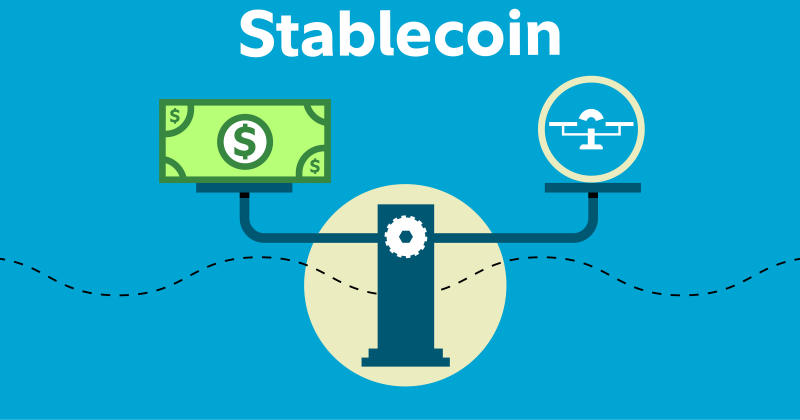
Analysts report that when actual transactions occur in sanctioned environments, stablecoins tend to be the preferred instrument. They offer the same sanctions-resistance as Bitcoin without the price volatility that makes a $1-per-barrel fee worth wildly different amounts from one hour to the next.
What this means for investors
Energy prices are likely to remain elevated and volatile for as long as the closure holds. Any disruption to 20% of global oil supply doesn’t just move prices, it restructures entire supply chains.
If sanctions-pressured nations prefer stablecoins for actual transactions while Bitcoin serves as the headline-grabbing insurance product, issuers like Tether and Circle could see increased demand from exactly the kind of use cases that make regulators nervous.
For crypto investors specifically, the key variable to watch isn’t Bitcoin’s price on any given day. It’s whether the “Hormuz Safe” concept actually processes real volume. If it does, it validates the thesis that crypto has graduated from speculative asset to geopolitical infrastructure. If it doesn’t, it remains what most sanctions-evasion crypto schemes have been so far: interesting in theory, stablecoins in practice.
Disclosure: This article was edited by Editorial Team. For more information on how we create and review content, see our Editorial Policy.




 English (US) ·