
 1 hour ago
16
1 hour ago
16
Iran’s negotiating team has drawn a line in the sand, and it runs straight through southern Lebanon. Tehran is insisting that any final agreement with the United States must include Israel’s complete withdrawal from Lebanese territory, a demand that puts the entire diplomatic framework on life support.
The problem: Israeli Prime Minister Benjamin Netanyahu has made it abundantly clear that his forces aren’t going anywhere. Israeli troops will withdraw when security needs dictate, he’s said, which is diplomatic shorthand for “don’t hold your breath.”
A deal that was barely alive is now on a ventilator
The timing here matters. A tentative US-Iran memorandum of understanding emerged in mid-to-late June 2026, and it explicitly references the importance of respecting Lebanon’s territorial integrity and sovereignty. That language seemed carefully chosen to thread the needle between Iran’s demands and Israel’s military posture.
Iran apparently didn’t think the needle was threaded well enough. By categorizing Israel’s withdrawal as a “red line,” Tehran has effectively transformed what was supposed to be a bilateral US-Iran arrangement into a three-party problem where the third party, Israel, has zero interest in cooperating.
The conflict on the ground hasn’t exactly created a conducive environment for compromise, either. Hezbollah initiated attacks on Israel on March 2, 2026, in support of Iran, and clashes between the two sides have intensified since then.
Why Israel won’t budge, and why that matters
Netanyahu’s refusal to entertain withdrawal isn’t just posturing. Israel has maintained a security presence in southern Lebanon for reasons that predate this particular round of tensions. The calculus is straightforward from Jerusalem’s perspective: Hezbollah sits on its northern border, and pulling back troops while the group is actively launching attacks would be, in the Israeli government’s view, strategically suicidal.
But that calculus creates a deadlock that neither Washington nor Tehran can resolve on their own. The US signed a memorandum that references Lebanese sovereignty. Iran says that sovereignty requires Israeli withdrawal. Israel says withdrawal isn’t happening. Each position is internally logical and collectively incompatible.
The broader ceasefire framework that various parties have been working toward is now under significant strain. A ceasefire generally requires both sides to stop fighting and, ideally, create some physical distance between their forces. When one side’s patron demands withdrawal and the other side refuses, the distance stays theoretical.
What this means for markets and investors
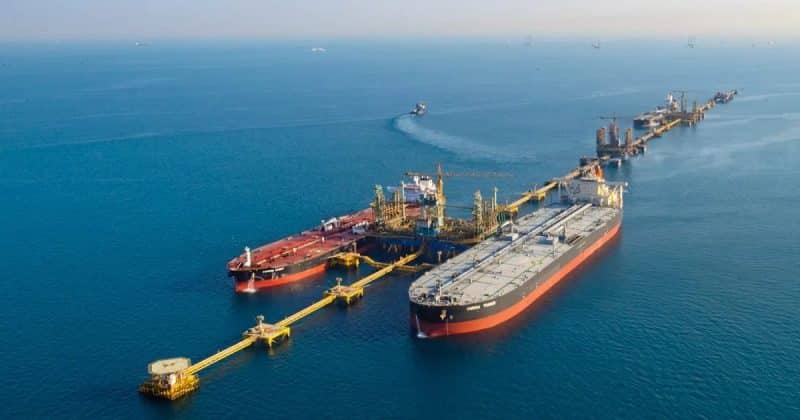
The most immediate concern for traditional markets is oil. Escalating conflict in the Middle East has historically sent energy prices on wild rides, and the ongoing Hezbollah-Israel clashes since March represent exactly the kind of sustained regional instability that makes commodity traders nervous. If the diplomatic framework collapses entirely and fighting intensifies, oil supply disruption becomes a real scenario rather than a hypothetical one.
Disclosure: This article was edited by Editorial Team. For more information on how we create and review content, see our Editorial Policy.







 English (US) ·