
 1 hour ago
19
1 hour ago
19
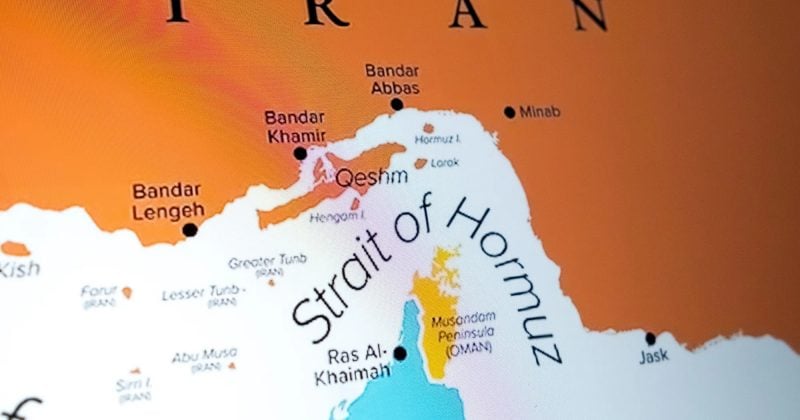
Iran’s Islamic Revolutionary Guard Corps Navy is now requiring commercial vessels to coordinate their passage through the Strait of Hormuz, the narrow waterway separating Iran from the Arabian Peninsula. Every oil tanker, cargo ship, and commercial vessel looking to transit must get authorization from the IRGC before proceeding.
Iran has also floated the idea of Bitcoin-settled maritime insurance and a crypto-based toll system for oil tanker passage, potentially priced around $1 per barrel.
What’s actually happening in the strait
The IRGC reported that on May 20, it authorized 26 vessels to cross within a single 24-hour window. Between late May and early June, daily transits ranged from 15 to 35 vessels receiving IRGC approval.
Military vessels have been outright prohibited from passage. Commercial ships, meanwhile, face a detailed review process covering their cargo and destination before getting the green light.
As of June 16, Iran’s state media confirmed the coordination requirement remains active.
Roughly a fifth of the world’s oil supply passes through this roughly 21-mile-wide channel every day.
The broader regional context involves escalating tensions between Iran, the US, and Israel, encompassing military blockades, ceasefires, and diplomatic negotiations that have kept the Middle East on a knife’s edge since mid-May.
The crypto angle: Bitcoin tolls and maritime insurance
Iran has explored proposals for Bitcoin-based maritime insurance and a crypto toll system for oil tankers transiting the strait.
The proposed toll of roughly $1 per barrel, run across the volume of crude flowing through Hormuz daily, represents a potentially significant revenue stream denominated in an asset outside the SWIFT banking system and US Treasury sanctions apparatus.
Bitcoin price volatility has shown correlation with developments in the Strait of Hormuz since mid-May.
What this means for investors
If Iran successfully implements a crypto-based toll or insurance system for Hormuz transit, it would represent one of the most significant real-world use cases for Bitcoin in international commerce as functional settlement infrastructure for state-level economic activity.
US authorities have consistently pushed back on Iranian sanctions evasion, and any formalized crypto toll system would almost certainly trigger a regulatory response. Exchanges and service providers could face pressure to block or flag transactions associated with Hormuz tolls.
Disclosure: This article was edited by Editorial Team. For more information on how we create and review content, see our Editorial Policy.








 English (US) ·