
 3 hours ago
31
3 hours ago
31
Two Iranian drones targeted an UAE tanker transiting the Strait of Hormuz, according to the UAE Defence Ministry. The attack struck the MV Barakah, an empty oil tanker operated by ADNOC Logistics & Services, with no injuries reported.
What happened in the Strait
The incident occurred on May 4, 2026, amid what has become a dangerously volatile stretch in the Persian Gulf. The UAE’s Ministry of Foreign Affairs labeled the assault a “terrorist attack” and an act of “piracy,” while emphasizing that it violated international maritime law and multiple UN Security Council resolutions.
UAE air defense systems were also active during the same period, intercepting multiple ballistic and cruise missiles from Iran, with some injuries reported in those separate engagements.
The military escalation follows a ceasefire from April 2026 that has effectively collapsed, with rising tensions and US naval deployments aimed at deterring further Iranian aggression in the region.
The Strait of Hormuz is roughly 21 miles wide at its narrowest point, and virtually every barrel of oil leaving the Persian Gulf passes through it.
The energy market ripple effect
Iran has a documented pattern of provocations against shipping in the Strait of Hormuz, most notably the tanker attacks of 2019 that sent oil prices spiking. The broken ceasefire, active missile interceptions by UAE air defenses, and the explicit “terrorist attack” framing from the UAE government all suggest this is more than a one-off provocation.
The UAE explicitly characterized the attack as economic coercion. That framing matters because it tells the market this wasn’t an accident or a case of mistaken identity.
Why crypto traders should care
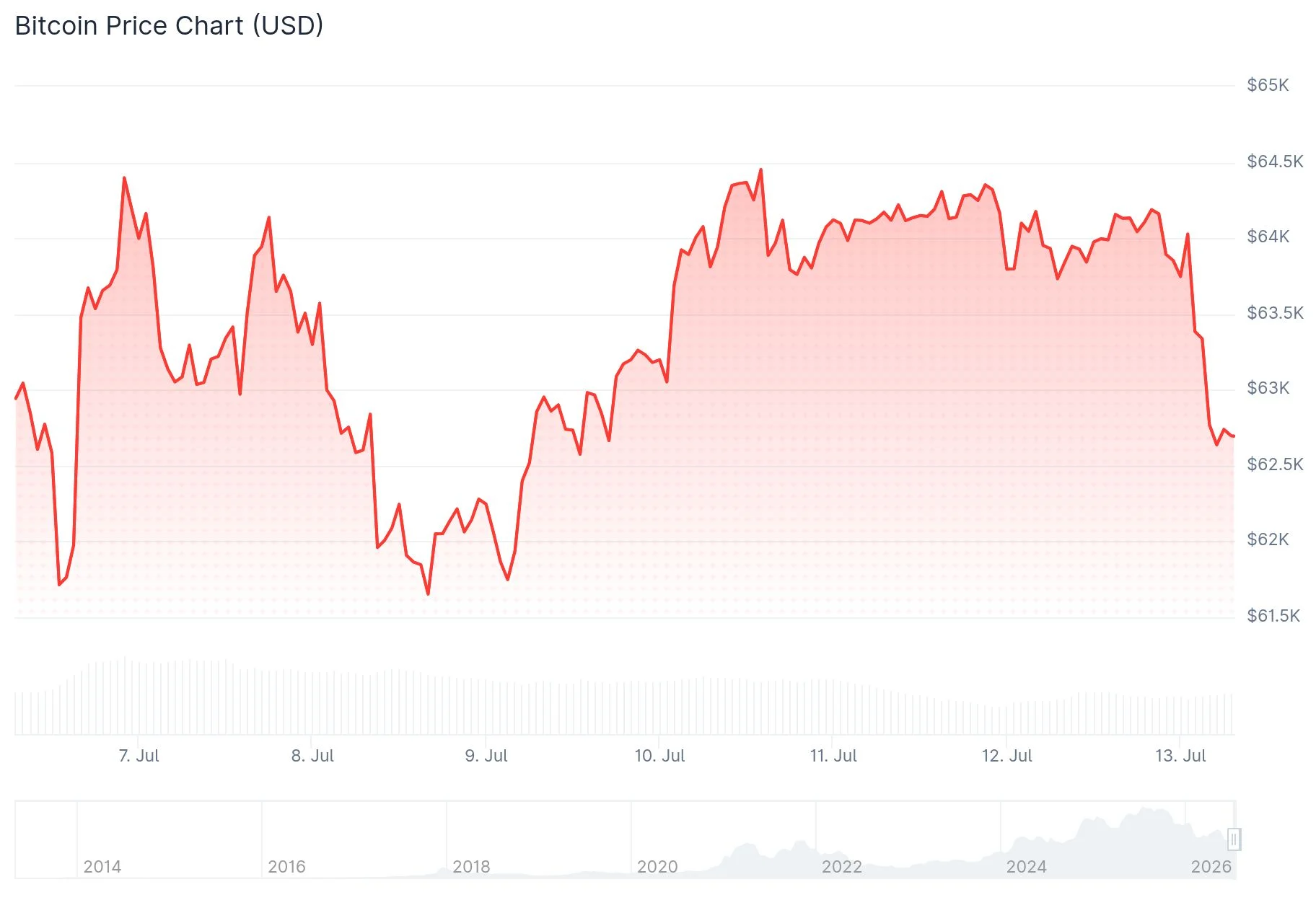
Crypto-native media hasn’t picked up this story in any meaningful way, and there has been no reported connection to cryptocurrencies or visible reaction in digital asset prices following the event.
Historically, oil price spikes feed into inflation expectations, which influence central bank policy, which directly moves risk assets including Bitcoin and major altcoins. During past Middle Eastern escalations, Bitcoin has sometimes rallied as a “digital gold” trade, and sometimes sold off alongside broader risk assets.
Watch Brent crude, watch the dollar index, and watch for any follow-on incidents in the Strait.
Disclosure: This article was edited by Editorial Team. For more information on how we create and review content, see our Editorial Policy.




 English (US) ·