
 12 hours ago
12
12 hours ago
12
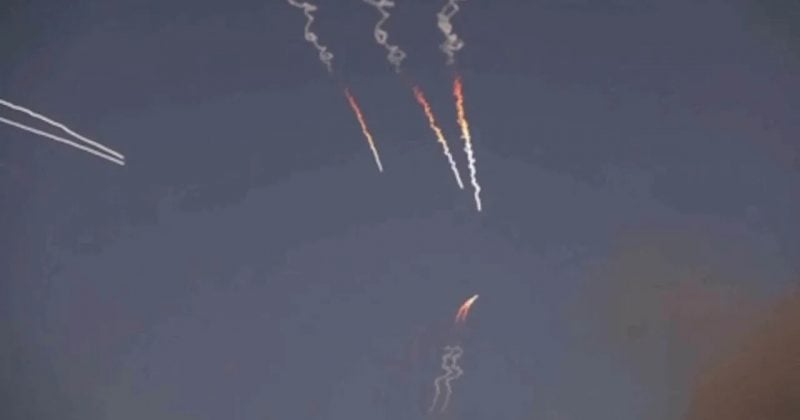
Iran’s Islamic Revolutionary Guard Corps claimed responsibility for precision drone and missile strikes targeting two US military installations in Kuwait: Camp Arifjan, a major American military support hub, and Ali Al Salem Air Base, where the IRGC alleged it destroyed a radar facility. The strikes, which the IRGC framed as retaliation for ongoing US military operations in the region, landed with consequences that extended well beyond the Gulf.
Bitcoin felt it too. On July 8, 2026, the price slipped to approximately $99,500, briefly breaking below the psychologically significant $100K level before rebounding above $102,000. The move triggered over $700 million in Bitcoin liquidations, the kind of cascade that happens when leveraged positions unwind in a hurry.
Why crypto markets are watching the Gulf
Iran’s involvement adds a specific layer that crypto markets can’t ignore. The country’s domestic digital asset ecosystem is valued at over $7.8 billion, and it has become deeply intertwined with Iran’s broader strategy for navigating international sanctions. When geopolitical pressure spikes, observers watch whether Iranian-linked wallets start moving funds, whether exchanges tighten compliance, and whether regulators in Western jurisdictions sharpen their scrutiny of Middle Eastern financial flows.
Reports tied to the escalation indicate that assets worth around $130 million have been frozen in connection with these events, a figure that underscores just how seriously financial authorities are treating the intersection of the IRGC’s actions and digital asset markets.
Iran’s crypto playbook and why it matters now
Iran has spent years building out crypto infrastructure as a workaround to SWIFT exclusions and dollar-denominated trade restrictions. Decentralized networks, by design, don’t require a correspondent bank. The US Treasury’s Office of Foreign Assets Control has designated crypto addresses tied to Iranian entities before. The difference now is scale and sophistication.
The IRGC has signaled that its operational commitments in the region are ongoing, which means this is unlikely to be a one-time volatility event.
What investors should actually watch
Bitcoin’s recovery above $102,000 is the reassuring part of this story. Markets absorbed the shock, liquidations cleared, and price bounced.
For crypto investors, the risk calculus here runs in two directions. The first is pure price volatility: further escalation between US forces and the IRGC could produce additional sharp moves. Leveraged positions remain the most exposed.
The second risk is regulatory. The $130 million in reportedly frozen assets is the kind of number that ends up in a Senate hearing. If major exchanges preemptively restrict accounts tied to certain jurisdictions in response to OFAC pressure, it could create localized selling pressure as affected holders move to less regulated venues or simply liquidate.
Disclosure: This article was edited by Editorial Team. For more information on how we create and review content, see our Editorial Policy.



 English (US) ·