
 1 hour ago
16
1 hour ago
16
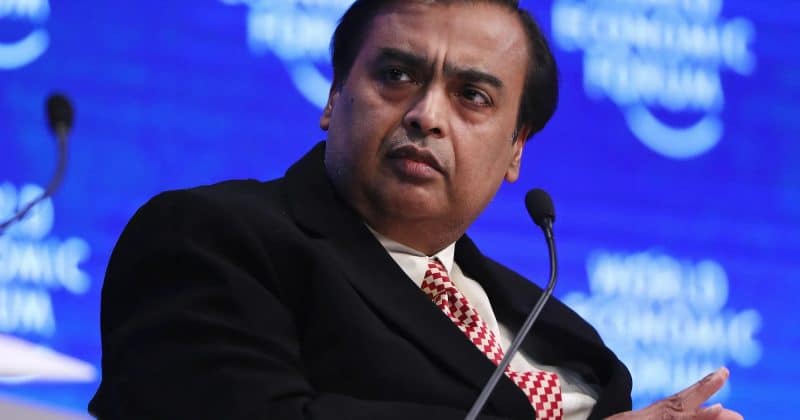
Jio Platforms, the digital and telecom subsidiary of Mukesh Ambani’s Reliance Industries, filed draft IPO papers on June 19 for what would be India’s largest-ever initial public offering. The target: roughly $3.8 billion, or around ₹360 billion, through the issuance of up to 270 million new shares.
To put that in perspective, the current record holder for India’s biggest maiden IPO is Hyundai Motor India, which raised $3.3 billion in 2024. Jio is aiming to blow past that mark by about 15%.
A subscriber base the size of the European Union
Jio Platforms serves nearly 525 million wireless subscribers, a user base roughly equivalent to the entire population of the European Union.
The IPO is structured as a pure fresh issue, meaning new shares are being created to raise capital rather than existing shareholders cashing out. Proceeds from the offering will primarily go toward reducing debt at subsidiary Reliance Jio Infocomm.
The 2020 fundraising blitz that set the stage
In 2020, Jio Platforms raised over $20.5 billion from a who’s who of global investors. Meta acquired a 9.99% stake. Alphabet picked up 7.73%. KKR, Silver Lake, Vista Equity Partners, General Atlantic, TPG, and others all wrote checks.
At the time, those investments valued Jio Platforms between $57 billion and $65 billion. Analyst estimates now suggest the post-IPO valuation could land somewhere between $130 billion and $180 billion.
Meta’s investment came with a strategic angle: integrating JioMart, a grocery delivery platform, with WhatsApp to create a commerce ecosystem targeting India’s hundreds of millions of small merchants. Alphabet’s stake reflected a broader bet on cloud computing partnerships.
What this means for investors
The valuation range of $130 billion to $180 billion places Jio in rarefied air. For context, that upper bound would make Jio Platforms one of the most valuable telecom-adjacent companies globally.
Average revenue per user, or ARPU, will be a key headline metric, since Jio’s ability to extract more value from each of its 525 million subscribers is the core growth thesis. The company has been gradually raising tariffs after years of market-share-first pricing.
By using IPO proceeds to pay down obligations at Reliance Jio Infocomm, the company is deleveraging ahead of a capital-intensive period of 5G rollout and AI infrastructure buildout.
For the broader Reliance empire, a successful Jio IPO achieves something Ambani has been working toward for years: unlocking the value of individual business units currently embedded within the conglomerate structure. Reliance Retail, the group’s consumer-facing commerce arm, is widely expected to follow with its own public listing.
Hyundai Motor India, for instance, saw its shares trade below the issue price in the weeks after listing.
Disclosure: This article was edited by Editorial Team. For more information on how we create and review content, see our Editorial Policy.








 English (US) ·