
 3 months ago
42
3 months ago
42
- Justin Sun sues after $75M WLFI stake is frozen and voting rights removed
- Allegations of hidden smart contract controls raise serious transparency concerns
- Case could redefine what “decentralized” legally means in crypto
Justin Sun just turned a messy token dispute into something much bigger. After investing $75 million into World Liberty Financial, he’s now suing the project in U.S. federal court, claiming his wallet was blacklisted and his tokens effectively locked without warning.
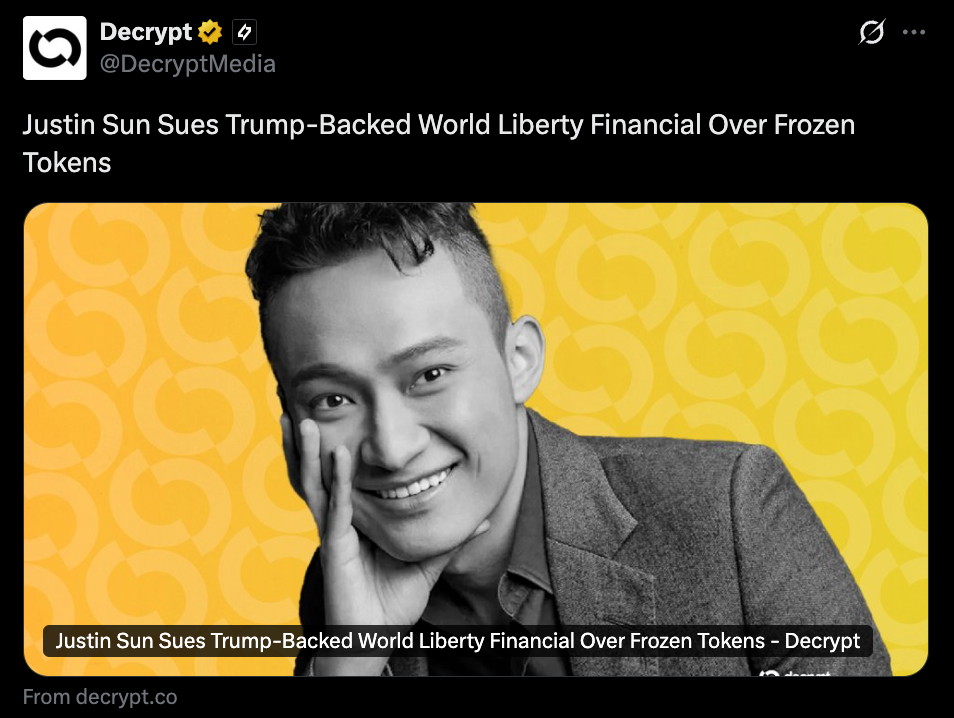
That alone would be headline-worthy, but the real tension sits underneath. This isn’t just about one investor, it’s about whether something marketed as decentralized can quietly behave like a centralized system when it matters most.
What Actually Triggered the Fallout
The situation seems to trace back to activity involving Sun’s holdings. The project claims he may have violated certain terms tied to his investment, possibly by moving tokens in a restricted way, though Sun has denied any intent to sell or breach conditions.
Shortly after, his wallet was blacklisted. Access gone, governance rights stripped, and according to his claims, even the possibility of token destruction on the table. That’s not a small disagreement, that’s a full breakdown of trust.
The “Hidden Controls” Problem
Sun’s core argument is pretty direct. He claims WLFI embedded a backdoor into its smart contract, one that allows administrators to freeze assets without notice.
If that’s true, it raises a bigger issue than just this case. Because a system advertised as decentralized, but capable of unilateral intervention, starts to look… not so decentralized after all. And that’s exactly what legal experts are focusing on.
Where the Legal Debate Gets Interesting
The key question isn’t just whether WLFI had the power to freeze funds, it’s whether users were properly informed that such power existed.

Legal analysts are pointing out that burying these capabilities deep in code doesn’t count as meaningful disclosure. If investors believed they were buying into a decentralized system, but the rules allowed centralized control, that gap could become a serious liability in court.
Governance or Control?
There’s also a governance angle here that courts tend to examine closely. If voting rights were removed or altered after certain triggers, it raises questions about whether token holders actually had enforceable rights, or just the appearance of them.
WLFI will likely argue the freeze was justified, tied to compliance or contractual obligations. But if it turns out to be discretionary rather than rule-based, the case becomes a lot harder to defend.
A Bigger Moment for Crypto
Beyond the courtroom, this case hits at something the industry has been quietly avoiding. The word “decentralized” gets used often, sometimes loosely, and rarely tested under legal scrutiny.
Now it is. And depending on how this plays out, it could force projects to rethink how they design, disclose, and market their systems. Because if decentralization doesn’t hold up when challenged, it’s not really decentralization, it’s branding.
Disclaimer: BlockNews provides independent reporting on crypto, blockchain, and digital finance. All content is for informational purposes only and does not constitute financial advice. Readers should do their own research before making investment decisions. Some articles may use AI tools to assist in drafting, but every piece is reviewed and edited by our editorial team of experienced crypto writers and analysts before publication.








 English (US) ·