
 2 months ago
103
2 months ago
103
- Robert Kiyosaki called Iran’s yuan-based oil settlements a direct threat to U.S. dollar dominance
- Iran reportedly allowed oil shipments through the Strait of Hormuz only if settled in Chinese yuan
- Analysts increasingly view de-dollarization as a real long-term geopolitical trend, not just theory
Robert Kiyosaki is once again sounding the alarm about the U.S. dollar, but this time the backdrop is far more serious than another routine inflation warning. The Rich Dad Poor Dad author posted on X on May 24 claiming Iran’s decision to accept Chinese yuan for oil payments is “worse than war” because it directly challenges the petrodollar system that has supported American financial dominance for decades.
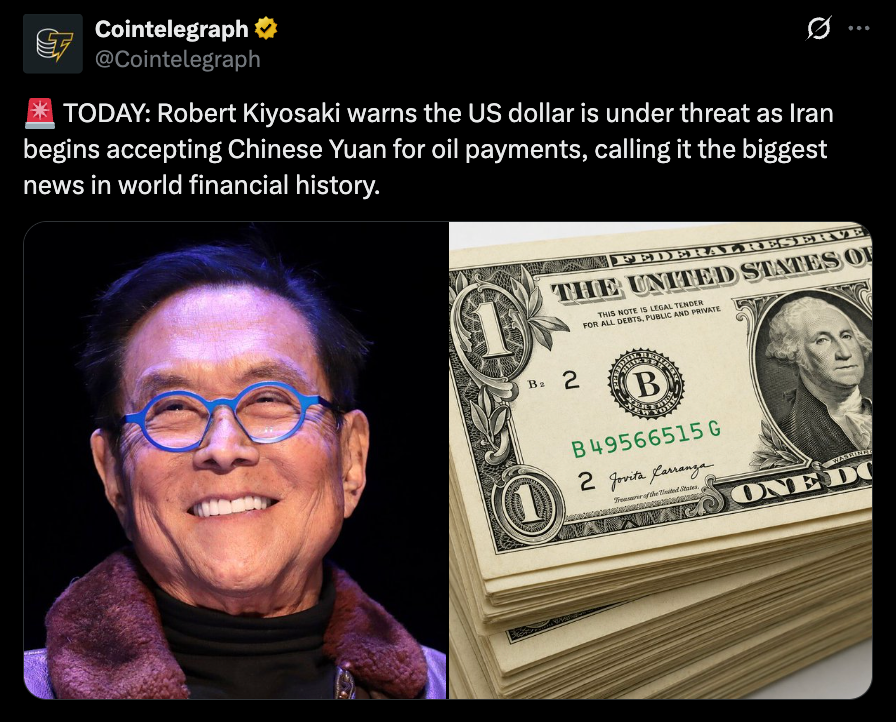
As dramatic as Kiyosaki tends to sound, the broader story underneath the headline is very real.
Why the Petrodollar Matters So Much
Since the 1970s, global oil trade has largely operated in U.S. dollars, forcing countries worldwide to hold large dollar reserves in order to buy energy. That system helped strengthen global demand for the dollar and reinforced America’s financial influence across international markets.
Now that structure is showing visible cracks.
Following the recent U.S.-Israel-Iran conflict escalation, Iran reportedly restricted dollar-denominated oil traffic through the Strait of Hormuz while allowing Chinese-linked vessels to continue operating using yuan settlements instead. Considering Hormuz handles one of the most strategically important oil shipping routes on Earth, markets noticed immediately.
The Shift Away From the Dollar Is Slowly Growing
The dollar still dominates global finance, but its share of global foreign exchange reserves has gradually fallen to roughly 57%, the lowest level in about 25 years.
At the same time, several nations have accelerated efforts to reduce dependence on dollar settlement systems after watching the United States weaponize sanctions against Russia, Iran, and other geopolitical rivals. Freezing Russian reserves in 2022 especially changed how many governments think about reserve risk.
Deutsche Bank analyst Mallika Sachdeva recently described the current environment as a potential catalyst for the gradual emergence of a “petroyuan” system. That does not mean the dollar collapses tomorrow morning, but it does signal growing structural pressure underneath the existing system.
The Dollar Still Holds Major Advantages
That said, there is also a reason many analysts remain cautious about declaring the dollar era over. China’s yuan still faces major limitations as a reserve currency. Capital controls remain strict, global trust in Chinese financial institutions is weaker than Western systems, and the yuan currently represents only a small share of global oil settlement overall.
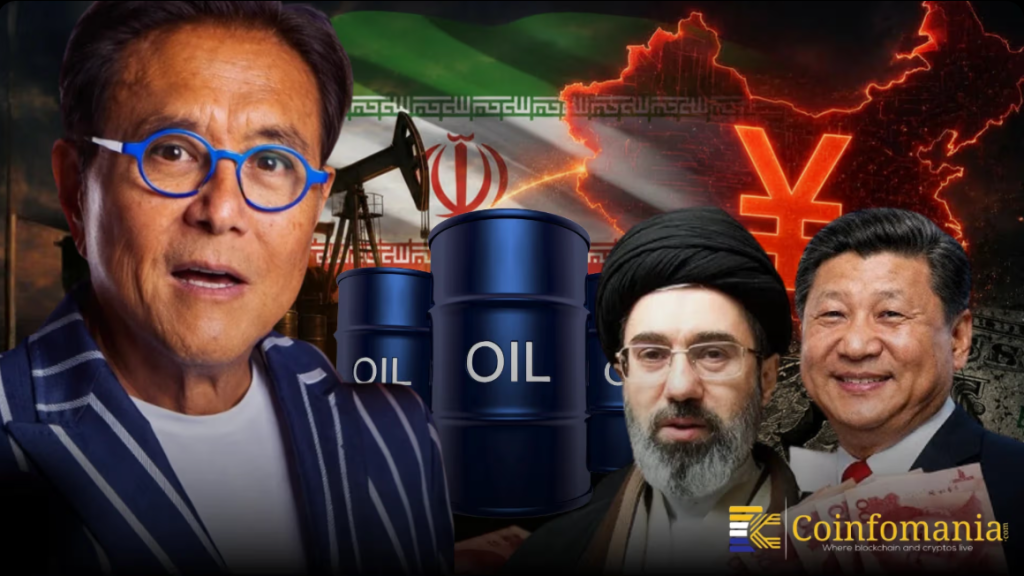
The petroyuan narrative is growing, but it remains early.
Kiyosaki also has a long history of predicting financial collapse scenarios with very dramatic language, so markets tend to separate the emotional framing from the underlying structural trend itself.
Why This Story Actually Matters
The more important takeaway is not whether the dollar disappears entirely. It is that more countries are now openly building alternatives to dollar settlement systems for geopolitical protection.
That shift alone changes the global financial landscape gradually over time.
Iran demanding yuan settlement through one of the world’s most critical energy chokepoints is not just another random geopolitical headline. It reflects a broader trend toward multipolar finance, where nations increasingly want options outside U.S.-controlled monetary infrastructure.
The dollar is still dominant. But for the first time in decades, more countries are openly preparing for a world where it may not dominate forever.
Disclaimer: BlockNews provides independent reporting on crypto, blockchain, and digital finance. All content is for informational purposes only and does not constitute financial advice. Readers should do their own research before making investment decisions. Some articles may use AI tools to assist in drafting, but every piece is reviewed and edited by our editorial team of experienced crypto writers and analysts before publication.





 English (US) ·