
 2 months ago
63
2 months ago
63
Kraken has officially launched perpetual futures trading for eligible US customers, marking one of the most significant expansions of regulated crypto derivatives in the country’s history. The Kraken perpetual futures contracts are listed on Bitnomial, a federally regulated exchange that Kraken’s parent company, Payward, acquired in April 2026 — and they cover nine major cryptocurrencies from Bitcoin and Ether to Dogecoin and Avalanche.
Key takeaways
- Kraken launched perpetual futures for eligible US users via Bitnomial, a CFTC-regulated exchange it acquired in April 2026.
- The contracts span nine cryptocurrencies: Bitcoin, Ether, Solana, XRP, Cardano, Chainlink, Dogecoin, Litecoin, and Avalanche.
- Global perpetual futures volume exceeded $60 trillion in 2025, with most activity happening on offshore platforms outside US regulatory reach.
- The CFTC approved Kalshi’s Bitcoin perpetual contract and cleared a path for Coinbase in May 2026, signaling a broader regulatory shift.
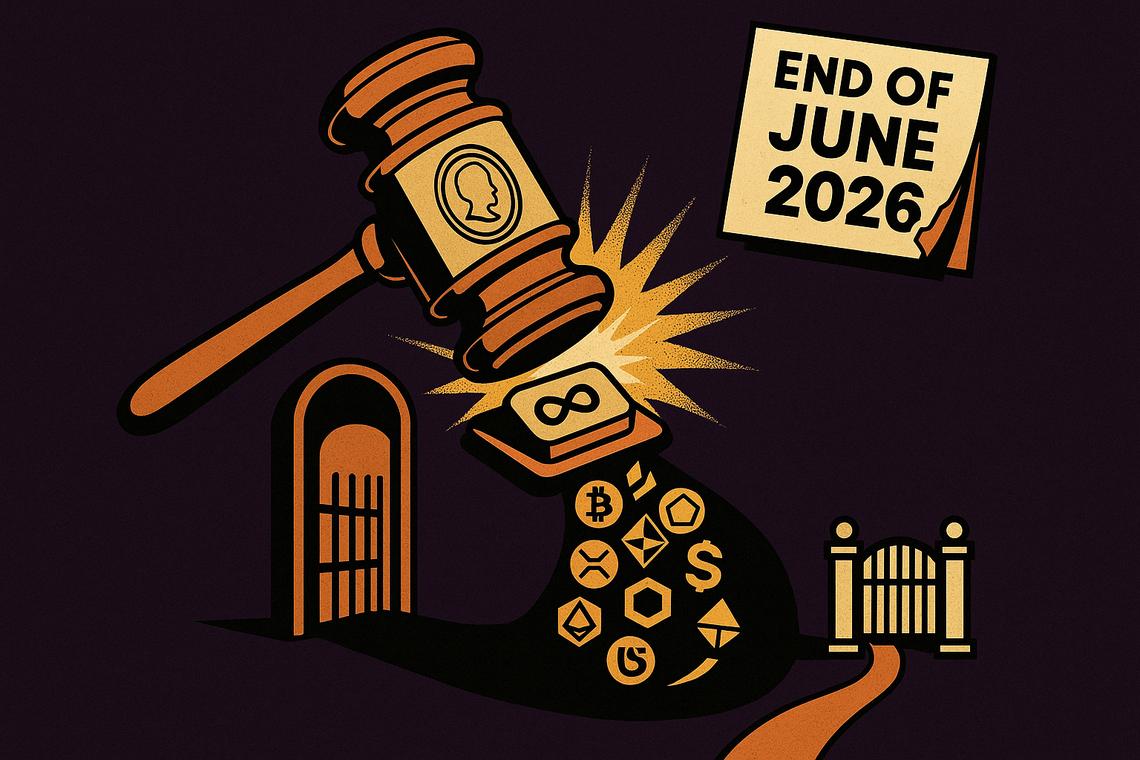
- A CFTC no-action letter enabling regulated exchanges to offer true perpetuals expires at the end of June 2026, making the timing of these launches critical.
Kraken Launches Perpetual Futures for US Traders via Bitnomial
Perpetual futures — commonly called “perps” — let traders take long or short positions on assets without owning them and without an expiration date. Unlike standard futures that must eventually be rolled into a new contract, perps allow positions to remain open indefinitely as long as margin requirements are met. That structural simplicity is a big part of why they have become the dominant trading instrument in global crypto markets.
Details of the Perpetual Futures Offering
The nine cryptocurrencies now available through Kraken’s perpetual futures platform are Bitcoin, Ether, Solana, XRP, Cardano, Chainlink, Dogecoin, Litecoin, and Avalanche. The contracts are accessible through Kraken Pro and are listed on Bitnomial, which holds futures commission merchant, exchange, and clearing licenses regulated by the Commodity Futures Trading Commission.
Kraken said it plans to expand the range of contracts and collateral options over time, with a longer-term goal of eventually allowing crypto assets themselves to be used as collateral — a feature already standard on major offshore venues.
Integration with Existing Trading Products
One practical advantage for existing Kraken users: these perpetual contracts can be managed alongside spot, margin, and CME-listed futures products from a single account. That level of integration puts Kraken in a position to offer US traders a more unified derivatives experience without requiring multiple platforms or accounts.
Regulatory Advances Enable Onshore Perpetual Futures Trading
The regulatory environment in the US shifted meaningfully in the months leading up to this launch, and Kraken moved quickly to capitalize on the opening.
CFTC Approvals for Kalshi and Coinbase
In May 2026, the CFTC approved Kalshi’s Bitcoin perpetual futures contract — a landmark decision that effectively confirmed regulated perpetuals could exist within the US framework. The CFTC also issued guidance that cleared a path for Coinbase to connect US customers to global perpetual and options markets. Kalshi moved fast, launching its own contracts the same day CFTC approval came through and reportedly crossing $1 billion in trading volume within its first week.
No-Action Letter Expiration and Its Implications
Alongside those approvals, the CFTC issued a no-action letter allowing regulated exchanges to convert existing futures contracts into true perpetuals by removing expiration dates. Exchanges must meet specific customer protection conditions, including notifying traders with open positions and giving them an opportunity to exit before conversion. That letter, however, expires at the end of June 2026 — making the current window unusually narrow and the pace of launches across Kraken, Kalshi, and Coinbase far from coincidental.
CFTC Chair Remarks on Regulatory Framework
CFTC Chair Michael Selig had been telegraphing this direction for months. Speaking in January, he said the agency would use its existing authority to support perpetual futures in the US, acknowledging that years of regulatory uncertainty had pushed trading activity offshore. He reiterated that stance at the Milken Institute’s Future of Finance conference, where he indicated the CFTC was working to build a proper, lasting framework for true perpetual futures in the US market.
That framing matters. If the CFTC follows through with a permanent framework after the no-action letter expires, the current competitive scramble among exchanges could solidify into something more durable. If it doesn’t, the regulatory footing for these products becomes less certain.
Kraken’s Strategic Moves to Expand Derivatives Business
Kraken didn’t arrive at this launch overnight. The exchange has been systematically building out its derivatives infrastructure for over a year.
Acquisitions and Licensing
The company acquired NinjaTrader in May 2025, gaining access to a regulated futures brokerage with an established US customer base. Then, in April 2026, it acquired Bitnomial, adding exchange and clearing licenses that made a CFTC-compliant perpetual futures launch possible. It also added CME-listed crypto futures in July 2025 and launched margin trading for US customers earlier in June 2026, rounding out a derivatives stack that now covers multiple product types under one roof.
Future Plans and Market Adoption Outlook
Kraken’s head of derivatives, John Palmer, offered a candid view of how he expects adoption to unfold. He drew a direct comparison to spot Bitcoin ETFs, which launched in January 2024 and saw a similar pattern: sophisticated traders and retail users entered quickly, while investment advisers and asset managers moved more slowly due to internal governance and compliance requirements.
“When I think about those participants in trading, typically the first movers are going to be the ones that are more sophisticated in nature,” Palmer said. “We saw the same thing with the bitcoin ETFs. We saw retail, we saw sophisticated customers really enter that market very quickly, and then we slowly started to see investment advisors, asset managers enter the space in a trailing fashion.”
He added: “I think we will see the same thing for perps.”
Market Context and Adoption Trends for Perpetual Futures
The scale of what Kraken and its competitors are trying to capture is hard to overstate.
Global Trading Volume and Offshore Dominance
Perpetual futures generated more than $60 trillion in global trading volume in 2025, according to Kraken. The overwhelming majority of that activity took place on offshore platforms — venues like Hyperliquid that operate outside the US regulatory perimeter. That means US traders wanting access to perps have historically had to leave the regulated system entirely, accepting counterparty and jurisdictional risks that come with offshore venues.
Bringing even a fraction of that volume onshore would represent a significant structural shift for the US crypto market.
Adoption Path and Comparison to Bitcoin ETFs
The ETF analogy is more than rhetorical. Spot Bitcoin ETFs, once approved, grew rapidly among professional traders before institutional adoption followed. If US perpetual futures follow the same arc, the early months will be dominated by proprietary trading firms and sophisticated retail users — with asset managers and investment advisers entering only after completing internal due diligence and governance reviews.
Palmer was explicit about where that leaves the market right now. “We’re at the beginning of the game,” he said. “We’re at the national anthem still.”
Industry Response and Competitor Activity
The competitive picture is already taking shape. Kalshi was first to market and hit a billion dollars in volume within days. Coinbase now has a cleared regulatory path to connect US customers to global perpetual markets. And Kraken enters with the structural advantage of holding its own regulated exchange through Bitnomial, giving it end-to-end control over the product rather than relying on a third-party venue.
What happens after the no-action letter expires in late June will likely determine whether this moment becomes a lasting inflection point or a regulatory pause. The CFTC’s ability to formalize a permanent perpetual futures framework is now the single most important variable in the room.
FAQ
What are perpetual futures and how do they differ from traditional futures?
Perpetual futures have no expiration date, unlike traditional futures contracts which must eventually be closed or rolled into a new contract. This allows traders to hold leveraged positions open indefinitely, as long as margin requirements are continuously met.
Which cryptocurrencies are included in Kraken’s newly launched perpetual futures contracts?
Kraken’s perpetual futures cover nine cryptocurrencies: Bitcoin, Ether, Solana, XRP, Cardano, Chainlink, Dogecoin, Litecoin, and Avalanche.
How does the CFTC regulation impact the availability of perpetual futures in the US?
The CFTC approved Kalshi’s Bitcoin perpetual contract in May 2026 and issued a no-action letter allowing regulated exchanges to offer true perpetuals by removing expiration dates from existing futures. That no-action letter expires at the end of June 2026, making the current regulatory window a narrow but significant opening for US-based exchanges.
What is Kraken’s outlook on the adoption of perpetual futures in the US market?
Kraken expects adoption to mirror the rollout of spot Bitcoin ETFs — with sophisticated proprietary traders and retail users entering first, followed gradually by investment advisers and asset managers as they complete internal compliance and governance reviews.
Article produced with the assistance of artificial intelligence and reviewed by the editorial team.


 English (US) ·