
 1 hour ago
22
1 hour ago
22
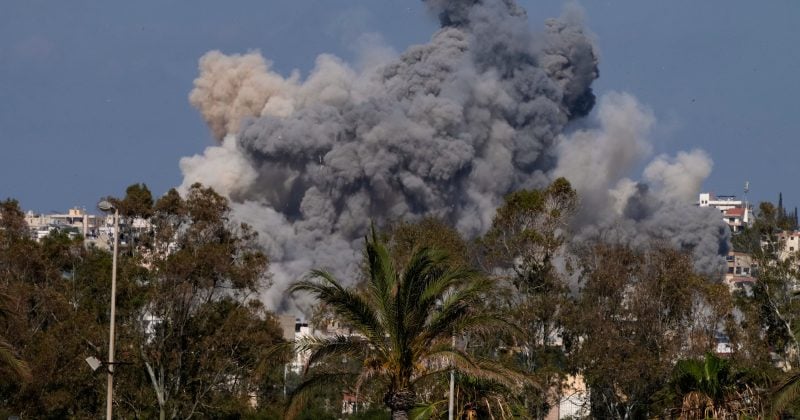
Kuwait’s military confirmed it intercepted a series of missile and drone attacks, with explosions heard across the country attributed to its air defense systems doing exactly what they were designed to do. The Kuwait Army urged citizens to follow safety protocols and steer clear of falling debris.
The interceptions are part of a broader pattern of hostilities linked to the ongoing 2026 Iran conflict, with Iran’s Islamic Revolutionary Guard Corps claiming responsibility for strikes targeting Gulf assets associated with US interests. Bahrain reported air sirens during the same period, suggesting this wasn’t an isolated incident but a coordinated regional escalation.
Bitcoin’s geopolitical stress test
Bitcoin dropped to approximately $99.5K as news of the Kuwait interceptions spread. The dip was short-lived. BTC climbed back above $102K as markets digested the situation and concluded that successful interceptions, while alarming, don’t constitute a full-blown regional war.
The pattern isn’t new. Multiple interceptions of Iranian projectiles have occurred since early 2026, with notable incidents reported in March and June. Each time, crypto markets flinch, dip, and then recover as the immediate threat passes without broader escalation.
A region on edge and markets that feel it
Kuwait’s military has been intercepting Iranian projectiles since at least March, meaning this isn’t a sudden crisis but a slow-burning conflict that markets have been partially pricing in for months. The fact that Bitcoin still sits above $100K despite repeated attacks suggests traders have, to some extent, normalized the threat.
Bahrain’s simultaneous air siren activity suggests Iran is testing defensive capabilities across multiple Gulf states rather than focusing on a single target.
What this means for crypto investors
The drop to $99.5K and recovery above $102K fits a pattern where leveraged positions get liquidated on the way down, creating an overshoot that savvier traders buy into.
The more important question is what happens if an interception fails. Kuwait’s air defenses worked this time. They’ve worked consistently since March. But the gap between “successful interception” and “direct hit on critical infrastructure” is where the real tail risk lives. A failed interception that damages oil facilities or causes casualties among US personnel would likely trigger a far deeper and more sustained crypto selloff than the brief dips we’ve seen so far.
Disclosure: This article was edited by Editorial Team. For more information on how we create and review content, see our Editorial Policy.








 English (US) ·