
 6 months ago
92
6 months ago
92
TLDR:
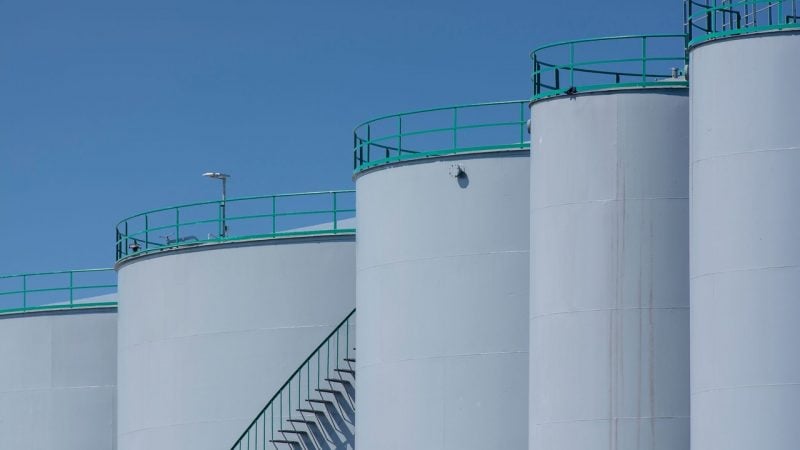
- Kuwait declared force majeure on day 18 as onshore tanks hit full capacity with no export route available.
- Seven insurance letters from London closed the Strait, not Iranian strikes on Kuwait’s oil production facilities.
- JPMorgan warns total Gulf shut-ins could reach nearly 5 million barrels per day if Hormuz stays closed.
- Forced well shut-ins risk 10 to 30 percent permanent recovery loss, turning disruption into long-term supply destruction.
Kuwait oil production has been curtailed after onshore storage tanks reached full capacity. This occurred on day 18 of the Strait of Hormuz closure to commercial shipping.
The Gulf nation was producing 2.8 million barrels per day before February 28. Since that date, no tankers have loaded at Kuwaiti export terminals.
Oil continued flowing from wells into storage with no route to market. Kuwait declared force majeure and began reducing output in response.
Insurance Withdrawal, Not Missiles, Closed the Strait
Analyst Shanaka Anslem Perera raised the root cause of the shutdown in a post on X. He noted that seven letters from London-based insurance companies effectively closed the Strait of Hormuz.
Without shipping insurance, commercial vessels could not legally transit the waterway. Those letters, rather than missiles, triggered Kuwait’s oil production cuts.
JUST IN: Kuwait just cut oil production. Not because Iran bombed a single Kuwaiti oil well. Not because sanctions were imposed. Not because OPEC ordered a reduction.
Because the tanks are full and there is nowhere to put the oil.
Kuwait produced 2.8 million barrels per day… pic.twitter.com/jbjBSUU7wn
— Shanaka Anslem Perera  (@shanaka86) March 7, 2026
Iran fired missiles at military bases and the US embassy in Kuwait. However, zero confirmed strikes landed on any oil production or export facility.
Kuwait’s refineries and export terminals remained physically intact throughout the conflict. The shutdown was driven entirely by the logistics breakdown downstream of the wells.
JPMorgan had estimated Kuwait held an 18-day storage runway following the closure. That estimate proved accurate as tanks reached capacity on schedule.
Iraq had already cut 1.5 million barrels per day the prior week for identical reasons. The same storage arithmetic is now counting down in Saudi Arabia, the UAE, and Qatar.
JPMorgan further warned that continued closure could push total Gulf shut-ins to nearly 5 million barrels per day. That figure represents roughly 5 percent of global oil supply.
The cuts would stem from storage limits, not from any attack on production infrastructure.
Reservoir Damage Could Make Kuwait Oil Production Cuts Partially Permanent
Kuwait oil production shut-ins carry a second concern beyond immediate volume loss. Forced well closures under reservoir pressure can cause lasting formation damage.
Asphaltene precipitation, fines migration, clay swelling, and pressure depletion are the primary risks. These factors can reduce long-term recovery rates by 10 to 30 percent even after wells restart.
The Society of Petroleum Engineers has documented this pattern across decades of forced shut-ins. During the 1991 Gulf War, some Kuwaiti fields lost 15 to 25 percent of long-term recovery capacity.
Mitigation options exist, including chemical inhibitors and controlled shut-in procedures. However, these measures require planning time that an insurance-driven closure did not provide.
Kuwait had roughly 18 days of warning before the storage crisis peaked. Whether that window was sufficient to protect thousands of producing wells remains an open question.
Post-restart treatments may limit damage if applied promptly. The outcome will determine whether the production cut proves temporary or partially permanent.
Markets are currently pricing a supply disruption. Reservoir physics, however, may be signaling supply destruction.
The gap between those two outcomes could equal 10 to 30 percent of Kuwait’s long-term output. That distinction is the central question the energy market has yet to fully price in.
The post Kuwait Oil Production Cut Begins as Strait of Hormuz Closure Fills Storage Tanks to Capacity appeared first on Blockonomi.






 English (US) ·