
 4 months ago
65
4 months ago
65
- LINK surged 5.24% as ETF inflows, Mastercard integration, and Coinbase data feeds boosted sentiment
- Social engagement around Chainlink spiked, with altcoin sentiment rising sharply across platforms
- On-chain metrics like Active Addresses and Open Interest are falling, suggesting hype may be outpacing usage
The crypto market got a decent lift, with total market cap climbing to around $2.37 trillion, up just over 3%. In that same window, Chainlink started standing out. LINK pushed to $8.97 after a 5.24% jump in 24 hours, and the move didn’t happen in a vacuum.
What really caught attention, though, was the social side. LunarCrush reported around 480 million social engagements over the last year, with positive sentiment around altcoins up 82%. That’s a huge shift in tone, and LINK seems to be right in the center of it.
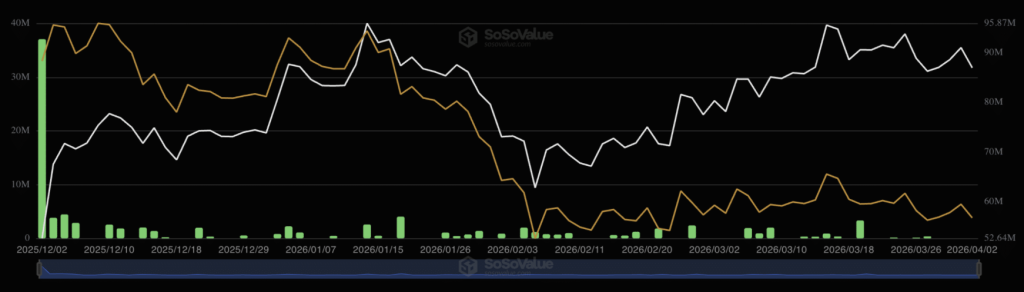
ETF Flows Gave LINK a Strong Narrative Boost
One of the biggest reasons behind the sudden attention is ETF momentum. Grayscale’s first U.S. Chainlink ETF, ticker $GLINK, launched on NYSE Arca and pulled in $41 million on day one. That’s a strong debut by any standard, and it helped push cumulative net flows to $82.79 million by April 4.
Bitwise’s $CLINK also added to the momentum, with cumulative net flow reaching $11.82 million on the same day. So this isn’t just one product getting lucky—there’s real capital coming in, and that tends to pull in even more attention.
Mastercard and Chainlink Are Connecting Two Worlds
The second catalyst is a lot bigger than a headline, honestly. Mastercard picked Chainlink to help connect its 3.5 billion cards to on-chain DeFi rails. That means users can move from traditional payments into crypto assets through Swapper Finance, using Uniswap under the hood.
It’s one of those moves that sounds technical, but the meaning is simple: Chainlink is being used as infrastructure, not just a token. And when a company like Mastercard starts plugging into your rails, people notice… fast.
Coinbase Adds More Fuel With On-Chain Market Data
Then there’s Coinbase. The exchange is now pushing trading data—order books and perpetuals data—directly on-chain using Chainlink. That’s a pretty big signal because it expands Chainlink’s role beyond oracles and into market infrastructure.
So in one cycle, LINK is getting ETF access from Wall Street, consumer access through Mastercard, and exchange-grade data from Coinbase. It’s a lot at once, and that’s exactly why social engagement is exploding.
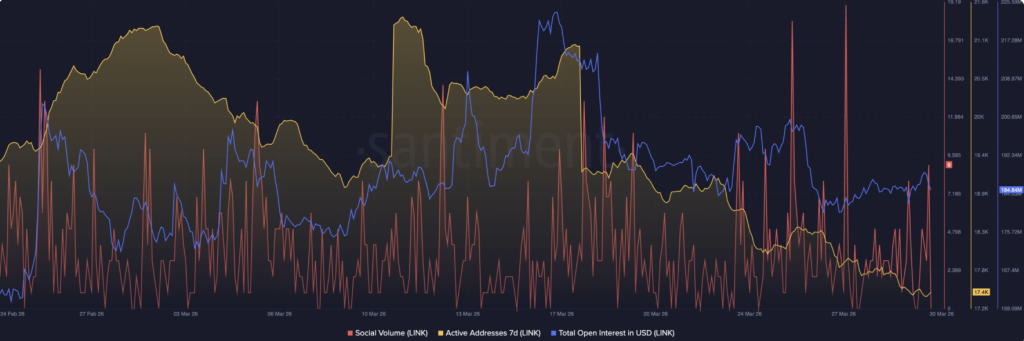
The Catch: On-Chain Activity Is Actually Slowing
But here’s where things get a little messy. While the headlines are bullish, on-chain data is flashing caution. Santiment’s metrics show a drop in both Active Addresses and Open Interest, which usually points to weaker participation and less conviction in the short term.
That’s the contradiction right now. Hype is rising, but usage and positioning are softening. It doesn’t mean the move is fake, just that it might be running ahead of itself.
Big Inflows Add More Uncertainty to the Setup
To make things even more confusing, LINK also saw its biggest inflow of the year, with roughly 14.9 million tokens moved between wallets. Moves like that can mean accumulation… or preparation to sell. It depends on where those tokens go next.
So yes, Chainlink is clearly having a moment. The story is strong, the partnerships are real, and the ETF flows are meaningful. But if on-chain activity doesn’t catch up soon, this rally could lose steam just as quickly as it started.
Disclaimer: BlockNews provides independent reporting on crypto, blockchain, and digital finance. All content is for informational purposes only and does not constitute financial advice. Readers should do their own research before making investment decisions. Some articles may use AI tools to assist in drafting, but every piece is reviewed and edited by our editorial team of experienced crypto writers and analysts before publication.







 English (US) ·