
 2 months ago
60
2 months ago
60
- Mastercard is enabling 24/7 settlement using regulated stablecoins including USDC, PYUSD, USDG, USDP, RLUSD, and SoFiUSD.
- The payments giant is bringing always-on stablecoin settlement to Solana, integrating blockchain into one of the world’s largest payment networks.
- Reports suggest Mastercard, Visa, Stripe, and potentially Coinbase are exploring a new stablecoin platform.
For years, crypto advocates argued that blockchain technology would eventually transform global payments. Critics often responded by pointing out that the companies actually running the payment system seemed perfectly happy with the status quo.
That argument is becoming much harder to make.
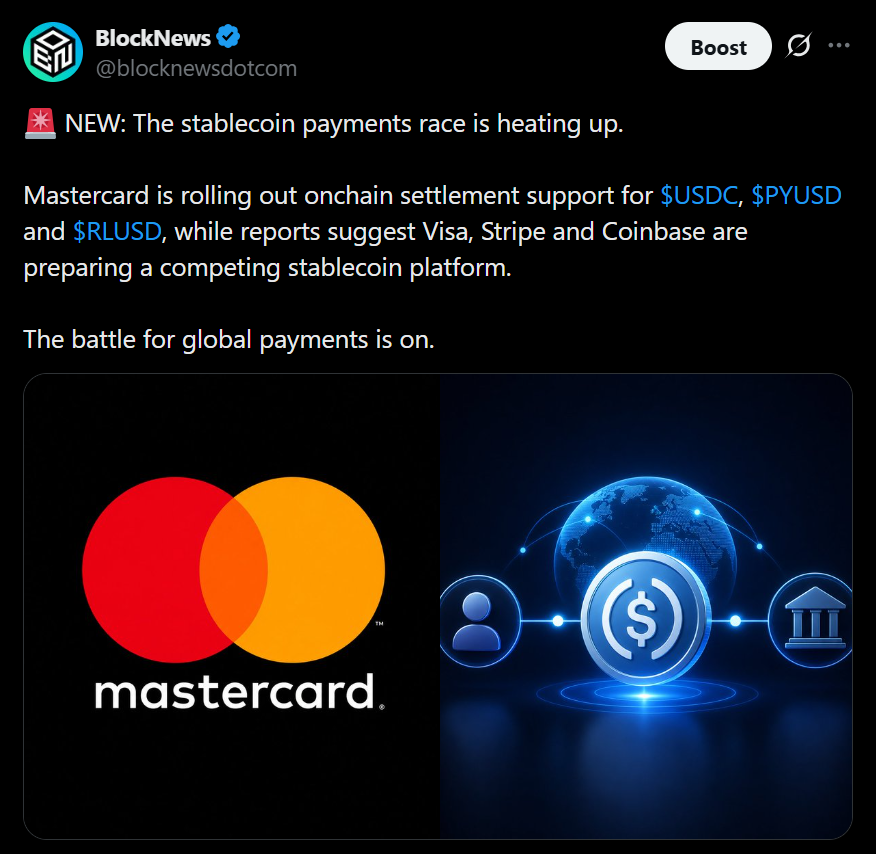
Mastercard has announced a major expansion of its stablecoin strategy, enabling participating institutions to settle transactions around the clock using regulated digital dollars. The move eliminates the need to wait for banking hours, weekends, or holidays, bringing payments closer to the always-on model that crypto has promoted since the beginning.
In simple terms, money may finally be starting to move at internet speed.
Mastercard Is Building For A 24/7 Financial World
Traditional financial infrastructure was designed for a different era. Payments often move through multiple intermediaries, settlement can take days, and weekends still create delays in many parts of the system.
Stablecoins offer a different approach.
By enabling settlement with assets such as USDC, PYUSD, USDG, USDP, RLUSD, and SoFiUSD, Mastercard is allowing participating institutions to move value continuously rather than waiting for banks to reopen. The change reflects a growing recognition that global commerce increasingly operates around the clock.
Consumers may never notice the infrastructure operating behind the scenes, but financial institutions certainly will.
Solana Scores A Major Institutional Win
One of the most notable aspects of the announcement is Mastercard’s decision to support always-on stablecoin settlement through Solana.
For years, Solana has battled criticism that it was too heavily associated with speculative trading and memecoin activity. Being selected as part of the infrastructure supporting a global payments giant represents a significant shift in how the network is being viewed.
Mastercard‘s reach is enormous. The company supports approximately 3.7 billion cards across more than 210 countries and territories. While blockchain remains invisible to most end users, the technology is increasingly finding its way into the financial plumbing that powers everyday transactions.
For Solana, this is the type of adoption that extends far beyond crypto-native audiences.
Stablecoins Continue Winning The Payments Race
The broader trend is difficult to ignore.
Stablecoins have evolved from a niche crypto tool into one of the industry’s most successful products. Over the past year, they have processed trillions of dollars in transaction volume while becoming increasingly important for payments, settlements, remittances, and treasury operations.

Unlike many blockchain use cases that remain largely speculative, stablecoins solve a practical problem. They allow value to move quickly, globally, and digitally while maintaining price stability.
That combination has attracted growing interest from both traditional finance and fintech companies.
Visa, Stripe, And Coinbase Could Be Joining The Push
Mastercard’s announcement may only be part of a much larger story.
Reports indicate that Mastercard, Visa, and Stripe are working on a new stablecoin platform, with Coinbase also reportedly exploring involvement. While details remain limited, the potential collaboration highlights how seriously major financial players are taking digital dollar infrastructure.
Competition among payment companies is increasingly shifting toward blockchain-based settlement systems. Rather than debating whether stablecoins matter, many firms now appear focused on ensuring they are not left behind.
The race is no longer about experimentation. It is about ownership of future payment rails.
The Bridge Between Crypto And Traditional Finance
For years, stablecoin supporters argued that digital dollars would become the link connecting traditional finance with blockchain networks. What once sounded like a long-term vision is starting to resemble a real business strategy.
When companies like Mastercard, Visa, and Stripe begin investing heavily in stablecoin infrastructure, it signals a major shift in perception. Blockchain technology is no longer being viewed solely as a competitor to traditional finance. Increasingly, it is becoming part of the system itself.
The biggest winners may ultimately be users who gain access to faster, cheaper, and more efficient financial services without even realizing blockchain is powering them.
The Stablecoin Battle Is Just Beginning
Mastercard’s latest move demonstrates how quickly stablecoins are becoming integrated into mainstream financial infrastructure. The company is not experimenting on the edges of crypto. It is embedding blockchain-based settlement into one of the world’s largest payment networks.
As more institutions adopt digital dollars and more payment providers compete to build the underlying rails, the conversation is changing. The question is no longer whether stablecoins will play a role in the future of payments.
The real question is which companies will control the infrastructure that powers it.
Disclaimer: BlockNews provides independent reporting on crypto, blockchain, and digital finance. All content is for informational purposes only and does not constitute financial advice. Readers should do their own research before making investment decisions. Some articles may use AI tools to assist in drafting, but every piece is reviewed and edited by our editorial team of experienced crypto writers and analysts before publication.








 English (US) ·