
 2 months ago
59
2 months ago
59
- Class action alleges misleading promotion of MOTHER token utility and integrations
- Token reportedly fell over 99% after peaking near $200M market cap
- Lawsuit focuses on consumer protection, not securities law
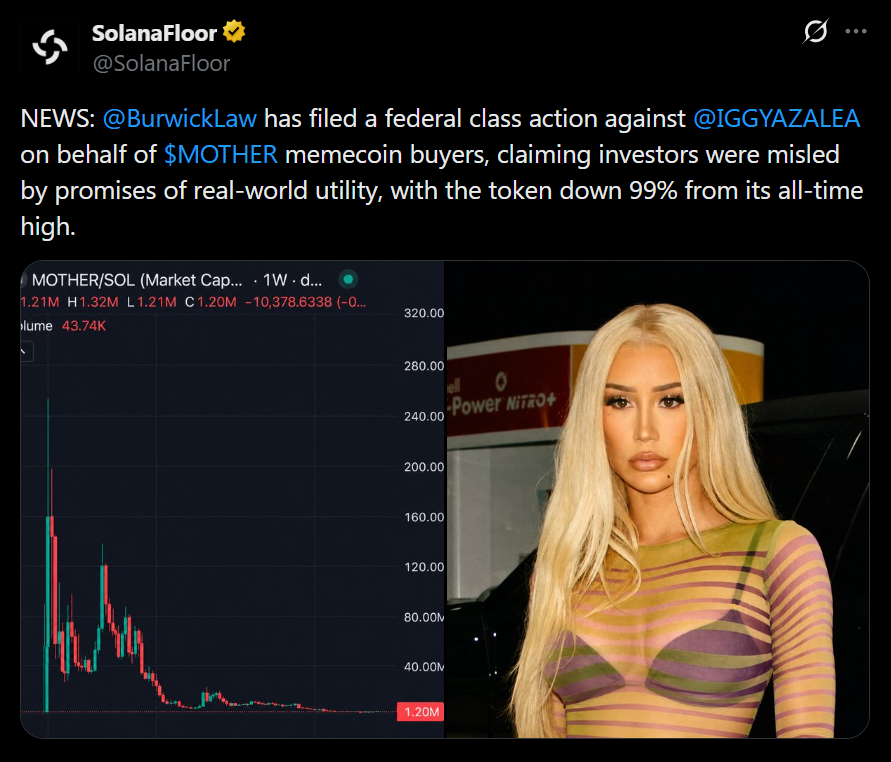
Iggy Azalea is now facing a class action lawsuit over her MOTHER memecoin, and the case is taking a slightly different angle than most crypto legal battles. Instead of arguing the token is a security, the lawsuit focuses on whether buyers were misled about what the token would actually do, which, depending on how this plays out, could have broader implications.
It’s less about classification, more about expectations versus reality.
Promises of Utility Under Scrutiny
According to the complaint, MOTHER wasn’t marketed as just another speculative token. It was presented as part of a broader ecosystem, tied to things like mobile services, an online casino, and other commercial integrations that would supposedly give the token ongoing utility.
That narrative likely played a big role in attracting buyers, especially during the early stages when the project gained momentum quickly.
The MOTHERLAND Issue
A major focus of the lawsuit is the MOTHERLAND casino, which was promoted as a key use case for the token. Buyers were led to believe that MOTHER would be required for access and transactions within the platform.
However, when the casino eventually launched, activity was reportedly conducted in USDT instead, leaving MOTHER without the expected transactional role, which is where the core dispute starts to take shape.
Questions Around Real-World Integrations
The complaint also challenges claims related to Unreal Mobile, where users were allegedly told they could purchase services using MOTHER or SOL. As of the filing, the lawsuit argues that no clear or lasting integration exists, raising questions about how much of the promised functionality was ever actually implemented.

That gap between promotion and execution is central to the case.
Market Makers and Transparency Concerns
Another layer involves the involvement of market makers like Wintermute and DWF Labs. The lawsuit claims these partnerships were promoted as signals of legitimacy, but without disclosing the terms of those arrangements, including whether those firms could trade against retail participants.
If proven, that lack of transparency could become a key issue in how the project is evaluated legally.
A Collapse That Amplifies the Claims
MOTHER reportedly reached a $200 million market cap shortly after launch, only to fall by roughly 99.5% over time. That kind of decline doesn’t automatically imply wrongdoing, but when paired with allegations of misleading claims, it strengthens the argument that buyers may have relied on expectations that weren’t met.
A Case That Could Go Beyond One Token
What makes this lawsuit particularly interesting is its legal framing. By focusing on consumer protection laws rather than securities classification, it opens the door for similar cases against other projects that promote utility but fail to deliver it.
If the court sides with that argument, it could shift how memecoins and utility tokens are marketed going forward, not just for celebrities, but for the entire space.
Disclaimer: BlockNews provides independent reporting on crypto, blockchain, and digital finance. All content is for informational purposes only and does not constitute financial advice. Readers should do their own research before making investment decisions. Some articles may use AI tools to assist in drafting, but every piece is reviewed and edited by our editorial team of experienced crypto writers and analysts before publication.







 English (US) ·