
 4 months ago
73
4 months ago
73
The crypto market in 2026 is less about speculation and more about which networks are actually being used. Chains with real activity, consistent volume, and clear utility are drawing the most attention from both retail and institutional sides.
When people search for the next big cryptos, projects like BlockDAG, Ethereum, Polygon, and Tron keep coming up because each one represents a different approach to solving real problems. Some have years of track record behind them.
Others are building fresh infrastructure with demand already forming. What matters now is less about price action alone and more about what a network actually does day to day. The rest of this article breaks down where each of these four projects stands right now.
1. BlockDAG: Casino Launches on May 7, $0.000000976 Ending Soon
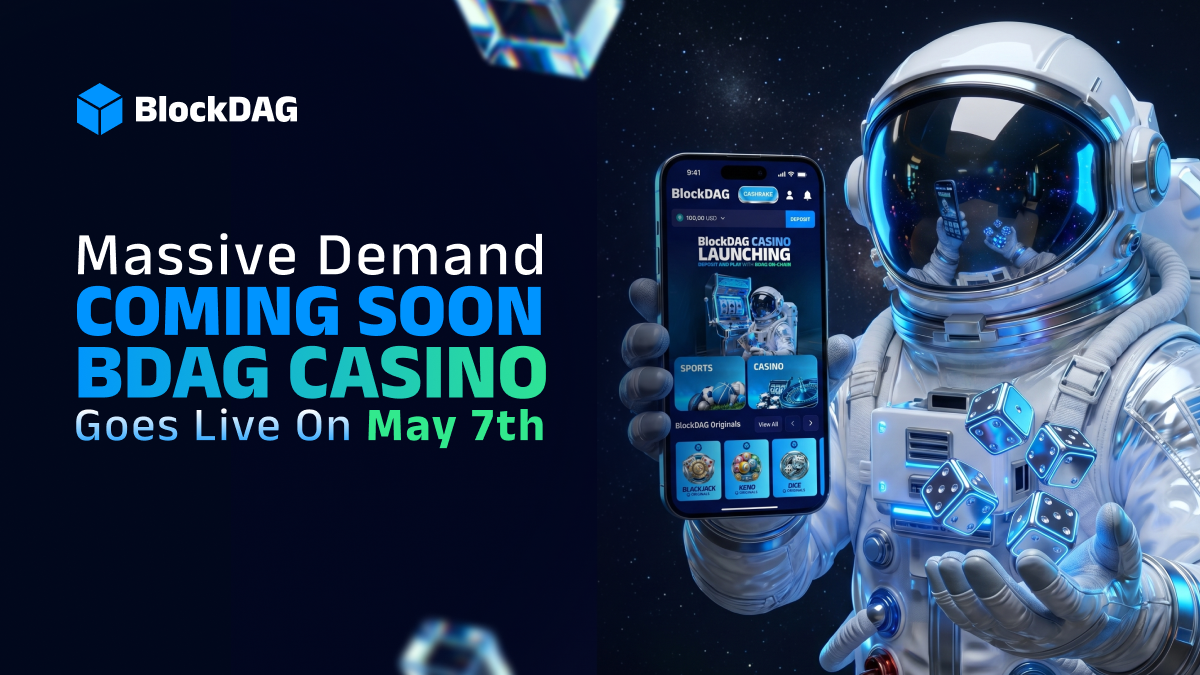
The next big crypto does not announce itself quietly, and BlockDAG is not being quiet. With three days left before the Aftersale closes permanently, the project is bringing its most powerful catalyst yet: the BlockDAG Casino, going live May 7.
The casino is the utility event that changes how the market thinks about BDAG. Once it launches, BDAG stops being a presale token and becomes the currency of a live, active gaming ecosystem. Every transaction on the platform, every reward distributed, every wager settled flows through BDAG.

That creates the kind of constant, self-renewing demand that no listing event or partnership can replicate. Gaming platforms drive some of the most relentless token usage in crypto, and BlockDAG is building that engine directly into its own chain.
The foundation underneath is already rock solid. Millions of blocks produced, over $1 billion in on-chain value settled, 3.3 billion BlockDAG (BDAG) staked, 13 exchanges live with more Tier-1 integrations confirmed, and a second-place ranking on CoinMarketCap by views. This is not a project building toward credibility; it already has it.
BDAG is priced at $0.000000976 in Batch 5, carrying a 246X ROI for current buyers. The Aftersale closes May 7, the same moment the casino switches on. Batch 4 claims are active, and Batch 5 is in its final phase.
Once the casino is live and presale access is gone, the only direction left for BDAG is the open market, and the demand engine will already be running.
2. Ethereum: Leading Institutional Smart Contract Settlement Layer
Ethereum remains a foundational asset in the crypto market, supporting decentralized finance, NFTs, and smart contracts across a wide ecosystem. Its continuous upgrades have improved scalability, reduced fees, and enhanced network efficiency, strengthening its position as a settlement layer for decentralized applications. Institutional interest and developer activity remain strong, helping Ethereum retain long-term relevance despite competition from newer blockchains.
Many analysts still view it as a core holding when evaluating the next big crypto opportunities in evolving markets. The network’s security, liquidity, and adoption give it resilience across market cycles, reinforcing confidence among builders and investors who prioritize utility-driven assets over speculative tokens in the broader crypto landscape.

3. Polygon: Core Ethereum Scaling and Web3 Infrastructure Network
Polygon provides scaling solutions for Ethereum-based applications, reducing transaction costs and improving network efficiency across decentralized ecosystems. Its role as a leading Layer-2 solution keeps it relevant in discussions around scalable blockchain infrastructure and mass adoption.
Enterprise partnerships continue to expand their ecosystem, strengthening long-term use cases in Web3 development. This growing integration across industries supports its position as a reliable scaling platform. Developer activity and tooling continue to improve, reinforcing its importance in Layer-2 innovation. Many analysts include Polygon when identifying the next big crypto trends driven by scalability and real-world adoption. Its consistent growth and technical utility make it a key player in Ethereum’s extended ecosystem and broader blockchain evolution.
4. Tron: High Throughput Blockchain for Global Stablecoin Transfers
Tron focuses on high-throughput transactions and stablecoin transfers, making it one of the most active blockchain networks by daily usage. Its low transaction fees and fast confirmation times support consistent activity across decentralized applications and payments. This efficiency-driven model has helped Tron maintain strong adoption in regions where cost-effective transfers are essential.
The ecosystem continues to expand with decentralized finance and content distribution use cases. Despite ongoing debates about centralization, its transaction volume remains high and stable. Analysts often reference Tron when discussing the next big crypto candidates driven by utility and network usage.
Continued stablecoin dominance and user activity reinforce its relevance in the broader blockchain landscape and digital payments sector, supporting scalable payments and global adoption growth.
Conclusion
The digital asset landscape is currently undergoing a structural metamorphosis where the move fast and break things era is being replaced by build deep and scale high architectures. While Ethereum, Polygon, and Tron maintain critical infrastructure for global settlements and low-cost transfers, the focus is shifting toward integrated ecosystems.

BlockDAG distinguishes itself by moving beyond theoretical utility; its upcoming casino launch transforms the token into an active engine for wagering and rewards. With $1 billion already settled on-chain and the Aftersale ending May 7, BlockDAG is establishing itself as a top-tier next big crypto contender. This transition from Batch 5 into the open market marks a pivotal shift for the project’s liquidity.
The post Next Big Crypto: BlockDAG, Ethereum, Polygon, & Tron Powering the Next Bull Run appeared first on Blockonomi.




 English (US) ·