
 1 hour ago
23
1 hour ago
23
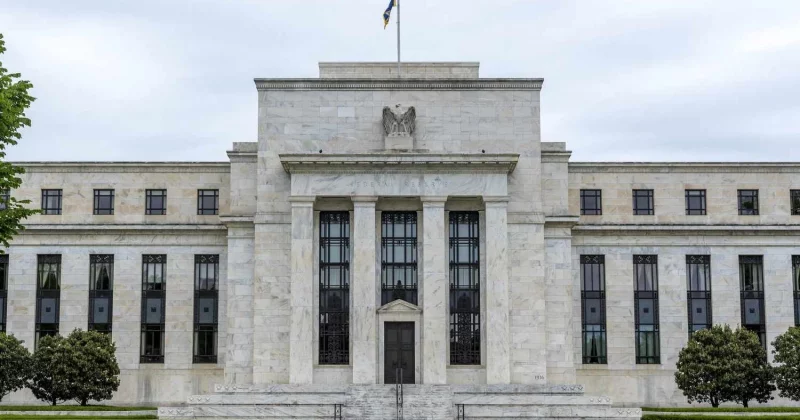
The National Transportation Safety Board pulled the plug on its entire public docket system on May 21 after discovering that people on the internet had used AI to reconstruct cockpit voice recorder audio from a fatal cargo plane crash. Federal law explicitly prohibits the public release of that audio, but the agency had inadvertently given the internet exactly what it needed to recreate it anyway.
The recordings in question come from UPS Flight 2976, a Boeing MD-11F that crashed shortly after departing Louisville Muhammad Ali International Airport on November 4, 2025. Three crew members and twelve people on the ground were killed. Twenty-three others were injured.
How spectrograms became a backdoor to forbidden audio
Here’s how this happened. The NTSB held a public hearing on May 19-20, 2026, as part of its investigation into the crash. During that hearing, the agency released transcripts and a spectrogram image, a visual representation of audio frequencies over time, essentially a picture of sound.
Internet users fed the spectrogram PDF into AI-powered image recognition and audio synthesis tools, producing approximations of the cockpit voice recorder audio. The reconstructed recordings then spread online.
Why the NTSB treats cockpit audio as sacred
Cockpit voice recorder protections exist for a specific reason. Pilots speak candidly in the cockpit because they know those recordings are shielded from public consumption. The protection encourages honest communication during emergencies, the kind of communication that helps investigators figure out what went wrong and prevent future crashes.
The NTSB has reaffirmed its commitment to not releasing actual CVR audio recordings. But the agency is now grappling with a problem it likely never anticipated: the raw data it releases as part of its transparency mandate can be reverse-engineered into the very thing it’s legally obligated to protect.
The crash itself was attributed to an engine separation caused by a known bearing issue. The post-hearing AI reconstruction has temporarily overshadowed the investigation’s technical findings.
The broader implications of AI-powered data reconstruction
The NTSB’s docket system is a critical resource for aviation safety researchers, journalists, legal professionals, and the families of crash victims. Keeping it offline, even temporarily, has real costs to public accountability.
The NTSB is now evaluating what materials it can safely publish without enabling future reconstructions.
Disclosure: This article was edited by Editorial Team. For more information on how we create and review content, see our Editorial Policy.




 English (US) ·