
 3 months ago
96
3 months ago
96
Nvidia and TSMC are deepening their partnership in a way that goes well beyond the usual “we’re working together” press release. Announced at GTC Taipei on May 31, the expanded collaboration puts Nvidia’s AI and accelerated computing tools directly into TSMC’s fabrication processes, targeting everything from lithography to defect inspection.
What the partnership actually involves
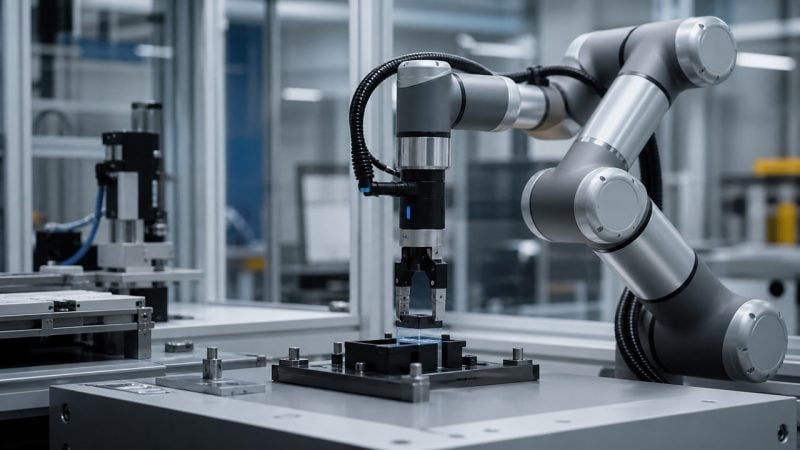
The collaboration spans multiple stages of semiconductor design and manufacturing. Fab operations optimization, lithography improvement, process control, and automated defect inspection are all on the table.
On the tools side, Nvidia is bringing its Metropolis platform and TAO Toolkit into TSMC’s workflows. Metropolis is Nvidia’s vision AI framework, originally built for things like smart cities and industrial inspection. TAO is a toolkit that lets companies fine-tune AI models without needing a PhD-sized team of data scientists. In English: TSMC gets off-the-shelf AI systems it can customize for spotting microscopic flaws on silicon wafers.
TSMC’s Chairman C.C. Wei framed the integration as a way to strengthen “technology leadership and manufacturing excellence.” Nvidia CEO Jensen Huang was a bit more pointed, saying the partnership helps TSMC address “some of the world’s most complex design and manufacturing challenges.”
This isn’t a cold start, either. The two companies have been working together for nearly three decades, with TSMC serving as the primary foundry for Nvidia’s AI GPUs. That includes the recent Blackwell architecture chips, which are produced at TSMC facilities in both Taiwan and Arizona.
CuLitho paved the way
Nvidia’s cuLitho computational lithography platform began production at TSMC back in October 2024, and that rollout served as a proof of concept for embedding AI deeper into chip fabrication.
Lithography is the process of etching circuit patterns onto silicon wafers. It’s arguably the most technically demanding step in chipmaking, requiring extreme precision at nanometer scales. Traditional computational lithography is extraordinarily time-consuming. CuLitho uses GPU-accelerated computing to speed up those calculations dramatically.
The successful deployment of cuLitho essentially proved that Nvidia’s AI tools could handle the rigor of TSMC’s manufacturing environment. The new partnership extends that logic across the entire fab operation, not just one step in the process.
Disclosure: This article was edited by Editorial Team. For more information on how we create and review content, see our Editorial Policy.




 English (US) ·