
 3 months ago
56
3 months ago
56
- Oil surge to $126 drives inflation higher, delaying rate cuts
- Higher rates continue to pressure Bitcoin and risk assets
- Bitcoin still outperforming traditional safe havens during crisis
Bitcoin doesn’t trade in a vacuum, even if it sometimes feels like it does. Right now, one of the biggest forces shaping its path isn’t coming from crypto at all, it’s coming from oil.
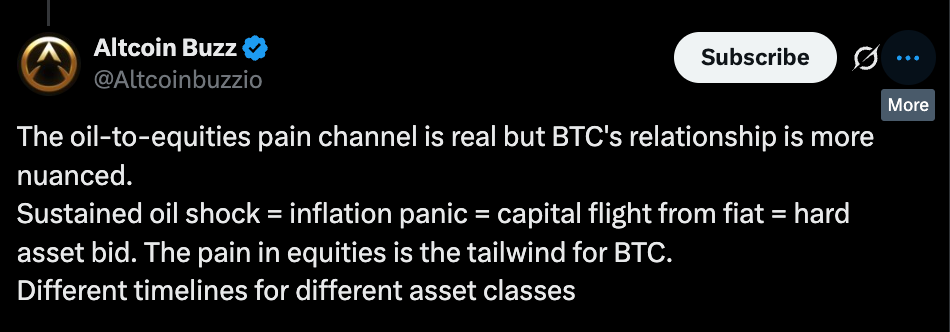
With crude pushing up to $126 a barrel after a major supply disruption, the ripple effects are moving straight through global markets, and eventually landing right on Bitcoin.
Inflation Starts With Energy
When oil spikes, inflation usually follows. Energy costs feed into everything, transport, production, even basic goods, and that pushes broader prices higher over time.
For markets, that matters because it directly impacts how central banks respond, especially the Federal Reserve.
The Fed Becomes the Real Gatekeeper
Higher inflation makes it harder for the Fed to cut interest rates. And when rates stay elevated, risk assets, including Bitcoin, tend to face more resistance.
It’s not a direct relationship, but it’s a strong one. Expensive oil leads to stubborn inflation, which leads to tighter monetary policy, which then weighs on assets like crypto.
This Shock Isn’t Small
What makes this situation different is the scale. The disruption in oil supply isn’t just another short-term event, it’s one of the largest seen in modern markets, removing a significant portion of global output.
That kind of shock doesn’t fade quickly. It tends to linger, keeping pressure on inflation data for months, sometimes longer.
Bitcoin Is Doing Something Unexpected
Here’s where things get a bit more complicated. Despite the macro pressure, Bitcoin has actually been outperforming traditional safe-haven assets during this period.

That’s not what most people would expect in a risk-off environment, and it suggests Bitcoin’s role might be evolving, even if the market hasn’t fully agreed on what that role is yet.
More Than Just a Risk Asset?
For years, Bitcoin has been treated like a high-risk tech asset, rising when liquidity is loose and falling when conditions tighten. But moments like this challenge that narrative.
A fixed-supply asset, trading globally and continuously, starts to look different when traditional systems are under stress. Not necessarily safer, but… alternative.
A Market Still Figuring It Out
Oil is clearly a headwind for Bitcoin in the short term, mainly through inflation and interest rates. That part is straightforward.
What’s less clear is how Bitcoin fits into the bigger picture if these macro shifts continue.
For now, it sits in an awkward position, pressured by policy on one side, but quietly attracting attention on the other. And until the market decides what Bitcoin really is in this kind of environment, expect that tension to stick around.
Disclaimer: BlockNews provides independent reporting on crypto, blockchain, and digital finance. All content is for informational purposes only and does not constitute financial advice. Readers should do their own research before making investment decisions. Some articles may use AI tools to assist in drafting, but every piece is reviewed and edited by our editorial team of experienced crypto writers and analysts before publication.









 English (US) ·