
 3 weeks ago
26
3 weeks ago
26
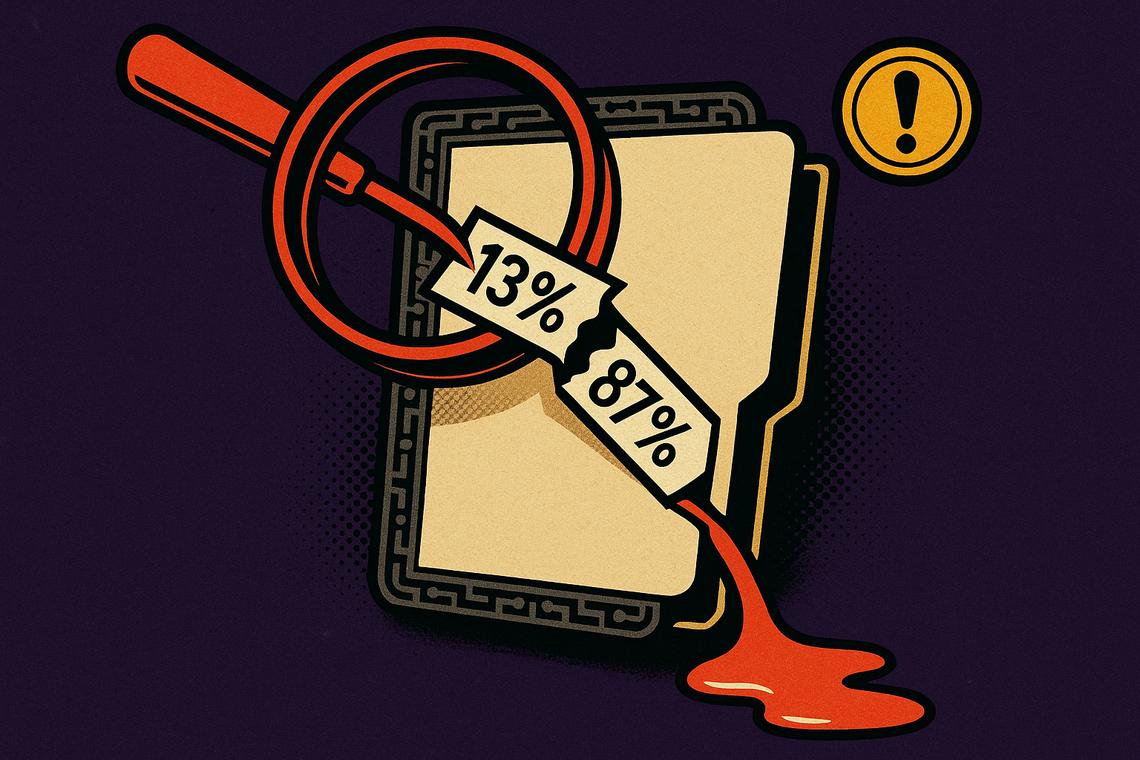
A Florida man and his company have been hit with federal charges over a crypto mining fraud that allegedly stripped more than 380 investors of tens of millions of dollars — and the numbers buried in the SEC’s complaint tell a damning story. The Securities and Exchange Commission filed partially settled charges against Zan Shaikh and his company Mining Automatic, alleging the pair raised roughly $22 million while funneling almost none of it into the mining operation they promised investors.
Key takeaways
- The SEC charged Zan Shaikh and Mining Automatic with a $22 million crypto mining fraud affecting more than 380 investors between June 2023 and May 2025.
- Only about 13% of investor funds were used for actual crypto mining expenses, according to the SEC complaint.
- At least $20 million more was taken from investors than was ever repaid to them.
- Funds were primarily used for marketing to recruit new investors and for Shaikh’s personal and unrelated business expenses.
- Both defendants consented to permanent injunctions barring future securities-law violations; financial penalties will be determined later by the court.
SEC Charges Over $22 Million Crypto Mining Fraud
The SEC’s complaint, filed in the U.S. District Court for the District of Massachusetts, covers conduct spanning nearly two years — from June 2023 to May 2025. During that window, Shaikh and Mining Automatic pitched investors on a simple premise: hand over capital, and a professional crypto asset mining operation would generate reliable monthly income in return.
It was a compelling pitch. Crypto mining — the process of using computing power to validate blockchain transactions and earn digital asset rewards — carries an air of technical legitimacy. Shaikh reportedly leaned into that, presenting Mining Automatic as an experienced, capable operation with a track record in the space. Investors were told their money would fund the computing infrastructure needed to participate in those networks.
What they weren’t told, according to regulators, was that the operation could not actually produce the returns it promised. When payments fell behind, Shaikh and Mining Automatic allegedly gave investors misleading explanations rather than honest answers about the state of the business.
Misuse of Investor Funds and Misrepresentations
The most striking figure in the SEC’s case is a single percentage: only about 13% of the money raised from investors was spent on anything related to crypto mining. That means roughly 87 cents of every dollar collected went somewhere else entirely.
Where did it go? According to the complaint, a significant portion funded marketing campaigns — essentially, efforts to bring in more investors. The rest, the SEC alleges, covered Shaikh’s personal expenses and costs tied to unrelated businesses. It is a pattern regulators often describe in Ponzi-adjacent schemes: new investor money used to sustain the illusion of a functioning operation while the actual business remains largely dormant.
The SEC also details a layered set of misrepresentations. Shaikh and Mining Automatic allegedly made false or misleading statements about their experience and expertise in crypto asset mining, how investor funds would actually be deployed, and whether the mining infrastructure was running as described. When payments came due and couldn’t be made, explanations given to investors were, according to the complaint, equally misleading.
The financial toll is stark. Based on the SEC’s calculations, Mining Automatic took in at least $20 million more than it ever returned to investors. Against the $22 million total raised, that gap leaves the vast majority of investor funds unaccounted for through repayments.
Regulatory Violations and Legal Consequences
The SEC charged both defendants with violating the registration and antifraud provisions of the Securities Act of 1933, as well as the Securities Exchange Act of 1934 and Rule 10b-5 — the foundational rule prohibiting fraud in connection with securities transactions. The inclusion of both statutes signals the breadth of the alleged misconduct, touching both how the investments were offered and how the scheme was operated.
Mining Automatic is legally registered as Bright Vision Distribution LLC, according to crypto.news, which also reported that the SEC’s Cyber and Emerging Technologies Unit investigated the case alongside staff from the Boston Regional Office. SEC officials Joy Guo, Sejal Bhakta, Amy Gwiazda, Mark Albers and Kathleen Shields led the investigation under the supervision of Laura D’Allaird.
Consent Judgments and Permanent Injunctions
Shaikh and Mining Automatic consented to the entry of court judgments without admitting or denying the SEC’s allegations — a common structure in civil enforcement settlements. Subject to judicial approval, those orders would permanently bar both defendants from committing the cited violations again.
Under the proposed settlement terms, Shaikh would also face an officer-and-director ban, preventing him from leading public companies, along with a conduct-based injunction. Disgorgement of ill-gotten gains, prejudgment interest and civil penalties have not yet been fixed; the court will decide those figures following a motion from the SEC. Whether any recovered funds will ultimately reach investors remains an open question pending those proceedings.
The case fits into a pattern of accelerating U.S. enforcement against crypto investment schemes. Earlier in July, the Commodity Futures Trading Commission filed suit against North Carolina resident Trevor Vernon and Argent Capital Management LLC over an alleged $14 million commodity pool fraud. The parallel actions from two different agencies underscore that federal regulators are applying sustained pressure across multiple fronts of the crypto investment space — and that schemes promising guaranteed returns remain a priority target regardless of which regulatory body holds jurisdiction. For investors, the Mining Automatic case is a pointed reminder that guaranteed return promises in any market, crypto or otherwise, warrant hard scrutiny before a single dollar changes hands.
FAQ
Who are the defendants charged by the SEC in this crypto mining fraud?
The defendants are Zan Shaikh, a Florida resident, and his company Mining Automatic, legally registered as Bright Vision Distribution LLC.
What was promised to investors in the Mining Automatic scheme?
Investors were promised guaranteed monthly returns generated by a purported crypto asset mining operation that would use their funds to power computing infrastructure on blockchain networks.
How much of the investor funds were actually used for crypto mining?
According to the SEC’s complaint, only about 13% of investor funds were used for expenses relating to crypto asset mining. The remainder went primarily toward marketing and Shaikh’s personal and unrelated business expenses.
What legal actions resulted from the SEC charges?
Shaikh and Mining Automatic consented to court judgments that would permanently enjoin them from future securities-law violations. Shaikh also faces an officer-and-director ban and a conduct-based injunction. Disgorgement, prejudgment interest and civil penalties are still to be determined by the court.
Article produced with the assistance of artificial intelligence and reviewed by the editorial team.




 English (US) ·