
 4 months ago
72
4 months ago
72
- OpenAI raises $122B, reaching a record $852B valuation
- Backed by SoftBank, Nvidia, Amazon, and Microsoft
- Massive growth comes with pressure to justify scale and profitability
OpenAI just crossed into territory that barely even existed a few years ago. With a fresh $122 billion funding round, the company now sits at an $852 billion valuation, one of the largest ever for a private tech firm. That number alone tells you how aggressively capital is chasing AI right now.
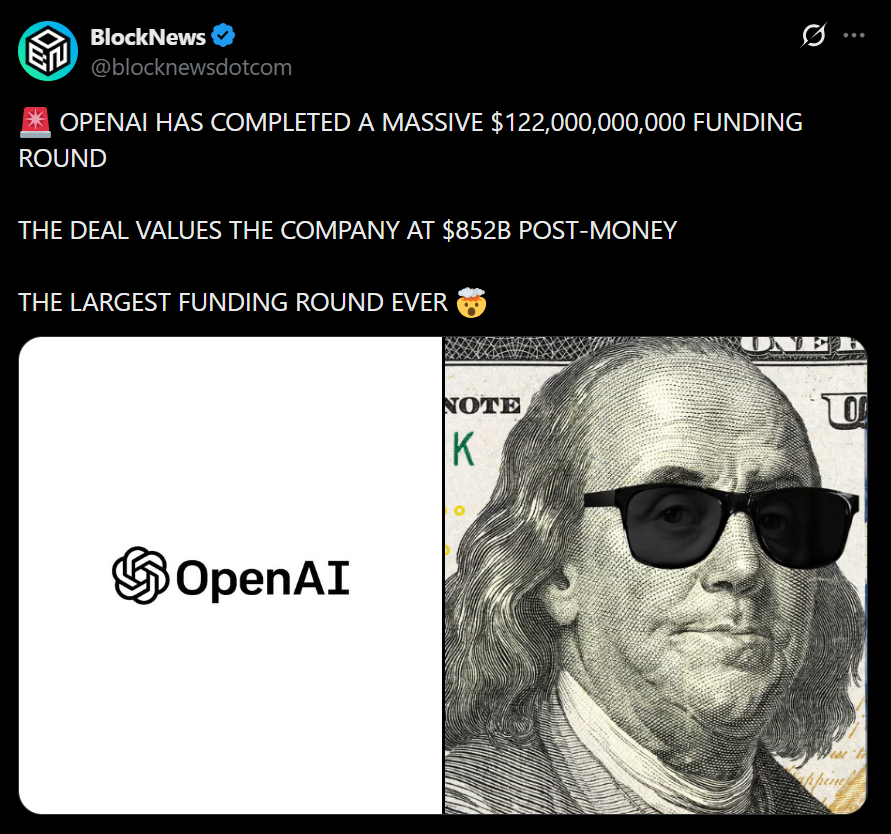
But this isn’t just about hype. It’s about positioning. Investors aren’t funding what OpenAI is today, they’re funding what it might become.
Capital Is Flooding Into AI Infrastructure
The scale of this round is hard to ignore. SoftBank led the raise, with major backing from names like Nvidia, Amazon, Andreessen Horowitz, and D. E. Shaw. Even Microsoft, already deeply tied to OpenAI, added more capital.
This isn’t a typical venture round. It’s more like infrastructure funding. The kind you deploy when you believe a technology is about to reshape entire industries.
And that’s exactly how OpenAI is framing it, not as a product company, but as part of the foundation layer for future intelligence systems.
Growth Is Massive, But So Are Expectations
The numbers behind OpenAI’s growth are just as striking. ChatGPT now serves over 900 million weekly users, with more than 50 million paying subscribers. Revenue has climbed to around $2 billion per month, putting annualized figures well into the tens of billions.
That kind of scale explains the valuation, at least partially. But it also raises the bar. At $852 billion, expectations shift from growth to dominance.
Investors aren’t looking for incremental progress anymore. They’re expecting OpenAI to define the category.
Profitability Still Isn’t There
Despite the massive revenue, OpenAI is still not profitable. The company continues to burn significant capital, which isn’t surprising given the cost of training models, building infrastructure, and competing at the frontier of AI.
There are also signs of tightening. Some products and initiatives have been scaled back as the company looks to control spending. That suggests a transition phase, from rapid expansion toward more disciplined growth.
Still, the underlying bet remains the same. Spend now, capture the market later.
The IPO Pressure Is Building
With this kind of valuation, an IPO starts to feel less like a possibility and more like an expectation. And when that happens, scrutiny increases.
Public markets don’t just reward growth, they demand clarity. Margins, sustainability, competitive positioning, all of it becomes more visible.
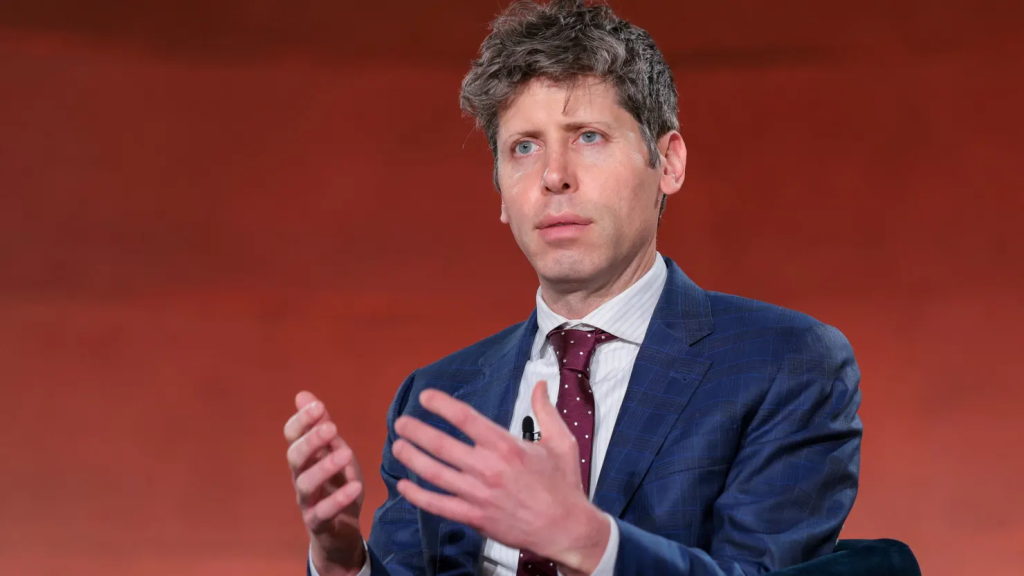
Sam Altman is now in a position where execution matters as much as vision. The story has already been sold. Now it needs to be delivered.
AI as the New Economic Layer
What stands out most is how OpenAI is being positioned by its investors. Not just as a company, but as a core layer of future economic activity.
The idea is that AI will drive productivity, reshape industries, and create entirely new categories of value. If that plays out, companies like OpenAI don’t just participate in the economy, they help define it.
That’s the real reason capital is flowing at this scale.
A Bet That Still Needs to Play Out
For now, the narrative is strong. Massive adoption, rapid revenue growth, and deep institutional backing all support the story.
But at $852 billion, the margin for error shrinks. The next phase won’t be about proving AI matters. That’s already been accepted.
It’ll be about proving that this level of value can actually be sustained, and eventually, justified.
Disclaimer: BlockNews provides independent reporting on crypto, blockchain, and digital finance. All content is for informational purposes only and does not constitute financial advice. Readers should do their own research before making investment decisions. Some articles may use AI tools to assist in drafting, but every piece is reviewed and edited by our editorial team of experienced crypto writers and analysts before publication.





 English (US) ·