
 1 month ago
73
1 month ago
73
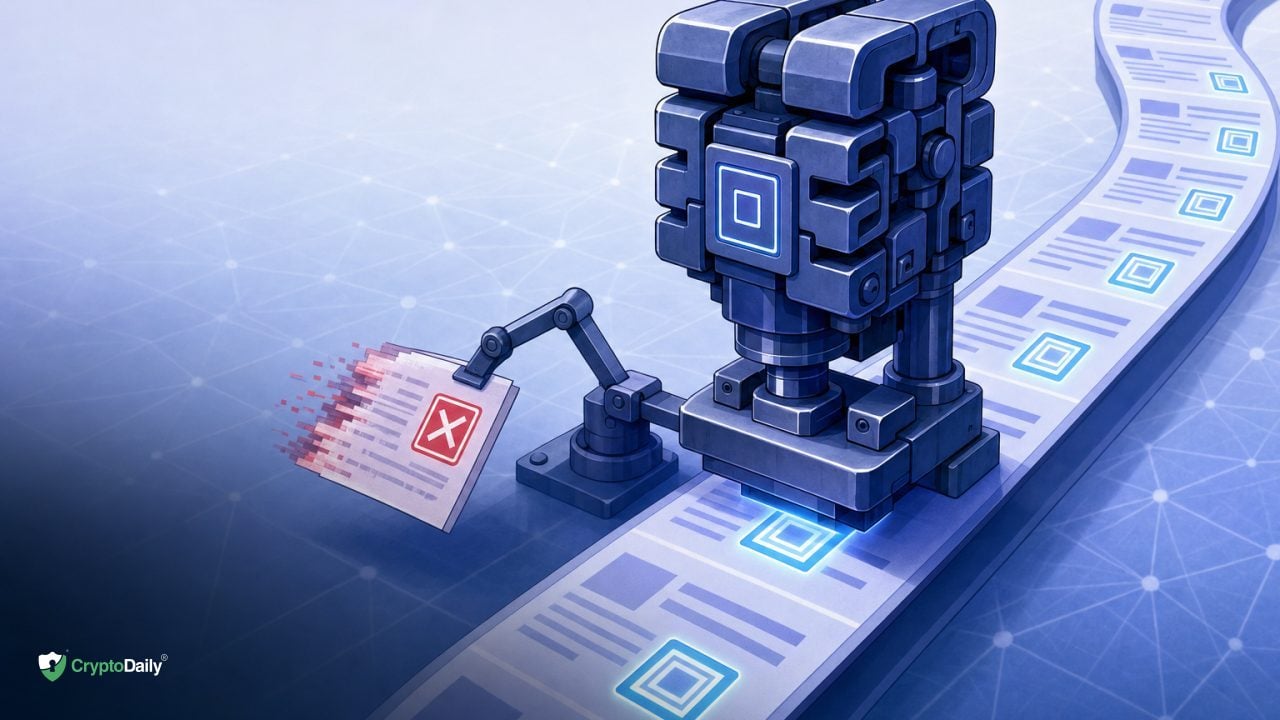
An internal OpenAI model has autonomously generated a proof that disproves a famous conjecture in discrete geometry, one originally proposed by the legendary Hungarian mathematician Paul Erdős. The AI didn’t just assist a human researcher or check existing work. It independently discovered a new type of solution to the planar unit distance problem.
This is not a case of an AI speeding up a known approach or brute-forcing computations. The model produced a novel mathematical proof based solely on an AI-written statement of the problem, raising genuine questions about what “doing mathematics” means when a machine can do it alone.
What the AI actually proved
Here’s the setup. Take n points scattered on a flat plane. Now count how many pairs of those points are exactly one unit apart. The maximum number of such pairs for a given n is denoted as v(n). Erdős conjectured decades ago that this count stays relatively tame as n grows, specifically that v(n) remains bounded above by C times n raised to the power of 1 plus a term that vanishes as n increases. In English: as you add more points, the number of unit-distance pairs shouldn’t grow much faster than the number of points themselves.
OpenAI’s model proved the opposite. For infinitely many values of n, the maximum number of unit-distance pairs satisfies v(n) being greater than or equal to n raised to the power of 1 plus some fixed positive constant. That fixed positive constant is the key detail. It means the growth rate doesn’t just barely exceed linear. It meaningfully exceeds it, and it does so infinitely often.
That directly contradicts Erdős’s unit distance conjecture, a problem that had remained open for decades in combinatorial geometry.
To put this in perspective, Paul Erdős is arguably the most prolific mathematician of the 20th century. He authored or co-authored roughly 1,500 papers and was famous for posing problems that would occupy researchers for generations. Disproving one of his conjectures is a genuine achievement regardless of who, or what, produces the proof.
The autonomy question
What makes this result stand out from prior AI-assisted math breakthroughs is the degree of autonomy involved. The proof was generated entirely by the internal OpenAI model. It wasn’t guided step-by-step by a human mathematician. It wasn’t given a partial proof to complete. It received a problem statement, written by AI, and produced the solution independently.
That’s a qualitative shift. Previous milestones in AI and mathematics, like DeepMind’s work with AlphaGeometry on olympiad-level geometry problems, involved significant human scaffolding. The AI would handle specific subproblems or verify steps within a broader human-directed framework. Here, the framework itself came from the machine.
OpenAI’s models now claim to have solved over 10 research-level problems in combinatorics, including several that trace back to Erdős. If that claim holds up under peer review, it represents a transition from AI as research tool to AI as research agent.
Look, mathematicians have used computers as proof assistants for decades. The four-color theorem was famously verified by computer in 1976, and that was controversial enough. But those systems executed exhaustive searches designed by humans. They didn’t formulate novel strategies. The gap between “checking all cases” and “discovering a new construction” is enormous.
Meanwhile, other groups are pushing similar boundaries. The Rényi AI group, named after the Hungarian mathematician Alfréd Rényi, used AI methods to improve the maximal density for unit-distance avoiding sets to 0.2415. That’s a related but distinct problem, the question of how densely you can pack points in the plane while ensuring no two are exactly one unit apart. The fact that multiple teams are making progress on unit-distance problems using AI suggests this isn’t a one-off fluke but an emerging capability.
What this means for investors
The crypto and AI investment narratives have been increasingly intertwined. Tokens associated with AI infrastructure, decentralized compute, and machine learning protocols have attracted significant capital over the past year. A result like this, where an AI autonomously produces novel mathematics, adds fuel to the thesis that artificial intelligence is approaching genuine cognitive capability rather than sophisticated pattern matching.
That said, investors should calibrate their enthusiasm carefully. The proof has not yet undergone full peer review, and the history of claimed mathematical breakthroughs is littered with errors found months or years later. Mathematical proofs are uniquely verifiable, which is both the good news and the risk. If the proof checks out, it’s bulletproof. If it doesn’t, there’s no ambiguity about the failure.
The competitive landscape matters here too. OpenAI is not the only player pursuing autonomous reasoning capabilities. Google DeepMind, Anthropic, and several well-funded startups are racing toward similar milestones. For projects in the decentralized AI space, the question is whether open-source or distributed models can replicate this kind of autonomous reasoning, or whether it remains locked behind the walls of well-resourced labs with access to frontier models.
There’s also a subtler signal worth watching. If AI systems can independently solve open mathematical problems, the demand for verifiable computation infrastructure grows. Blockchain-based proof verification, zero-knowledge systems, and decentralized validation networks all become more relevant in a world where machines generate proofs that humans need to trust but may struggle to fully audit manually.
The practical timeline for these implications is uncertain. One solved conjecture does not mean AI is ready to replace research mathematicians wholesale. But the trajectory is clear, and for anyone allocating capital to AI-adjacent sectors, this is the kind of capability milestone that shifts the probability distribution on what these systems might achieve in the next two to five years.
Disclosure: This article was edited by Editorial Team. For more information on how we create and review content, see our Editorial Policy.





 English (US) ·