
 1 month ago
39
1 month ago
39

OpenPayd secured its MiCA authorization on June 24 — just days before Europe’s hard regulatory deadline — positioning the fintech as one of a select group of firms cleared to offer regulated crypto services across the entire European Economic Area. The timing was deliberate, the implications are significant, and the company isn’t stopping there.
Key takeaways
- OpenPayd received MiCA authorization on June 24, 2026, less than a week before the July 1 transitional deadline that closes Europe’s regulated crypto market to unlicensed firms.
- The license covers fiat-to-stablecoin conversions, custody, wallet infrastructure, and stablecoin transfers across the EEA through a single API.
- OpenPayd processes more than $240 billion in annualized transaction volume for over 1,100 businesses, including Kraken, eToro, OKX, and B2C2.
- The company has active partnerships with Circle for USDC integration and with TON Foundation for fiat infrastructure across the TON Blockchain ecosystem.
- OpenPayd plans a Nasdaq public listing through a merger with Titan Acquisition Corp, valuing the company at approximately $1.1 billion, expected to close in Q4 2026.
What the MiCA License Actually Unlocks
MiCA authorization isn’t just a compliance checkbox. For OpenPayd, it’s a structural unlock that allows the company to operate as a regulated crypto-asset service provider across all 30 countries of the EEA under a single approval — using passporting rules to extend services without needing jurisdiction-by-jurisdiction licensing.
The authorized services cover a meaningful slice of the stablecoin economy: fiat-to-stablecoin on- and off-ramping, crypto custody, wallet infrastructure, and stablecoin transfers across major blockchain networks. For enterprise clients that need to move money across borders efficiently and compliantly, that’s a comprehensive stack under one regulated umbrella.
CEO Iana Dimitrova framed the moment in clear terms. “Stablecoins are rapidly becoming part of mainstream financial infrastructure,” she said. “MiCA is a major step forward for Europe because it gives businesses the assurance to leverage digital asset technology to improve their payments and treasury and to grow.”
A Single API Bridging Two Financial Worlds
One of OpenPayd’s core selling points is operational simplicity at scale. Its platform connects traditional banking rails with digital asset infrastructure through a single API, allowing clients to move and manage fiat currencies and digital assets on one platform without stitching together multiple providers.
That integration matters more now than it did a year ago. As stablecoins move into treasury management, payroll, and settlement — not just speculation — the demand for infrastructure that handles both sides of the transaction cleanly is growing fast. OpenPayd has been building toward this for at least a year, having launched its stablecoin infrastructure twelve months before the MiCA approval and steadily expanding it across treasury, settlement, and cross-border payment use cases.
Why the July 1 Deadline Changes Everything
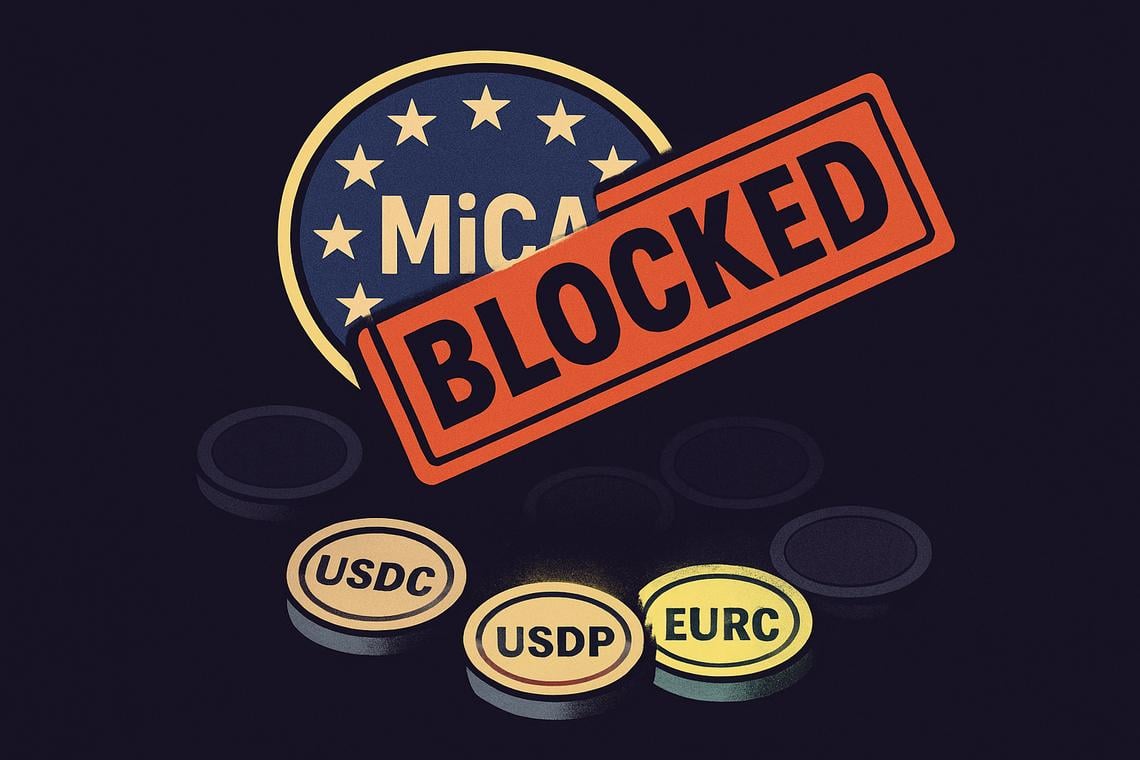
The July 1 MiCA enforcement date isn’t a soft target — it’s a hard cutoff. Under the framework, firms without authorization can no longer legally offer crypto services to EU clients once national transitional periods expire. OKX Europe CEO Erald Ghoos put the situation bluntly: roughly 80% of crypto exchanges won’t survive MiCA, and about 60% of European crypto users are currently on platforms with no authorization and, in many cases, no clear path to getting one.
As of mid-June 2026, over 200 crypto-asset service providers held full CASP authorization under MiCA according to ESMA’s interim register — a fraction of the more than 3,000 virtual asset service providers that were operating in Europe in 2024. The consolidation that MiCA was always going to produce is now arriving on schedule.
OpenPayd joins a group of firms that moved early and moved strategically. Bitcoin Suisse announced its MiCA license in Liechtenstein on June 23. Ripple received a preliminary Green Light Letter from Luxembourg’s Commission de Surveillance du Secteur Financier. Italy-based Conio also secured MiCA authorization in June. But the firms clearing the bar represent a fundamentally different kind of market participant than the majority that won’t make it through the deadline.
What This Consolidation Means for Stablecoin Adoption in Europe
The structural shake-out has a less obvious upside: it concentrates stablecoin infrastructure into the hands of a smaller number of compliant, well-capitalized operators. For businesses that rely on stablecoin services in Europe for payments or treasury, that actually reduces counterparty risk. Working with a MiCA-authorized provider like OpenPayd means operating inside a framework that mandates segregated client assets, proof of reserves, and fit-and-proper governance — standards that weren’t universally enforced before.
OpenPayd’s scale gives it a strong position to absorb that demand. The company processes more than $240 billion in annualized transactions for over 1,100 businesses globally, a client base that includes names like Kraken, eToro, OKX, and B2C2. That volume, combined with MiCA authorization, puts OpenPayd in a position to capture institutional clients migrating away from unlicensed platforms under pressure from the deadline.
Partnerships Deepening the Stablecoin Stack
OpenPayd’s regulatory milestone sits within a broader strategic build-out. In June, Circle partnered with the company to provide infrastructure enabling businesses to convert between fiat currencies and USDC, Circle’s dollar-backed stablecoin. That integration extends OpenPayd’s reach directly into the most widely used stablecoin in institutional finance.
Earlier, in December, the TON Foundation selected OpenPayd to provide fiat infrastructure for the entire TON Blockchain ecosystem — covering treasury operations, ecosystem grants, and international fiat transfers across multiple jurisdictions. Together, these partnerships suggest a deliberate strategy: not just to be licensed, but to be embedded at multiple layers of the digital asset economy before competitors can establish the same positions.
The Nasdaq Play: A $1.1 Billion Bet on the Regulated Future
The MiCA authorization lands alongside an equally significant corporate milestone. Earlier in June, OpenPayd announced a proposed merger with special purpose acquisition company Titan Acquisition Corp., which would take the company public on Nasdaq under the ticker “OP.” The deal values OpenPayd at approximately $1.1 billion and is expected to close during the fourth quarter of 2026, subject to shareholder and regulatory approval.
The combination of a MiCA license and a planned U.S. public listing is a calculated signal. It positions OpenPayd simultaneously as the compliant infrastructure choice for European enterprise clients and as an investment-grade company preparing for public market scrutiny. That dual move — regulatory legitimacy in Europe, capital markets access in the U.S. — reflects how seriously OpenPayd is treating the next phase of its growth.
For investors, the Nasdaq path through a SPAC merger means the final valuation and timeline still depend on approvals that haven’t cleared yet. But the direction of travel is clear: OpenPayd is building toward a world where regulated stablecoin infrastructure is as bankable as traditional payments rails — and wants to be valued like it.
FAQ
What services does OpenPayd’s MiCA license authorize?
OpenPayd’s MiCA authorization covers regulated services including fiat-to-stablecoin conversions, crypto custody, wallet infrastructure, and stablecoin transfers across the European Economic Area.
How does OpenPayd’s platform integrate fiat and digital assets?
OpenPayd provides a single API that connects traditional banking rails with digital asset infrastructure, allowing clients to move and manage both fiat currencies and digital assets through one platform.
What is the scale of OpenPayd’s current business operations?
OpenPayd processes more than $240 billion in annualized transactions for over 1,100 businesses worldwide, including major crypto firms like Kraken, eToro, OKX, and B2C2.
What future corporate milestone is OpenPayd pursuing?
OpenPayd plans to go public on Nasdaq through a merger with Titan Acquisition Corp, valued at approximately $1.1 billion. The transaction is expected to close in the fourth quarter of 2026, pending shareholder and regulatory approvals.
Article produced with the assistance of artificial intelligence and reviewed by the editorial team.






 English (US) ·