
 5 hours ago
22
5 hours ago
22
- The Bangko Sentral ng Pilipinas has proposed a 12-month pause on new Operator of Payment System registrations while it reviews its licensing framework.
- Banks and regulated payment providers would face stricter requirements when working with crypto firms, including enhanced due diligence, transaction monitoring and settlement limits.
- The BSP also plans to establish a National QR Code Merchant Database to improve visibility into merchants and payment flows across the country.
The Philippines central bank is proposing a 12-month freeze on new payment system operator registrations as it moves to strengthen oversight of the country’s digital payments sector.
The Bangko Sentral ng Pilipinas released a draft circular on Sept. 7 outlining the proposal, saying the temporary pause would allow it to conduct a “holistic review” of how payment system operators are classified and licensed.
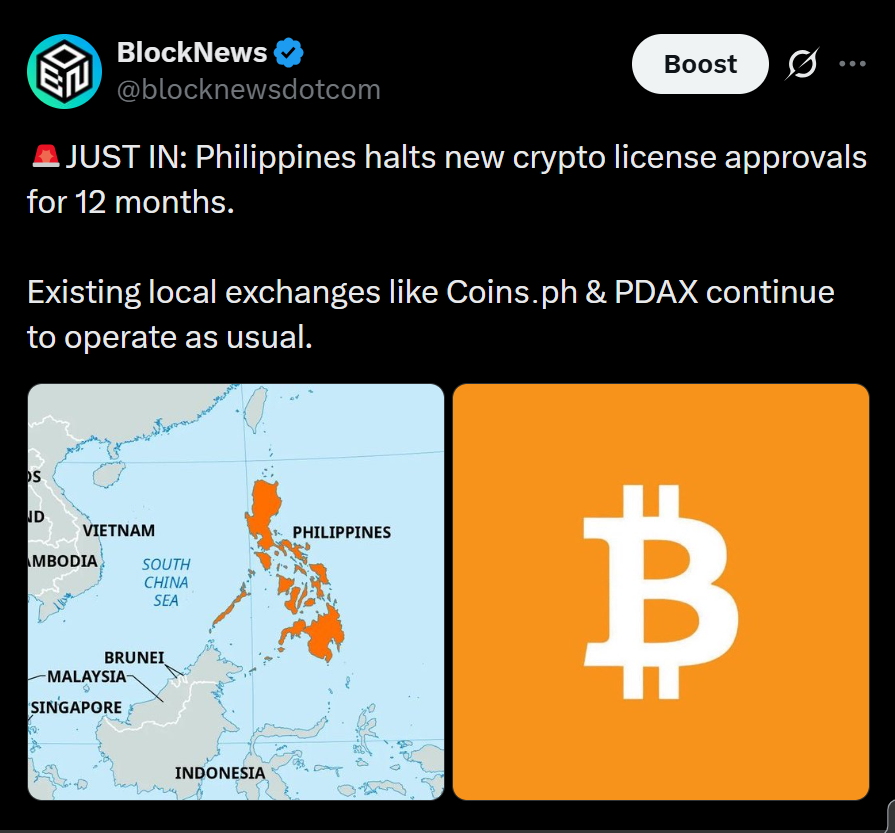
Under the proposal, the BSP would stop accepting and processing new Operator of Payment System, or OPS, applications for 12 months.
Applications submitted before the freeze could still be reviewed, but the regulator would not approve or reject them until the suspension ends.
Crypto Payment Firms Face Stricter Controls
The proposal would also tighten oversight where Virtual Asset Service Providers, or VASPs, connect with traditional banking and payment infrastructure.
Banks and regulated payment providers would generally be required to deal directly with licensed crypto firms, reducing the use of third-party or layered payment arrangements.
Only VASPs authorized by the BSP, Securities and Exchange Commission or other approved regulators would be allowed to access the relevant payment rails.
Unregistered and offshore crypto platforms would be blocked from using those arrangements.
Direct relationships involving crypto payment merchants would also face enhanced due diligence, closer transaction monitoring and settlement limits designed to control potential risks.

BSP Plans National QR Merchant Database
The proposed changes extend beyond cryptocurrency businesses.
The BSP also wants to establish a National QR Code Merchant Database containing information including merchant identities, business registration details, payment providers, settlement accounts and risk classifications.
The database would give financial institutions greater visibility into merchants using QR-based payment systems and make it easier to track how money moves through the financial system.
The BSP wants payment activity to remain traceable from the merchant receiving funds through to the financial institution processing the transaction.
Proposal Remains Open for Feedback
The measures are currently proposals and have not yet been finalized.
The draft remains open for feedback before the BSP decides whether to implement the new framework.
If approved, the rules would take effect 15 days after publication, while the suspension of new OPS applications would remain in place for 12 months.
The proposal signals tighter oversight of the Philippines’ growing digital payments industry, with crypto businesses facing particularly close scrutiny when accessing traditional banking and payment infrastructure.
Disclaimer: BlockNews provides independent reporting on crypto, blockchain, and digital finance. All content is for informational purposes only and does not constitute financial advice. Readers should do their own research before making investment decisions. Some articles may use AI tools to assist in drafting, but every piece is reviewed and edited by our editorial team of experienced crypto writers and analysts before publication.






 English (US) ·