
 5 months ago
62
5 months ago
62
Polygon price is showing fresh signs of recovery after weeks of steady selling. Since February 11, POL is up nearly 13%, and over the past 24 hours, it has gained around 5.4%, holding most of its rebound near $0.095.
At first glance, the structure looks similar to the setup that triggered Polygon’s 90% rally earlier this year. Price is stabilizing, momentum is improving, and buyers are active near support. But this time, one critical element is missing. The last rally began after sellers were fully flushed out. This time, that flush has not happened yet.
POL Price Repeats the Old Reversal Pattern, But Without a Clean Seller Flush
Before the January rally, Polygon formed a very clear bottom. Between December and early January, the POL price printed a sharp lower low in a single move. Sellers capitulated. Weak hands exited. That created a clean base for buyers to step in.
This time, the structure is different.
Between January 31 and February 11, POL again made a lower low near $0.087, while the Relative Strength Index, or RSI, formed a higher low. RSI measures buying and selling strength, and this bullish divergence usually signals that selling pressure is weakening. But instead of one decisive breakdown candle, POL tested the same support area twice.
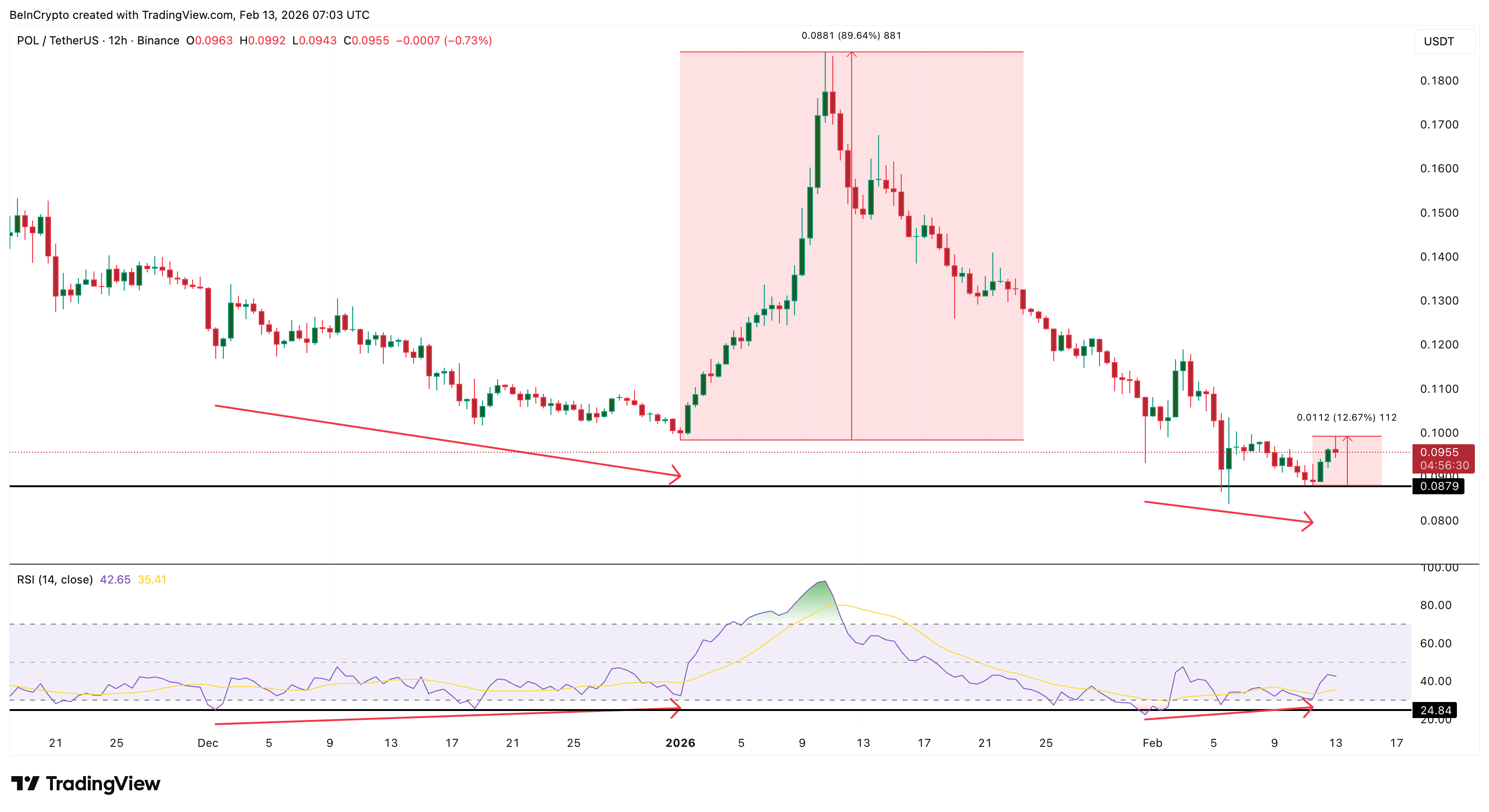 Divergence Setup: TradingView
Want more token insights like this? Sign up for Editor Harsh Notariya’s Daily Crypto Newsletter here.
Two separate candles touched the $0.087 zone. This creates a “lower-low zone” instead of a clean lower low.
That matters. When a market prints a single deep low, it usually means sellers have given up, hinting at exhaustion. When the price keeps revisiting the same level, it means sellers are still active. Supply has not been fully absorbed yet. So even though the technical pattern looks similar, the psychology is different.
The market has stabilized, but it has not been fully cleansed. That unfinished seller flush is the foundation of the entire twist.
Muted Leverage and Rising Shorts Reflect Unfinished Selling Pressure
This incomplete flush is clearly visible in the derivatives data. During the January rally, leverage exploded early.
Open interest on Binance jumped from around $16.6 million to over $40 million, rising more than 140% in a few days. Traders rushed into long positions as soon as the price turned. This time, that has not happened. Since February 11, while POL gained nearly 13%, open interest has stayed near $18.80 million. There is no strong buildup of leverage yet. Possibly hinting at low conviction.
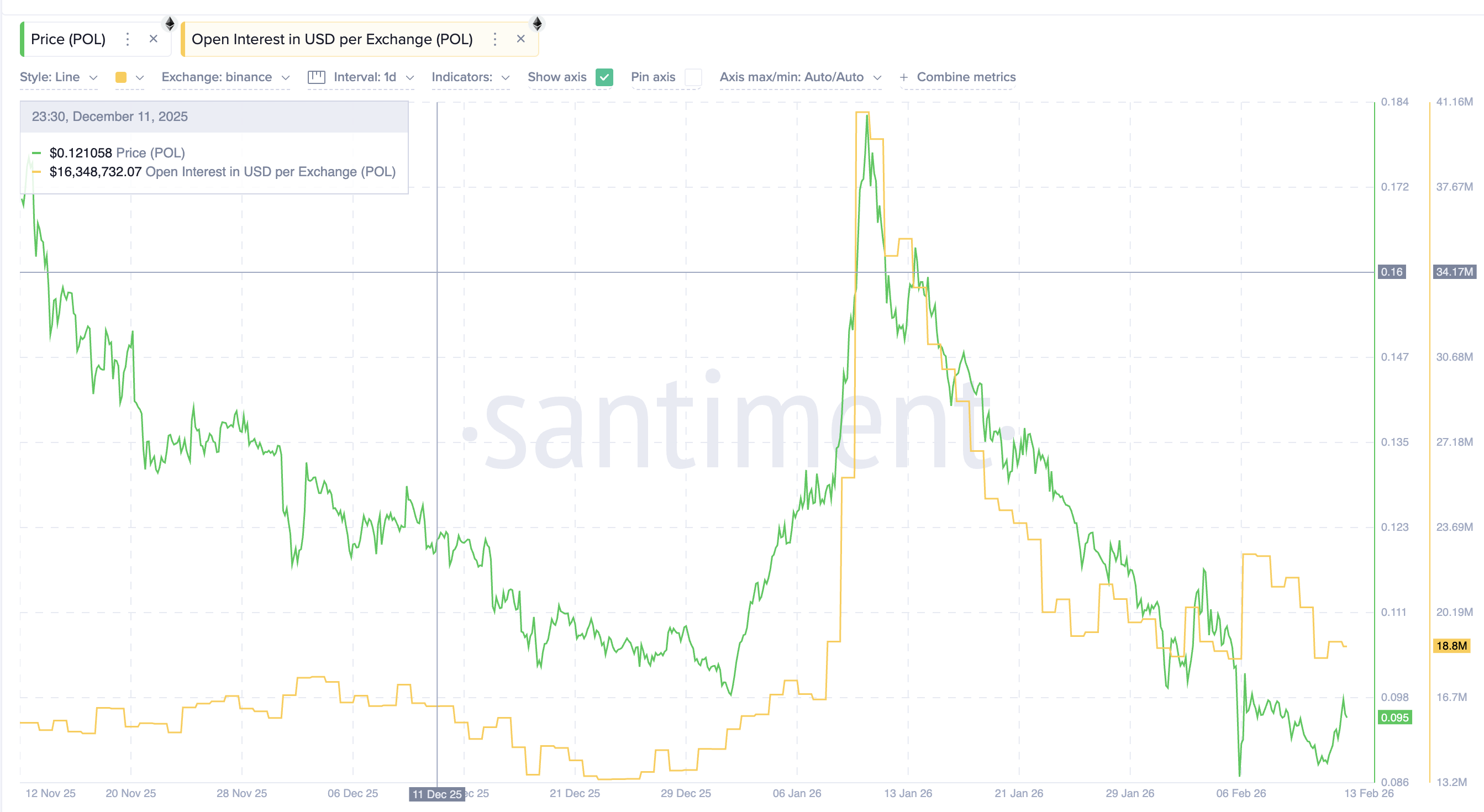 Open Interest Steady: Santiment
More importantly, funding rates are now negative, near -0.012. Funding rates show which side dominates futures markets. Negative rates mean short traders are paying longs. That signals growing bearish positioning.
In January, funding was positive. Traders were betting aggressively on upside. Now, shorts are building.
This fits perfectly with the price structure. Because sellers have not been flushed out, traders are still comfortable betting against the rally. They see unfinished downside risk. So instead of chasing longs, many are positioning for pullbacks. That lends a major hit to the supposed rally’s conviction.
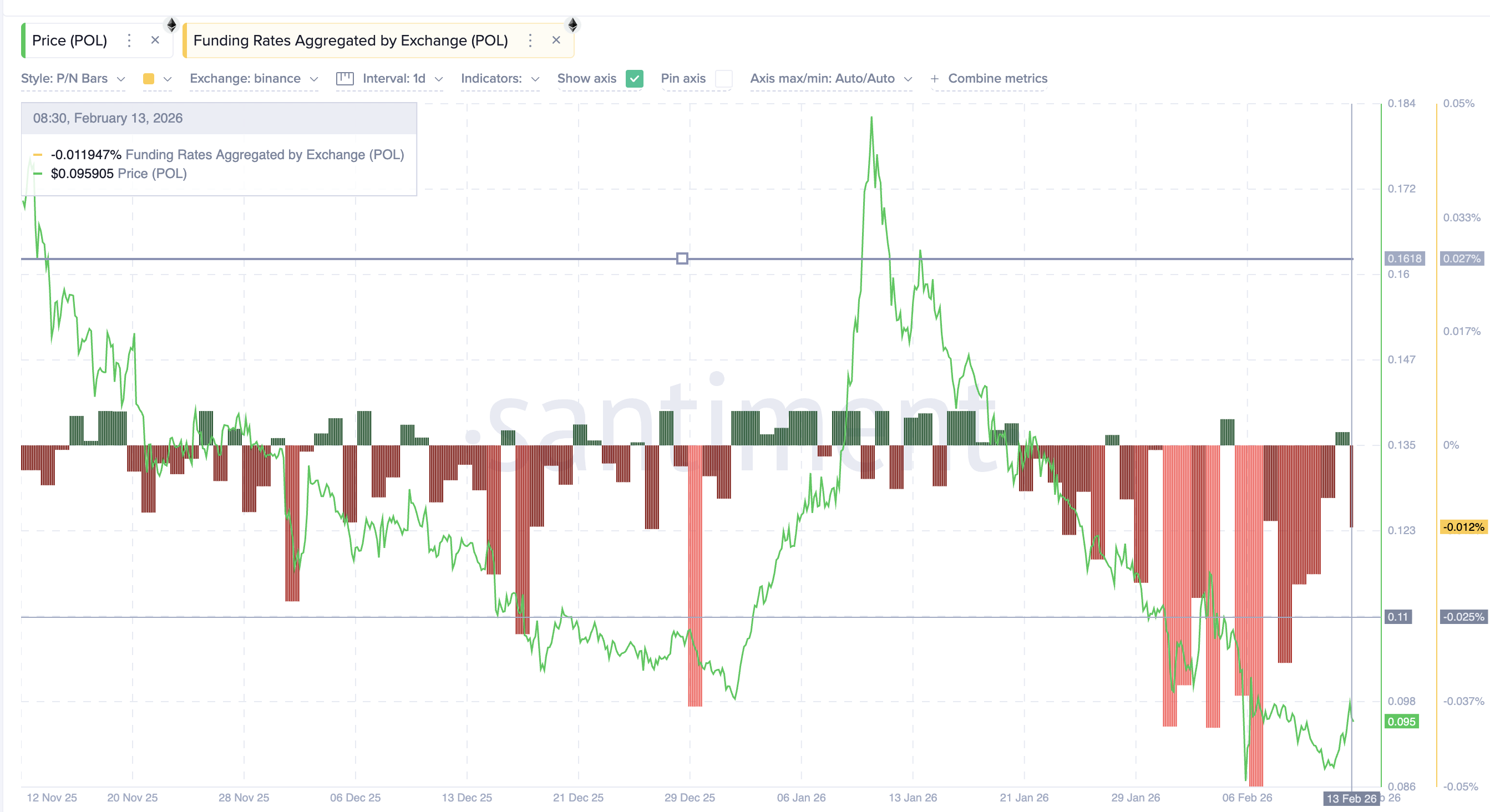 Funding Rate: Santiment
This keeps leverage restrained and momentum controlled. The rally is moving forward, but under constant pressure.
Whale Accumulation Is Supporting Price, But Not Forcing Capitulation
While traders remain cautious, large holders are behaving differently. Since early February, whale holdings have risen from around 7.5 billion to nearly 8.75 billion POL, an increase of about 16%. This shows that long-term buyers are accumulating quietly.
Their buying is the main reason the price keeps rebounding from the $0.087 area.
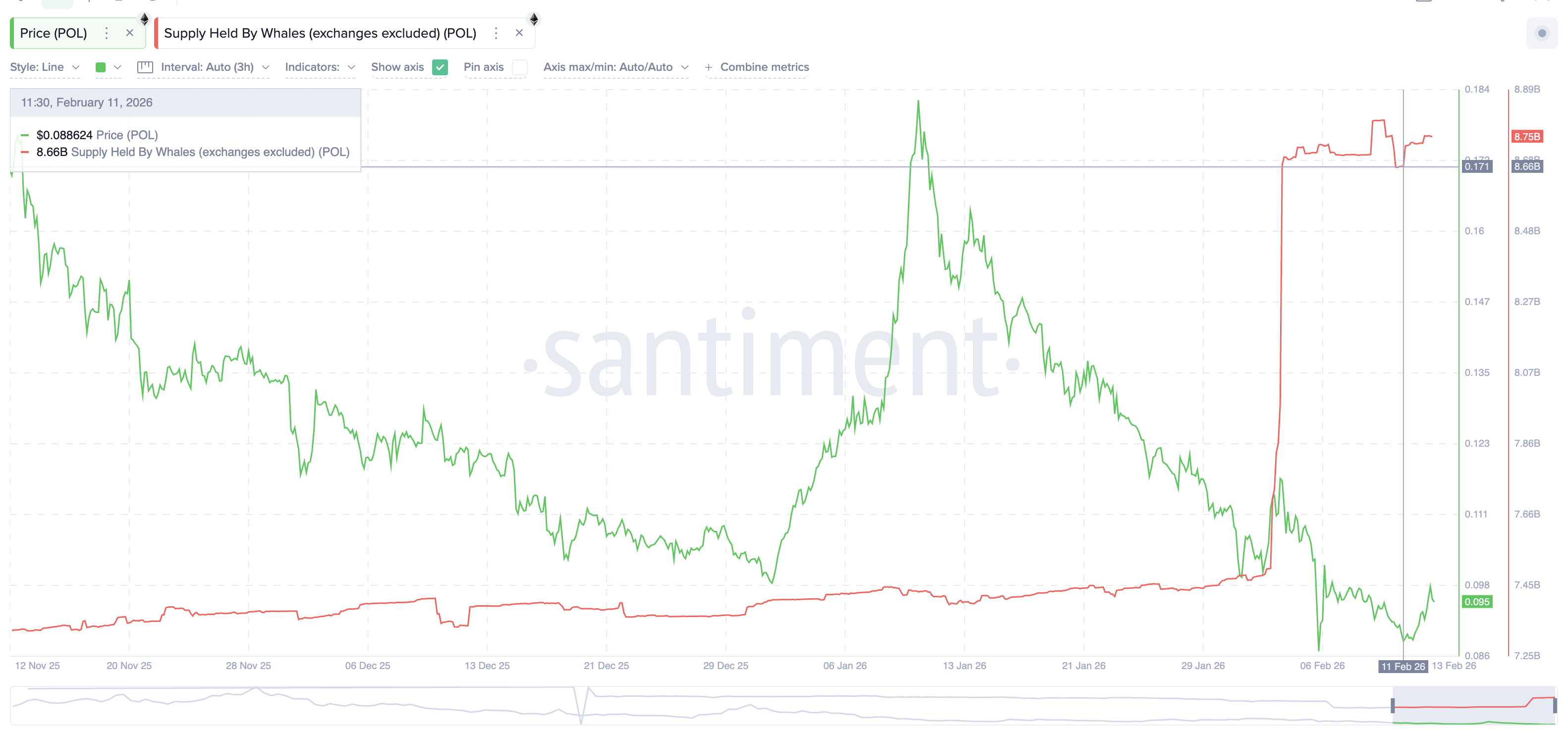 POL Whales: Santiment
But whale accumulation has another effect. It absorbs supply without triggering panic. Instead of forcing weak sellers out, whales are slowly taking their coins. That stabilizes the price but delays capitulation. It is worth noting that during the last early-2026 rally, these Polygon whales hardly increased their stash.
So the market ends up in between:
- Sellers are still present (not flushed out)
- Buyers are active
- No one is fully in control of the Polygon price
This is why the price is rising gradually, not explosively. And that might limit the rally potential going forward.
Key Polygon Price Levels Will Decide Whether Sellers Finally Get Flushed
With unfinished selling pressure still in the system, price levels now matter more than patterns. On the upside, the key level is $0.11.
A clean break above $0.118 would signal that remaining sellers are being overwhelmed. From current levels, that would be another 24% move. It would likely attract leverage and weaken short positions, finally completing the flush. Above that, targets open toward $0.137 and $0.186.
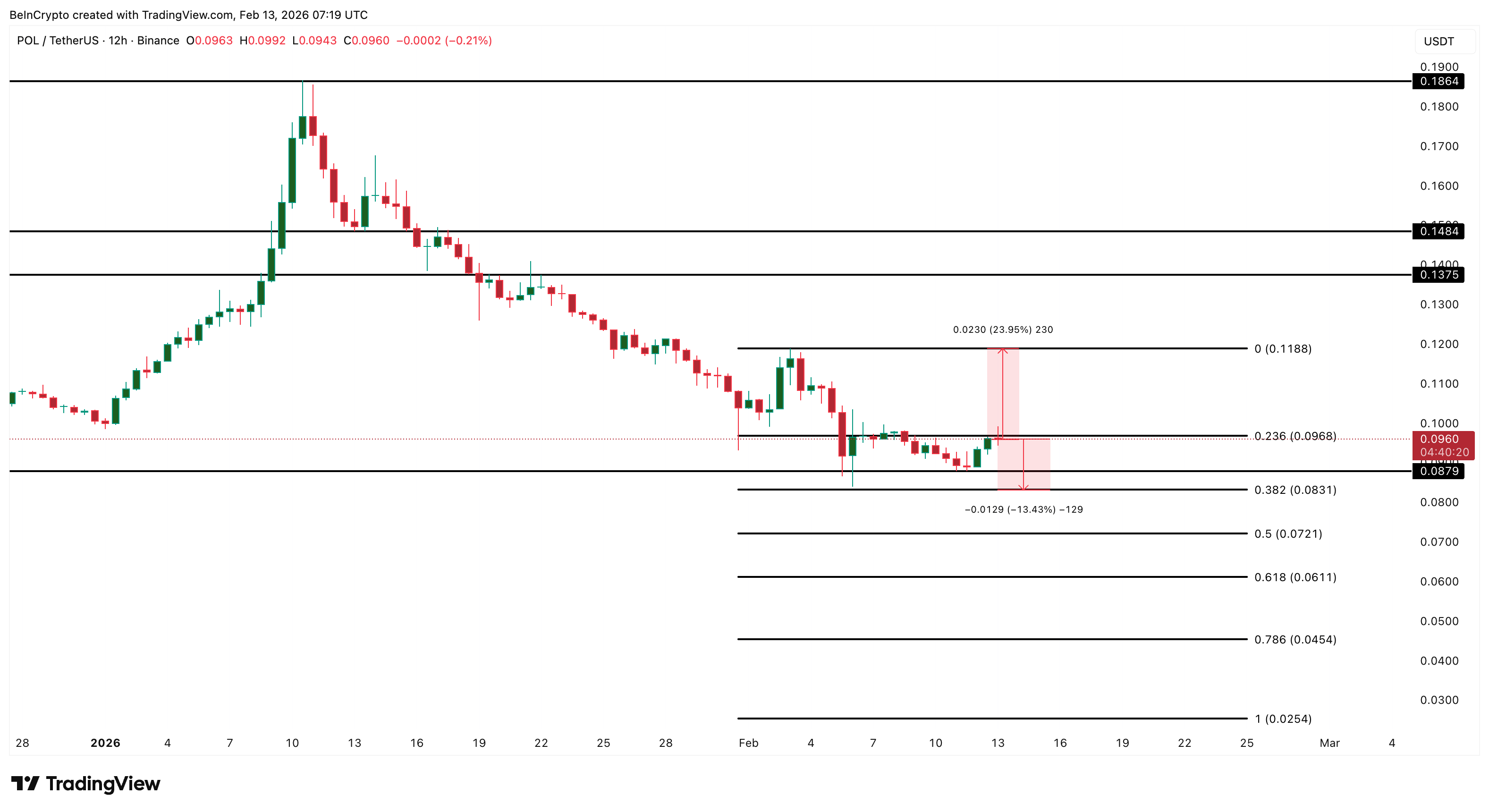 Polygon Price Analysis: TradingView
On the downside, the critical support zone is $0.083-$0.087. If POL breaks below that, the lower-low setup fails, and a new one starts forming. That would confirm that sellers still have control and that the unfinished flush is playing out. In that case, the price could slide toward $0.072 and $0.061.
The post Polygon (POL) Price Structure Mirrors a 90% Rally Setup — But There’s a Twist appeared first on BeInCrypto.


 English (US) ·