
 2 months ago
83
2 months ago
83
Key Takeaways
- Crude oil declined more than 1% Wednesday following diplomatic progress between Washington and Tehran and increased maritime activity in Hormuz
- Vessel transits through the strategic waterway increased nearly threefold in seven days, from 32 to 93 crossings
- The nationwide average for gasoline stands at $3.93 per gallon—down from $4.02 seven days earlier but approximately $1 higher than pre-conflict rates
- The president publicly blamed petroleum companies for exploiting consumers and directed federal prosecutors to examine industry practices
- Financial analysts at Macquarie reduced their 2026 WTI projection to $77 per barrel from an earlier estimate of $89
President Trump has escalated his rhetoric against major oil producers, warning them to accelerate fuel price reductions or face potential Department of Justice scrutiny for alleged consumer exploitation.
 Trump to Big Oil: Drop your prices NOW or you're f*ked!!
Fed up with gas prices still being sky high, and killing him in the polls, Trump's ordered the DOJ to investigate
He says the price Big Oil is paying for crude is dropping like a rock while the price at the pump isn't… pic.twitter.com/M8ghQtmSEW
— Mario Nawfal (@MarioNawfal) June 24, 2026
In an early-morning post on Truth Social, the commander-in-chief expressed frustration that declining crude costs aren’t being reflected quickly enough at filling stations across America.
“Gasoline prices better start going down a lot faster than what I’m seeing,” the president declared.
Pump Prices Declining Gradually
AAA data shows the nationwide average for regular unleaded reached $3.93 per gallon on Wednesday. This represents a decline from $4.02 recorded the previous week and significantly below the $4.50 peak reached last month during Iran’s closure of the Strait of Hormuz, which sent crude futures soaring.
Consumers saw relief last Thursday when prices dropped beneath the $4 threshold for the first time since late March. Nevertheless, current rates remain roughly one dollar above pre-war baseline figures.
Trump has consistently pledged that motorists would see substantial savings following the conclusion of hostilities. An interim diplomatic agreement was finalized last week.
Whether federal prosecutors have officially launched an investigation or identified specific companies for examination remains uncertain.
Energy Markets React to Hormuz Reopening
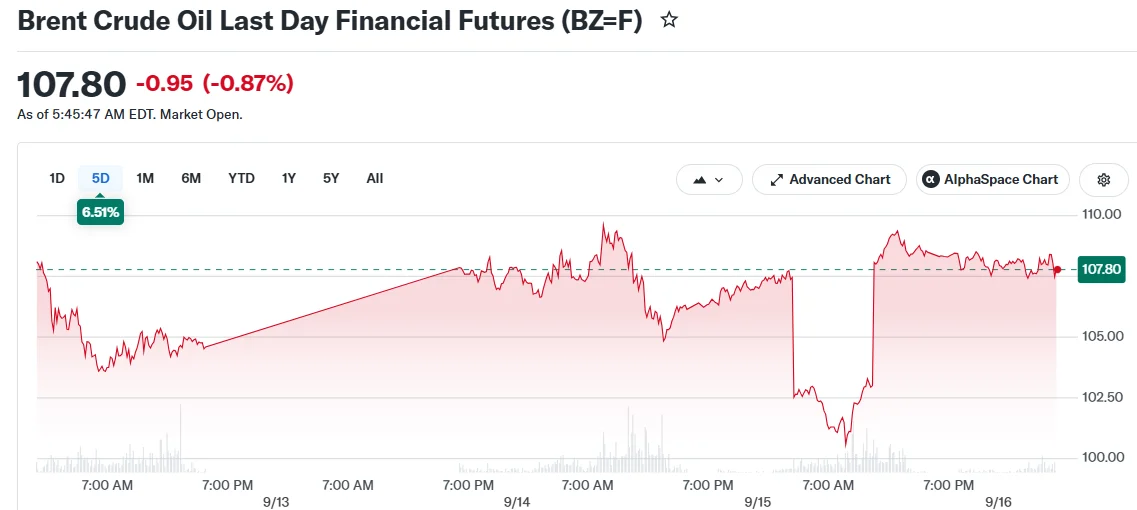
Global oil prices extended their retreat Wednesday. Brent crude futures declined over 1.8% to settle at $75.65 per barrel. West Texas Intermediate decreased 1.2% to $72.31 per barrel.
Tuesday marked Brent’s lowest settlement since before military confrontations with Iran commenced.
The downturn follows dramatic improvements in shipping activity through the Strait of Hormuz, a critical chokepoint that typically facilitates roughly one-fifth of worldwide petroleum transport.
Maritime data provider Kpler reported that total vessel movements through the strategic passage climbed from 32 during the June 12–14 period to 93 between June 19–21.
Tehran announced last week that unrestricted passage through the strait would resume without tolls as part of the diplomatic settlement. The arrangement also permits Iran to resume international oil sales without sanctions.
Market Forecasters Adjust Expectations Downward
Macquarie’s research team revised its average WTI projection for 2026 downward to $77 per barrel from $89.
Strategist Peter Taylor suggested the petroleum market could stabilize more rapidly than conventional wisdom suggests now that Hormuz restrictions have been lifted.
Taylor noted that alternative supply routes established during the crisis may have enhanced the global distribution network’s resilience and adaptability.
Last month, GasBuddy’s petroleum analysis director indicated that while Hormuz’s reopening would trigger immediate price adjustments, retail gasoline might not return to pre-conflict levels for several months.
Bloomberg energy columnist Javier Blas commented on the president’s social media statement, suggesting Trump had “just discovered the refining and marketing margin.”
The post President Trump Demands Lower Gas Prices, Threatens Federal Investigation Into Oil Industry appeared first on Blockonomi.


 English (US) ·