
 2 months ago
65
2 months ago
65
- Pump.fun launched frictionless trading across Ethereum, Base, BNB Chain, and other EVM networks
- Users no longer need bridges, separate wallets, or native gas tokens to trade across chains
- Solana quietly powers settlement and gas abstraction behind the scenes
Pump.fun just rolled out one of its biggest upgrades yet, and honestly, it targets one of crypto’s most universally hated experiences: dealing with cross-chain infrastructure.
The platform announced frictionless multi-chain trading support this week, allowing users to trade assets across Ethereum, Base, BNB Chain, and other EVM ecosystems directly through a unified wallet experience inside the app.
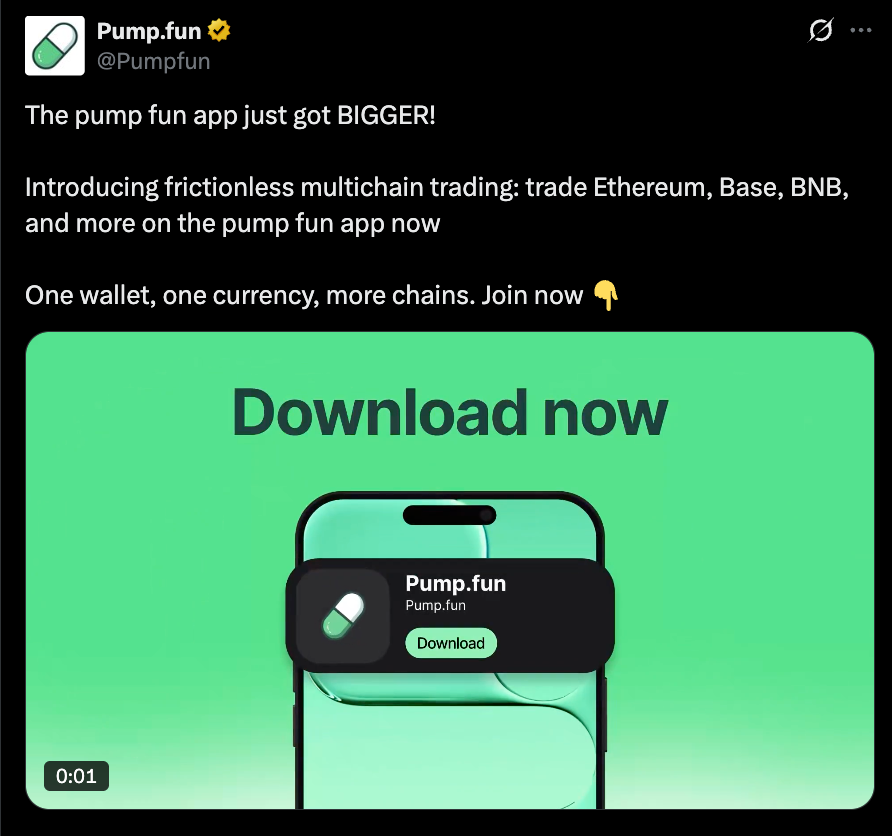
That sounds simple on paper. In practice, though, it removes a surprising amount of pain that has made cross-chain crypto usage feel unnecessarily hostile for years.
Crypto’s Cross-Chain Experience Has Been A Mess
Right now, using multiple blockchains usually means managing separate wallets, bridging assets manually, holding multiple gas tokens, navigating different interfaces, and occasionally wondering whether you accidentally sent your money into a digital black hole.
Even experienced crypto users regularly deal with failed bridges, wrong-chain transfers, gas fee confusion, and wallet fragmentation. For newer users, the experience often feels less like finance and more like troubleshooting network cables from 2004.
Pump.fun is trying to abstract almost all of that away completely.
According to the platform, users will no longer need native gas tokens for each blockchain or manually bridge funds between ecosystems. Instead, the system automatically handles wallet generation and cross-chain settlement infrastructure behind the scenes.
Solana Quietly Became The Settlement Layer
One of the more interesting parts of the upgrade is that Solana powers the backend settlement architecture underneath the multi-chain experience.
Rather than forcing users to think about bridging mechanics directly, Solana acts as the settlement and gas subsidy layer while the platform dynamically creates EVM-compatible wallets automatically in the background.
The broader goal seems pretty obvious. Pump.fun wants users to stop caring which blockchain they’re technically interacting with underneath the interface.
And honestly, that may be where the entire industry has been heading for a while now. Most mainstream users do not actually want to study bridge architecture, wallet derivation systems, or gas optimization strategies before buying speculative tokens online. They just want the app to work.

Crypto UX Is Quietly Becoming The Real Battleground
What makes this update important is less about Pump.fun specifically and more about the broader direction crypto infrastructure is evolving toward.
For years, the industry focused heavily on decentralization, scalability, and ecosystem competition between chains themselves. But increasingly, the real battle appears to be shifting toward user experience abstraction.
The projects that successfully hide complexity without sacrificing functionality may ultimately onboard the next wave of mainstream users far more effectively than ecosystems demanding technical expertise upfront.
Infrastructure fading into the background is usually a sign technology itself is maturing. Most people using the internet today never think about TCP/IP routing protocols either.
Users Care About Convenience More Than Chain Loyalty
Pump.fun’s approach also reflects something crypto communities sometimes resist admitting publicly: most users care far more about convenience than ideological loyalty to specific blockchains.
If someone can trade faster, cheaper, and with fewer steps, they generally will. They are not sitting around emotionally attached to bridge interfaces or gas token management systems.
Crypto users still value decentralization, obviously. But they also value not paying six separate transaction fees while moving assets across three chains just to buy a memecoin named after an amphibian wearing sunglasses.
If Pump.fun’s system works smoothly at scale, it could end up becoming another example of blockchain infrastructure disappearing quietly into the background while usability takes center stage instead.
Disclaimer: BlockNews provides independent reporting on crypto, blockchain, and digital finance. All content is for informational purposes only and does not constitute financial advice. Readers should do their own research before making investment decisions. Some articles may use AI tools to assist in drafting, but every piece is reviewed and edited by our editorial team of experienced crypto writers and analysts before publication.





 English (US) ·