
 2 months ago
61
2 months ago
61
- Ripple and Bitso are bringing MXNB, a Mexican peso-backed stablecoin, to the XRP Ledger for enterprise settlement.
- MXNB will work with RLUSD to support regulated dollar-peso liquidity for cross-border payments.
- The partnership arrives as XRPL prepares a technical upgrade aimed at improving efficiency and scalability.
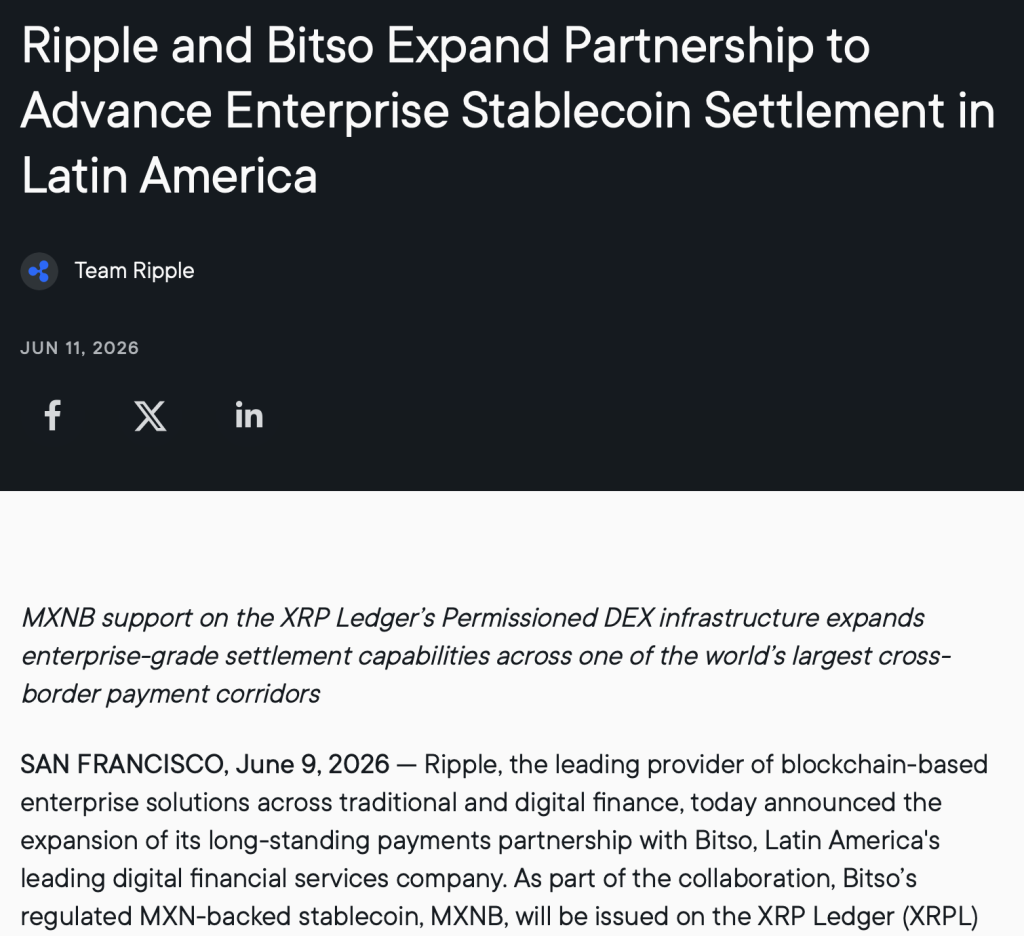
Ripple is deepening its push into Latin American payments through an expanded partnership with Bitso, one of the region’s largest crypto platforms. The collaboration will bring MXNB, Bitso’s Mexican peso-backed stablecoin, to the XRP Ledger for enterprise settlement, giving businesses a new on-chain option for moving value between the U.S. dollar and the Mexican peso.
The move builds on a long-running payments relationship between Ripple and Bitso, which now serves more than 10 million users. For Ripple, the announcement is not just another stablecoin integration. It is part of a broader effort to position the XRP Ledger as infrastructure for regulated liquidity, settlement, and cross-border enterprise payments in markets where currency movement can still be slow and costly.
Stablecoin Liquidity Becomes the Main Focus
The purpose of the partnership is fairly clear: make U.S.-Mexico enterprise payments faster, more efficient, and easier to settle on-chain. MXNB will provide peso-denominated liquidity, while Ripple’s RLUSD stablecoin will support the dollar side of the transaction flow.
Together, the two assets are expected to operate within Ripple’s Payments on Decentralized Exchange infrastructure. That setup could help institutions access regulated liquidity between dollars and pesos without relying entirely on traditional banking rails.
Ripple’s Managing Director of Latam, Silvio Pegado, described the development as the next step in how value moves between the two currencies. He noted that Ripple and Bitso have spent years building real-world payment infrastructure across Latin America, and the combination of RLUSD and MXNB on the XRPL Permissioned DEX is designed specifically for enterprise cross-border payments.
RLUSD Gains More Real-World Payment Context
The integration also gives Ripple’s dollar-backed stablecoin, RLUSD, another practical use case. Stablecoins have often been viewed mainly as trading tools within crypto markets, but that perception is changing. Increasingly, major payment companies and financial institutions are exploring them for settlement, liquidity management, and cross-border transfers.
Mastercard recently expanded its stablecoin strategy to include assets such as RLUSD, USDC, USDG, PYUSD, and USDP across multiple blockchain networks, including XRPL, Ethereum, Solana, and Base. That broader shift suggests stablecoins are moving deeper into payment infrastructure rather than remaining limited to exchange activity.
For Ripple, pairing RLUSD with MXNB gives the asset a more direct role in a real-world payments corridor. The U.S.-Mexico corridor is one of the most important payment routes in the Americas, so successful adoption here could strengthen Ripple’s stablecoin strategy considerably.
XRP Ledger Upgrade Adds More Momentum
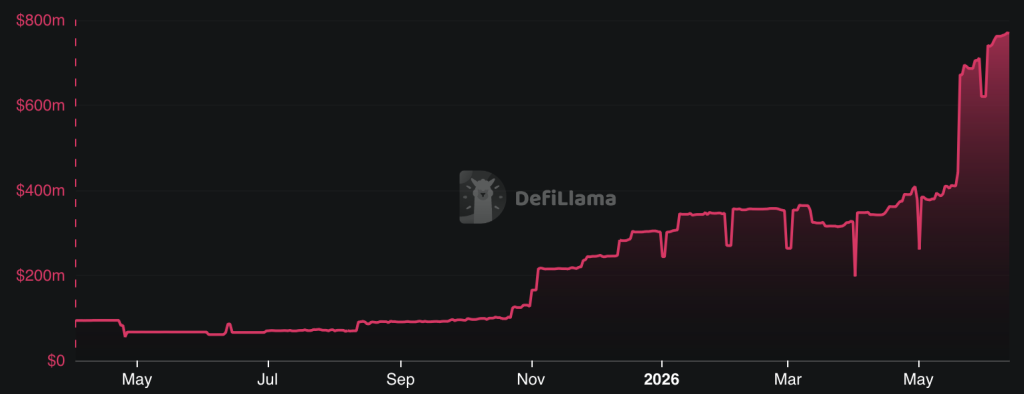
The announcement also comes as the XRP Ledger approaches a notable technical upgrade with version 3.2.0. The update is expected to reduce node memory usage by around 40%, improve overall network efficiency, and rebrand the core server software to “xrpld.”
That technical context matters because enterprise payment infrastructure needs to be reliable, efficient, and scalable. If XRPL can continue improving performance while adding stablecoin liquidity tools, it could become more attractive for institutions looking to move money on-chain without giving up regulatory structure.
Of course, technical upgrades alone will not guarantee adoption. Enterprises will need to see real liquidity, compliance clarity, and operational reliability before moving meaningful payment volume through these systems.
What Comes Next for Ripple and Bitso
The next major question is whether more businesses will begin using MXNB and RLUSD for live settlement flows between the United States and Mexico. If adoption grows, the partnership could become a strong example of how regulated stablecoins can support real payment corridors.
For now, Ripple and Bitso appear focused on building the infrastructure layer first. The pieces are starting to come together: peso liquidity through MXNB, dollar liquidity through RLUSD, XRPL-based settlement, and a growing institutional push toward stablecoin payments.
It is still early, and the market will need proof through actual usage. But the direction is clear enough. Ripple is trying to turn stablecoins into practical payment tools, not just assets that sit on exchanges. And with Bitso’s large Latin American user base, the XRP Ledger now has another opportunity to prove its value in real-world finance.
Disclaimer: BlockNews provides independent reporting on crypto, blockchain, and digital finance. All content is for informational purposes only and does not constitute financial advice. Readers should do their own research before making investment decisions. Some articles may use AI tools to assist in drafting, but every piece is reviewed and edited by our editorial team of experienced crypto writers and analysts before publication.








 English (US) ·