
 7 months ago
97
7 months ago
97
- Ripple’s $40B raise included investor terms guaranteeing profits through buybacks after 3–4 years.
- Major firms like Citadel Securities and Brevan Howard joined but demanded strong downside protection.
- Heavy reliance on XRP creates long-term financial pressure as Ripple tries to reduce its token dependency.
Ripple just closed a huge financing round at a $40 billion valuation, pulling in some of the most elite investors in global finance. But beneath the surface, Bloomberg reports that these backers negotiated unusually protective terms — the kind you only see when investors want upside without taking too much crypto risk. The deal structure shows that even top-tier funds believe in Ripple’s long-term potential… but still want a safety net in case the crypto markets keep wobbling.
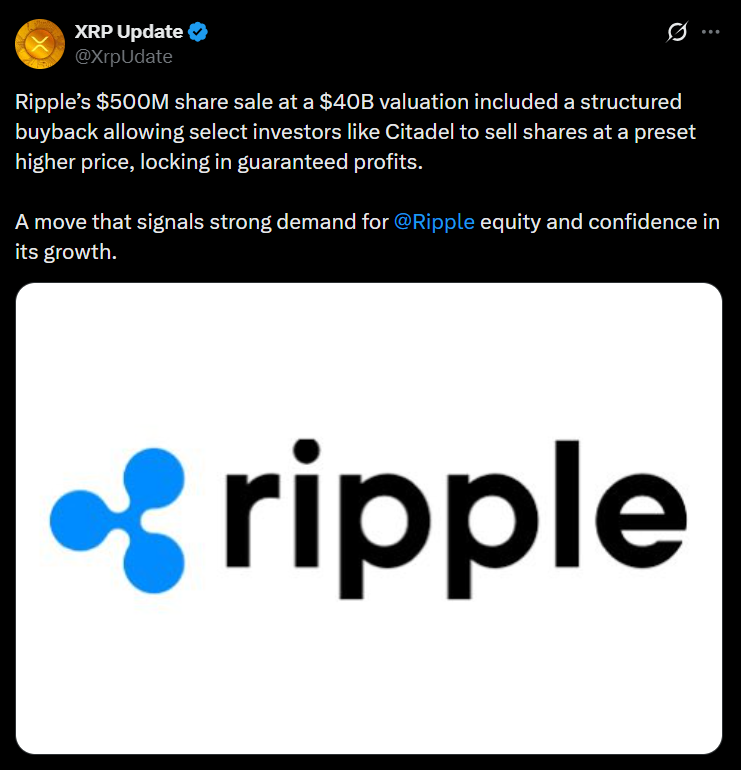
Investors Locked In Guaranteed Returns
The key detail causing all the noise is simple: these investors can sell their shares back to Ripple in three or four years at a higher predetermined price. It’s basically a built-in escape hatch that guarantees profits unless Ripple goes public first. And if Ripple decides to repurchase the shares on its own terms? The company must pay an annualized return of 25%, which is extremely high by traditional private-equity standards. It’s a sign of just how cautious large funds have become when stepping into crypto-linked valuations.
Who Joined the Round — And Why These Terms Matter
This wasn’t a collection of small VC firms. Heavyweights like Citadel Securities, Fortress Investment Group, Marshall Wace, Brevan Howard, Galaxy Digital, and Pantera all jumped in. Their participation gives Ripple strong institutional credibility, but the negotiated terms reveal that they see significant risk tied to Ripple’s business model. Many of these investors believe Ripple’s valuation relies heavily on XRP — a token that has been battered during the latest market downturn.
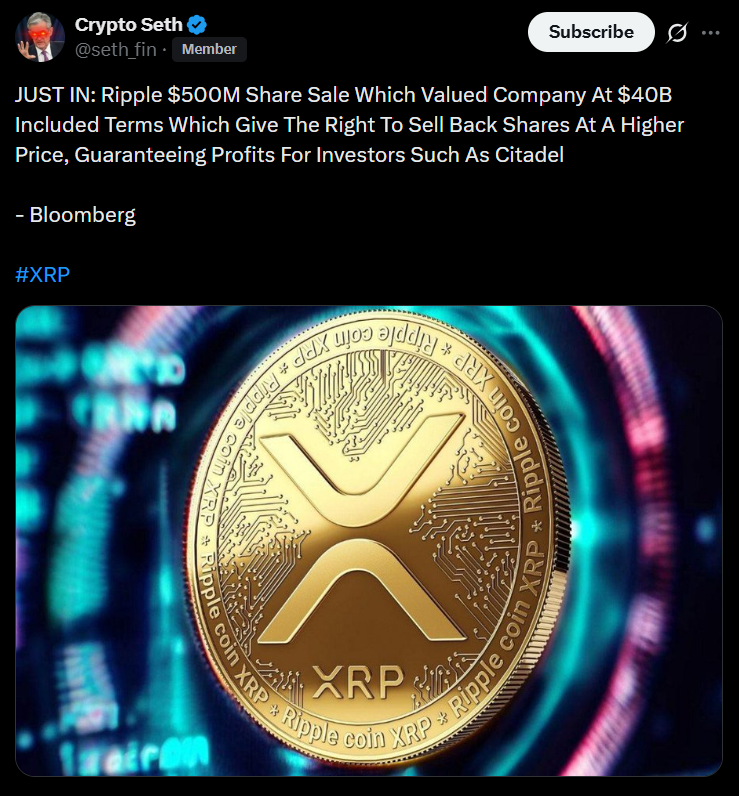
Ripple’s Heavy Reliance on XRP Raises Future Pressure
Ripple held roughly $124 billion worth of XRP as of July, and the token’s value has been sliding. If XRP doesn’t recover meaningfully, Ripple could face real long-term pressure meeting its buyback obligations to investors. The fundraising structure also highlights Ripple’s internal challenge: it still needs to diversify away from its dependence on a single digital asset, even as it pushes into enterprise payments and cross-border settlement. For now, investors get built-in profit protection — while Ripple absorbs the long-term risk.
The post Ripple’s $40B Fundraise Reveals Hidden Investor Protections – Here Is Why Big Money Is Playing It Safe first appeared on BlockNews.


 English (US) ·