
 4 months ago
73
4 months ago
73
- S&P 500 drops below 200-day average, signaling bearish momentum
- Rising oil prices and Fed outlook pressure equities
- Key support near 6,580 now at risk as sellers take control
U.S. stocks are under clear pressure right now, and the S&P 500 is starting to reflect that shift more visibly. After the latest Federal Reserve decision and a surge in oil prices, equities are struggling to hold key levels. The index has already broken below its 200-day moving average, which, for many traders, is one of those lines that quietly decides whether markets feel stable or not.
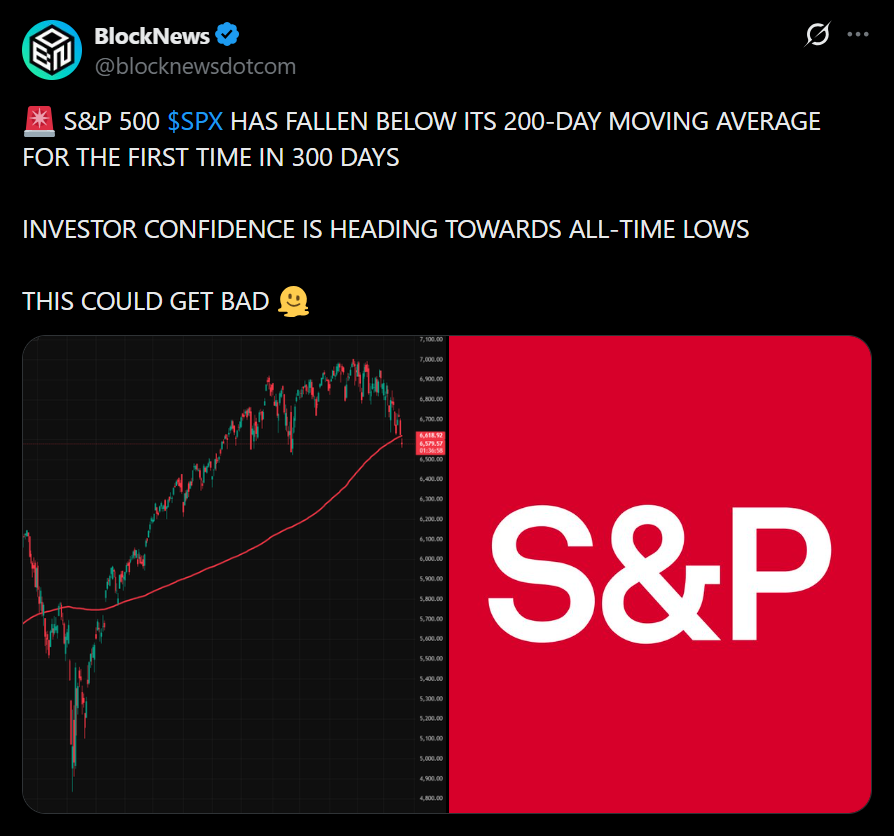
The reaction wasn’t subtle either. Following the Fed’s announcement and Powell’s comments on inflation and geopolitical risks, the S&P 500 dropped 1.3%, and futures are pointing to further कमजweakness. It’s not panic yet, but the tone has definitely turned defensive, maybe even cautious in a way we haven’t seen in a few weeks.
Fed Outlook and Oil Shock Hit Equities
The Federal Reserve holding rates steady at 3.5%–3.75% wasn’t the issue by itself. What changed the mood was the updated outlook. Inflation forecasts were revised higher, and the expectation of rate cuts is starting to fade. Markets don’t like that kind of uncertainty, especially when they were already leaning toward easier policy.
At the same time, oil prices have surged above $119 as tensions in the Middle East escalate. That creates a difficult backdrop for stocks. Higher energy costs squeeze corporate margins and increase inflation pressures, while also slowing growth, not exactly the combination equity markets want to see.
Key Technical Levels Are Now in Focus
From a technical perspective, the S&P 500 is now testing an important support zone around 6,580, which marked the March low. If that level breaks, the next downside targets come into play around 6,500, and then potentially 6,365, levels that previously acted as support late last year.
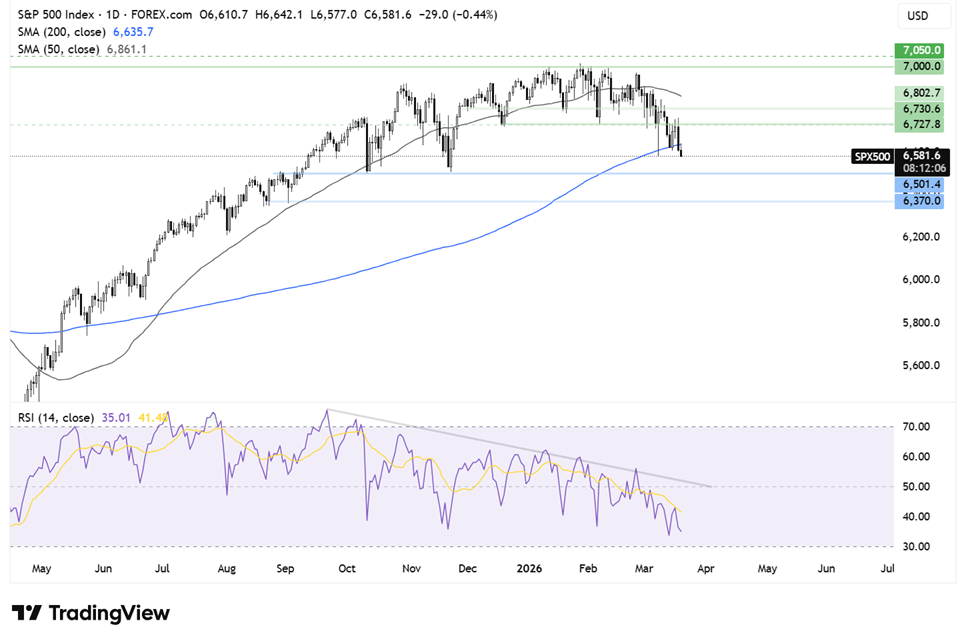
Momentum indicators aren’t offering much relief either. With the RSI sitting below 50, sellers are still in control, at least in the short term. That doesn’t guarantee further downside, but it does suggest that buyers haven’t stepped in with conviction just yet.
Sector Rotation Highlights Market Stress
Looking across sectors, the divergence is pretty telling. Energy stocks like Chevron and ExxonMobil are moving higher alongside oil prices, benefiting from the same forces hurting the broader market. Meanwhile, airlines, cruise operators, and other fuel-sensitive sectors are sliding as costs rise.
Even strong earnings aren’t enough to hold everything up. Micron reported massive growth, but its stock still dropped after announcing higher-than-expected spending plans. That kind of reaction shows how sensitive markets are right now, fundamentals matter, but macro matters more.
Stocks Enter a More Fragile Phase
The bigger picture is that equities are entering a more fragile phase. Rising yields, persistent inflation, and geopolitical risks are all stacking up at once. When that happens, markets tend to lose momentum and trade more defensively, even without a full breakdown.
For the S&P 500, the next move likely depends on whether buyers can reclaim the 200-day average near 6,635. If not, the focus shifts lower, and the conversation quickly turns from consolidation to correction.
Disclaimer: BlockNews provides independent reporting on crypto, blockchain, and digital finance. All content is for informational purposes only and does not constitute financial advice. Readers should do their own research before making investment decisions. Some articles may use AI tools to assist in drafting, but every piece is reviewed and edited by our editorial team of experienced crypto writers and analysts before publication.






 English (US) ·