
 3 hours ago
11
3 hours ago
11
https://www.foxnews.com/politics/lindsey-graham-left-behind-modest-wealth-despite-decades-washingtons-elite-circles
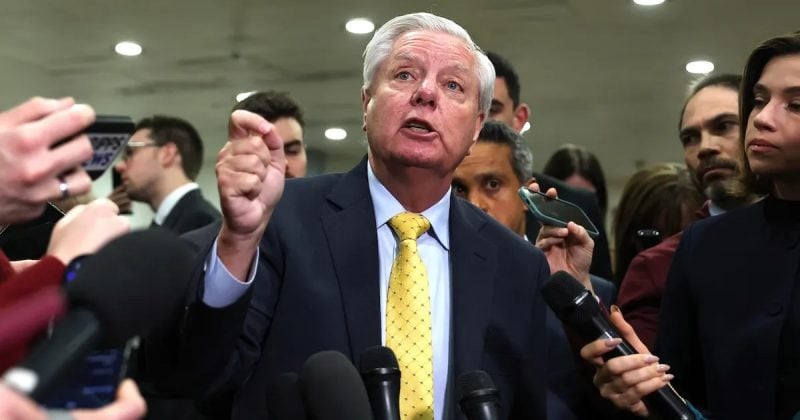
Senate Republicans are returning to Washington with an uncertain agenda following the unexpected death of Senator Lindsey Graham. Graham, a prominent Republican and key ally of former President Donald Trump, died at the age of 71 due to an aortic dissection. His passing leaves a significant void in the Senate, particularly as he was a crucial figure in the Republican strategy. The immediate impact includes a special primary on August 11 to select a new GOP nominee for the November general election. Governor Henry McMaster of South Carolina will appoint a temporary successor, adding to the party’s strategic challenges during a precarious midterm cycle.
Market participants are assessing the implications of Graham’s death on the Republican Party’s prospects in the upcoming 2026 midterm elections. The event introduces uncertainty into the already tight Senate dynamics, where Republicans hold a slim margin. Pricing on prediction platforms has reacted with varying adjustments, reflecting the potential volatility in the Republican Senate seat count post-midterms. Current data suggest that the Republican Party’s struggle to maintain its Senate seats is consistent with increased uncertainty.
Key Takeaways
- Graham’s passing appears to introduce uncertainty for Senate Republicans, potentially impacting their midterm strategy.
- Market pricing suggests participants may view the Republican Party’s Senate seat retention post-2026 midterms as increasingly uncertain.
- Temporary appointment and upcoming special primary add layers of complexity to the Republican Party’s strategic landscape.
What to Watch
The upcoming special primary on August 11 will be critical in determining the GOP nominee for Graham’s seat, with potential implications for the party’s midterm strategy. Governor McMaster’s choice for a temporary replacement could indicate future party directions and strategies. Market observers are also closely watching the broader impact on the Republican Party’s ability to maintain its Senate majority amidst the recent developments, particularly as they navigate a challenging electoral landscape.
Get live prediction-market analysis, powered by Vera. Sign up for Vera.
Term Structure
| November 2026 | 23.5% | — | — | View market → |
| November 2026 | 15.5% | — | — | View market → |
| November 2026 | 16.5% | — | — | View market → |
| November 2026 | 3.4% | — | — | View market → |
| November 2026 | 1.4% | — | — | View market → |
| will-the-republican-party-hold-57-or-more-senate-seats-after-the-2026-midterm-elections | 1.1% | — | — | View market → |
| will-the-republican-party-hold-exactly-48-senate-seats-after-the-2026-midterm-elections-971 | 11.5% | — | — | View market → |
| will-the-republican-party-hold-exactly-50-senate-seats-after-the-2026-midterm-elections-968 | 14.5% | — | — | View market → |
| will-the-republican-party-hold-exactly-52-senate-seats-after-the-2026-midterm-elections-829 | 9.6% | — | — | View market → |
| will-the-republican-party-hold-exactly-54-senate-seats-after-the-2026-midterm-elections | 1.7% | — | — | View market → |
| will-the-republican-party-hold-exactly-56-senate-seats-after-the-2026-midterm-elections | 1.2% | — | — | View market → |







 English (US) ·