
 1 hour ago
19
1 hour ago
19
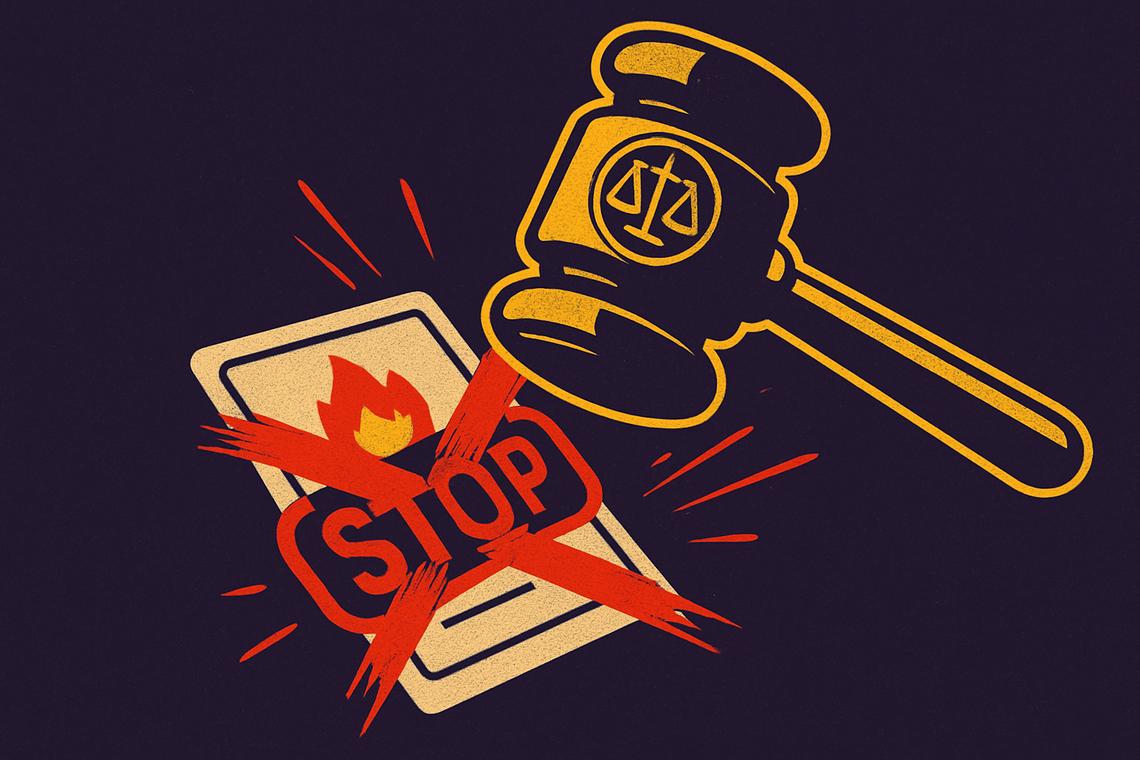
Nine Democratic senators are pressing federal regulators to close what they call a dangerous loophole: the ability to place bets on wildfires while they are actively burning. The push for tighter wildfire betting regulation comes as prediction markets like Polymarket and Kalshi face growing scrutiny over contracts tied to natural disasters, and as fire experts warn that letting people profit from destruction could create perverse incentives.
Key takeaways
- Nine Democratic senators sent a letter to CFTC Chair Michael Selig demanding a ban on wildfire-related betting contracts.
- Polymarket accepted more than $1.2 million in bets tied to the 2025 Palisades and Eaton fires in Los Angeles.
- The senators warned wildfire contracts could encourage arson, insider trading, and other public safety risks.
- Kalshi bars wildfire markets outright, calling them a source of “perverse incentives,” while Polymarket says it currently has no active wildfire contracts.
Senators Call for CFTC Ban on Wildfire Betting Contracts
The letter, sent Monday to the Commodity Futures Trading Commission, asks the agency to explain its plans for cracking down on prediction markets that let users wager on wildfires. Signed by Sen. Jeff Merkley of Oregon, Sen. Alex Padilla and Sen. Adam Schiff of California, Sen. Catherine Cortez Masto of Nevada, and five other Democratic colleagues representing California, Minnesota, and New Hampshire, the letter frames wildfire betting regulation as an urgent public safety matter rather than a routine market oversight issue.
Lawmakers’ Concerns Over Public Safety Risks
“Offering bets on destructive wildfires threatens to minimize communities’ suffering, all so the rich and powerful can profit,” the senators wrote. They cited warnings from state and local fire officials that betting contracts could tempt “individuals” to commit arson simply to guarantee a payout. The lawmakers also flagged insider trading risks, arguing that anyone with early knowledge of a fire’s spread could exploit that information on a betting platform before the public catches up.
Their concerns are not purely theoretical. Fire scientists contacted separately by Ars Technica echoed the same fear. Michael Gollner, a professor at the UC Berkeley Fire Research Lab, said such markets “could create a perverse incentive for arson or other destructive activities,” adding that resources should go toward mitigating disasters rather than monetizing them. Riva Duncan, president of the nonprofit Grassroots Wildland Firefighters, said her community is “pretty disgusted” by the concept, calling it “beyond comprehension” that people would try to profit from tragedy.
Details of the Senators’ Letter to the CFTC
The letter lands as active wildfires continue to tear through parts of the Pacific Northwest. In Washington state, the Spokane County Sheriff’s Office recently announced the arrest of a suspect believed to have started one of the blazes now threatening the Spokane area, where several hundred buildings have already burned and roughly a quarter of the city’s population has been ordered to evacuate.
The senators urged the CFTC to rein in these contracts before next year’s wildfire season begins. “The CFTC must lead the charge to rein in these contracts in the U.S. and offshore and put in place common-sense guardrails to prevent people from profiting as wildfires threaten communities,” the letter states.
Scope and Nature of Wildfire Betting on Prediction Markets
Prediction markets function like a stock exchange for real-world outcomes: users buy and sell contracts tied to whether a specific event will happen, and prices shift as new information arrives. That structure works reasonably well for elections or sports scores. Applied to an active wildfire, it raises a different set of questions about who benefits when a disaster gets worse.
How Prediction Markets Work
Platforms such as Myriad, run by Decrypt’s parent company Dastan, have expanded rapidly in recent years, letting users speculate on everything from crypto price swings to geopolitical developments. Investment bank Bernstein projected in April that annual trading volume across prediction markets could reach $1 trillion by 2030 as institutional money flows in. Former President Donald Trump, who once dismissed prediction markets as turning the world into “a casino,” softened that criticism the same month.
Examples of Wildfire Bets Placed on Polymarket
When the Palisades and Eaton fires devastated parts of Los Angeles in early 2025, Polymarket let users bet on when the fires would be contained, whether flames would spread to specific neighborhoods, and how many total acres would burn. Reports indicated that Polymarket received wagers exceeding $1.2 million according to the senators, who referenced data concerning these fires.
The two leading platforms have taken opposite approaches. Kalshi spokesperson Elisabeth Diana told Ars Technica the company does not allow wildfire markets “because they create perverse incentives.” Polymarket, by contrast, told Ars it does not “profit from outcomes” and argued that removing such markets “does not prevent a tragedy but makes the most accurate information less accessible to the people who need it most.” The company separately said it currently has no active wildfire markets and has not for some time.
Regulatory and Legal Uncertainty Surrounding Prediction Markets
The wildfire dispute is unfolding inside a much bigger fight over who actually regulates prediction markets, and that uncertainty is exactly why the senators want the CFTC to move fast. Right now, oversight is fragmented across state courts, federal lawsuits, and an agency whose jurisdiction keeps getting tested.
State Actions and Federal Lawsuits
Minnesota became the first state to ban prediction markets in May, only to be sued by the CFTC and the Department of Justice, which argued the state law conflicted with federal authority. In June, Kentucky sued both Kalshi and Polymarket, accusing them of running illegal sports betting operations under the guise of event contracts. Around the same time, a federal judge in Michigan ruled that sports prediction markets fall outside CFTC jurisdiction altogether, deepening confusion over which regulator, if any, has final say.
FAQ
What are prediction markets and how do they relate to wildfires?
Prediction markets let users buy and sell contracts betting on whether future events, including wildfires, will occur, with prices moving as new information comes in.
Why do senators want the CFTC to ban wildfire bets on prediction markets?
Senators warn these bets could encourage arson, insider trading, and pose risks to public safety by incentivizing profit from destructive wildfires as they burn.
How much money has been wagered on wildfires through prediction markets?
Polymarket accepted more than $1.2 million in bets linked to the Palisades and Eaton fires in California in 2025, according to the senators’ letter.
What is the current regulatory status of prediction markets in the US?
Oversight remains unsettled: Minnesota banned prediction markets before facing a federal lawsuit, Kentucky sued Kalshi and Polymarket over alleged illegal sports betting, and a Michigan federal judge ruled sports contracts fall outside CFTC authority, leaving the agency’s jurisdiction over wildfire betting regulation an open question.
Article produced with the assistance of artificial intelligence and reviewed by the editorial team.






 English (US) ·