
 1 month ago
65
1 month ago
65
- Solana rebounded after touching recent lows as tokenized stock trading on the network surged past $113 million in daily volume.
- Despite growing interest in equity-backed crypto products, declining DeFi activity and weaker liquidity continue to weigh on SOL’s momentum.
- Traders are now watching whether rising real-world asset adoption can offset falling network usage and push Solana toward the $80 level.
Solana bounced back on Friday, recovering from the previous session’s lows as investors returned to the market. A large part of that renewed optimism came from the rapid growth of tokenized stocks on the network, particularly products tied to artificial intelligence-related equities.
Still, while the price action looked encouraging, the broader picture wasn’t quite as convincing. Network activity remained uneven, liquidity stayed soft, and decentralized finance metrics continued to slide. In other words, the rally had fuel—but perhaps not enough yet to guarantee a sustained breakout.
Tokenized Stock Trading Gives Solana Fresh Momentum
One of the biggest catalysts behind SOL’s rebound was the growing popularity of tokenized equities.
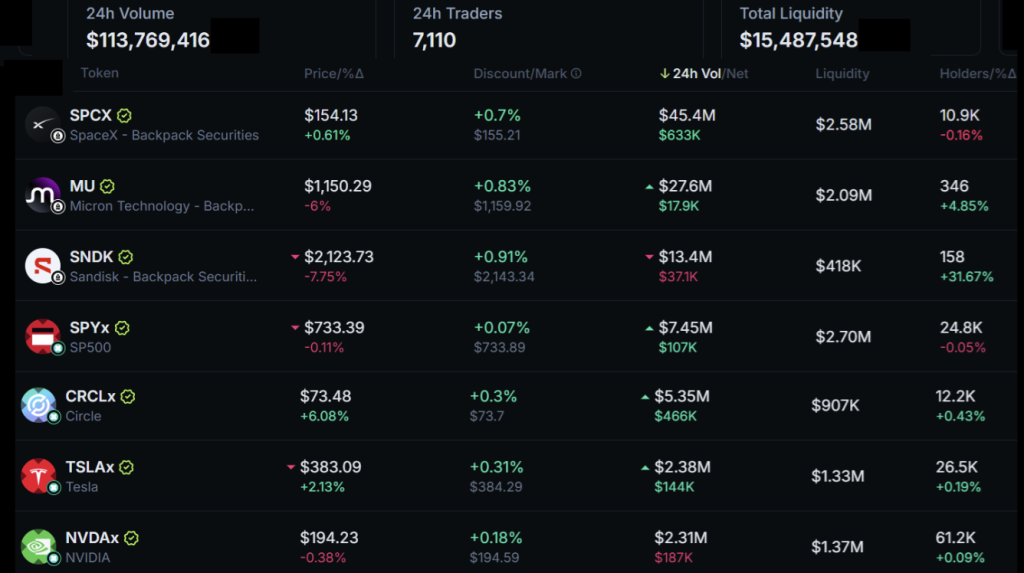
According to Jupiter Aggregator, more than $113 million worth of tokenized stocks changed hands over the past 24 hours. That suggests traders are increasingly turning to Solana as a fast and inexpensive way to access blockchain-based equity markets.
However, there’s a catch.
Many of these trading pools still suffer from relatively low liquidity, making larger trades more difficult and spreads less competitive. On top of that, most of these products are still very new, meaning holder counts remain relatively small. So while trading volume has been impressive, the user base has yet to catch up.
DeFi Activity Continues to Weaken
While tokenized stocks grabbed headlines, Solana’s traditional DeFi ecosystem continued moving in the opposite direction.
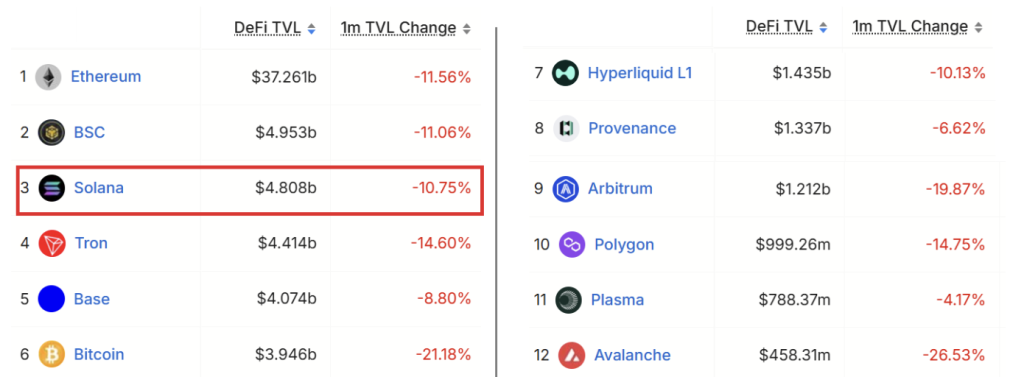
Data from DeFiLlama shows Solana’s total value locked (TVL) has dropped roughly 11% over the past month as rival blockchain Base continues narrowing the gap. That decline suggests capital hasn’t fully returned to the network despite the recent recovery in SOL’s price.
Several of Solana’s largest protocols also recorded notable declines:
- Kamino fell 19% over the past month.
- Binance Staked SOL declined 20%.
- Raydium dropped 17%.
The lone standout was xStocks, which grew around 31% as demand for tokenized equities accelerated.
DEX Volume and Revenue Remain Under Pressure
Another warning sign comes from decentralized exchange activity.
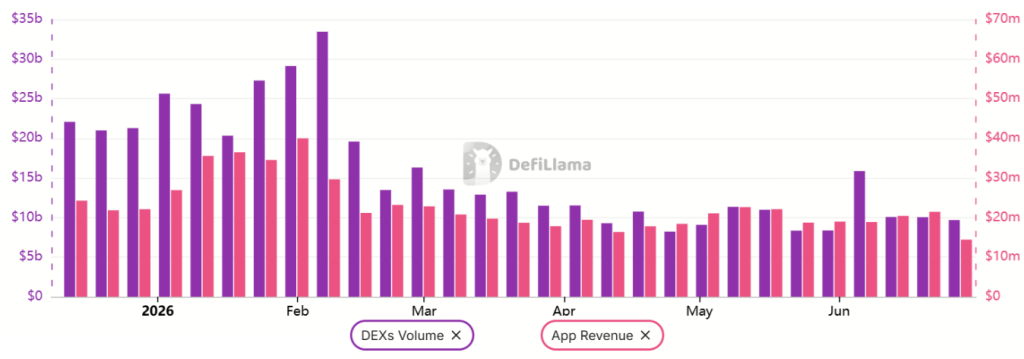
Weekly DEX volume on Solana has fallen to roughly $10 billion, a sharp decline from nearly $30 billion seen earlier this year. At the same time, decentralized application revenue has also trended lower.
That slowdown matters because Solana’s long-term value depends heavily on network usage. Fewer transactions mean less activity flowing through the ecosystem, reducing one of the blockchain’s strongest investment narratives.
Pump.fun remains a major contributor, generating roughly 30% of Solana’s decentralized application revenue. While impressive, that concentration also creates risk since the platform relies heavily on memecoin launches, an area known for rapid boom-and-bust cycles.
CoinGecko estimates that around 80% of the 18.7 million tokens created recently were launched within just two days. Meanwhile, Dune Analytics found that roughly 55% of participating wallet addresses lost as much as $1,000, raising fresh questions about the sustainability of that growth.
Derivatives Show Growing Confidence, But Not Euphoria
Futures traders have also become noticeably more optimistic.
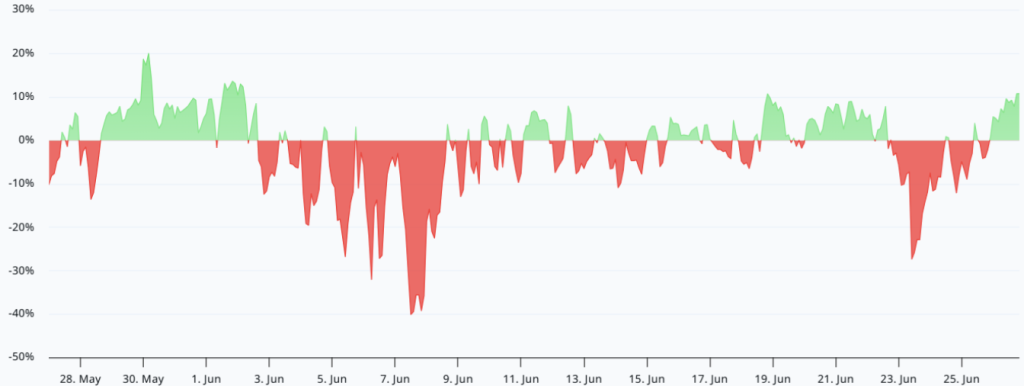
Data from Laevitas shows Solana’s perpetual funding rate climbed to an annualized 10%, its strongest reading this month. That’s a clear improvement from Thursday’s bearish conditions after SOL briefly dipped to around $64.
Even so, funding remains within what many traders would consider a relatively balanced range. It suggests investors are rebuilding long positions—but without excessive leverage that often precedes sharp liquidations.
That’s encouraging, although it also means the market could remain vulnerable if spot buying slows again.
New Projects Could Expand Solana’s Ecosystem
Several upcoming launches could provide additional support for Solana over the coming months.
Projects including OnRe, Bulk, and Loopscale continue attracting attention ahead of expected token distributions.
- OnRe currently holds approximately $200 million in total value locked through its reinsurance platform.
- Bulk has accumulated roughly $325 million in perpetual trading open interest.
- Loopscale manages around $79 million in lending deposits.
These platforms broaden Solana’s ecosystem beyond memecoins and speculative trading. However, their timelines remain uncertain, and history shows that airdrop excitement often fades quickly once token claims begin.
Competition in Tokenized Stocks Is Heating Up
Solana isn’t the only blockchain chasing the tokenized equity opportunity.
Hyperliquid has already entered the space with its own trading infrastructure, while several centralized exchanges are building competing blockchain-based stock products.
OKX recently partnered with Intercontinental Exchange, the parent company of the New York Stock Exchange, to develop tokenized financial products using Ethereum infrastructure. Moves like this could make it more difficult for Solana to dominate the emerging market as institutional players enter the race.
For now, Solana’s outlook largely depends on whether tokenized stocks become a lasting source of network demand rather than a short-lived trend.
A sustained move toward the $80 level will likely require stronger spot buying, healthier liquidity, improving application revenue, and renewed growth across the broader DeFi ecosystem. Without those pieces falling into place, the latest rally may prove to be little more than a temporary squeeze instead of the beginning of a larger uptrend.
Disclaimer: BlockNews provides independent reporting on crypto, blockchain, and digital finance. All content is for informational purposes only and does not constitute financial advice. Readers should do their own research before making investment decisions. Some articles may use AI tools to assist in drafting, but every piece is reviewed and edited by our editorial team of experienced crypto writers and analysts before publication.




 English (US) ·