
 2 months ago
68
2 months ago
68
- SpaceX successfully completed its IPO, but trading was temporarily delayed as Nasdaq conducted its opening auction process.
- Early indications suggested shares could open around $175, roughly 30% above the $135 IPO price.
- The delay reflects overwhelming investor demand rather than any issue with the company’s public debut.
SpaceX officially became a public company today, but many investors were surprised when they opened their brokerage accounts and discovered there were still no trades taking place. Despite the company pricing its highly anticipated IPO at $135 per share and raising tens of billions of dollars, the first transaction did not occur immediately after the scheduled market debut.
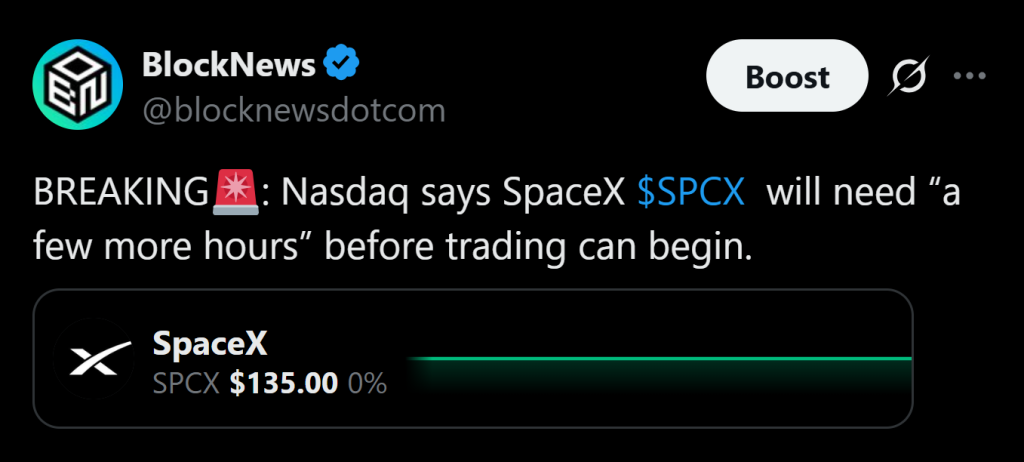
While the delay may have confused some traders, it is actually a normal part of the IPO process, especially for blockbuster offerings that attract massive interest from both institutional and retail investors. In fact, the pause before trading begins is often a sign that demand is exceptionally strong rather than a signal that something has gone wrong.
Why SpaceX Didn’t Start Trading Immediately
A common misconception among investors is that IPO shares automatically begin trading the moment the opening bell rings. In reality, exchanges use a process known as an opening auction to determine a fair market price before the first trade takes place.
Before trading begins, Nasdaq collects buy and sell orders from investors and continuously evaluates where supply and demand are balanced. The exchange then publishes indicative prices, which are estimates of where shares could open based on the current order flow.
For SpaceX, the first indications suggested an opening price near $175 per share, significantly above the $135 IPO price. However, those figures were only estimates and not actual trades. The opening price can continue moving higher or lower until the auction process is finalized.
The Opening Auction Is Designed To Create Stability
The purpose of the opening auction is to prevent chaotic trading conditions during highly anticipated listings. Millions of shares may be involved, and exchanges need time to match buyers and sellers efficiently.
During this period, investors continue submitting orders while Nasdaq adjusts the indicative price in real time. If demand outweighs supply, the projected opening price rises. If additional sellers enter the market, the estimate can move lower. The process continues until the exchange identifies a price where the largest number of shares can trade fairly.
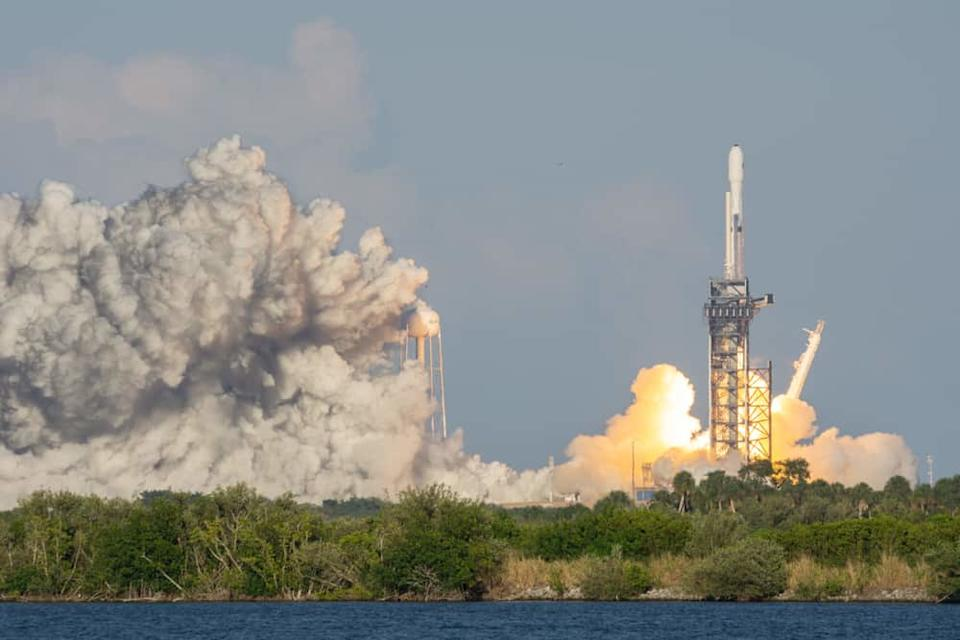
For a company as closely watched as SpaceX, this balancing act can take considerably longer than it would for a smaller IPO.
Major IPOs Have Experienced Similar Delays
SpaceX is far from the first company to encounter a delayed opening.
Some of the largest and most successful technology IPOs in history experienced similar situations. Google’s public debut opened well after the broader market had started trading, while Facebook’s IPO in 2012 faced delays that stretched more than two hours beyond the opening bell.
In both cases, overwhelming investor demand created a flood of orders that required additional time to process. Despite those early delays, both companies went on to become some of the most influential publicly traded firms in the world.
SpaceX entered the market with a comparable level of excitement, and many analysts expected the opening auction to take longer than usual because of the extraordinary volume of buy orders.
Strong Demand Is Driving The Premium
The most notable takeaway from the early indications is the size of the premium investors appear willing to pay. An opening price near $175 would represent approximately a 30% jump above the IPO price, instantly adding hundreds of billions of dollars to SpaceX’s valuation.
That level of demand reflects investor enthusiasm surrounding several key business segments. SpaceX dominates commercial rocket launches, operates the rapidly growing Starlink satellite network, maintains significant government and defense contracts, and continues pursuing ambitious long-term space exploration goals.
Many investors view the company as one of the most important technology and infrastructure businesses of the next decade.
Conclusion
The temporary delay in SpaceX trading does not indicate any problems with the IPO. Instead, it reflects Nasdaq’s effort to establish a fair opening price amid overwhelming investor interest. Early indications point to a strong debut, with shares potentially opening around $175 compared to the $135 IPO price.
For investors, the bigger story is not the exact minute trading begins but the extraordinary demand surrounding one of the most anticipated public offerings in market history. Once the opening auction concludes, SpaceX will officially begin its next chapter as a publicly traded company.
Disclaimer: BlockNews provides independent reporting on crypto, blockchain, and digital finance. All content is for informational purposes only and does not constitute financial advice. Readers should do their own research before making investment decisions. Some articles may use AI tools to assist in drafting, but every piece is reviewed and edited by our editorial team of experienced crypto writers and analysts before publication.





 English (US) ·