
 1 month ago
28
1 month ago
28
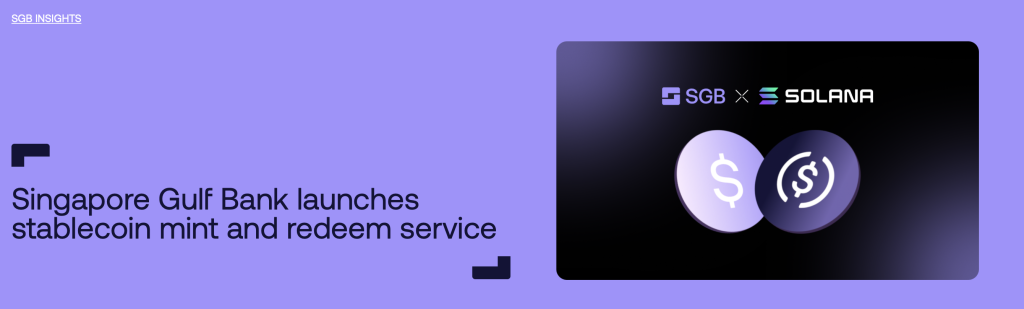
- Singapore Gulf Bank launched a stablecoin conversion service targeting institutional clients
- USDC and Solana gain early advantages with zero-fee transactions and instant conversions
- The move reflects growing institutional adoption of stablecoins for payments and treasury operations
Singapore Gulf Bank is making a fairly bold move into crypto, though it’s being framed in a very… traditional way. The bank has introduced a new stablecoin conversion service, specifically aimed at corporate clients and high-net-worth individuals, which already tells you who this is really for. It’s not retail-focused, not experimental—this is more about integrating digital assets directly into existing financial systems.
At its core, the service allows seamless switching between fiat and stablecoins, with USDC taking the lead and Solana quietly positioned as a key network behind the scenes. It’s another signal, honestly, that institutions are no longer just “exploring” crypto—they’re starting to use it where it makes sense.
Faster Payments, Lower Costs, Fewer Frictions
The setup is pretty straightforward, but also kind of powerful. Clients can convert funds instantly between traditional currency and stablecoins, without the usual delays that come with banking rails. That alone solves a lot of friction, especially for cross-border operations where timing can… get messy.
What stands out, though, is the multi-chain support. Ethereum, Base, Arbitrum, Avalanche—they’re all included. But Solana gets a bit of special treatment here, mainly because of its zero-fee structure within this program. That combination of speed and low cost could end up pulling more volume toward the network, even if quietly at first.
Built for Institutions, Not Casual Users
There’s a reason the minimum transaction size is set at $100,000. This isn’t meant for everyday users moving small amounts—it’s clearly designed for companies, funds, and wealthy clients managing large capital flows. That focus changes how the service will be used… fewer transactions maybe, but much larger ones.
SGB’s CEO, Shawn Chan, pointed out that the goal is to improve treasury operations and make cross-border payments more flexible. And that makes sense—if businesses can move funds globally without delays or extra costs, it opens up a lot of efficiency gains that traditional systems struggle to offer.
USDC and Solana Take the Early Lead
Right now, USDC is the main stablecoin enabled on the platform, giving it a bit of a head start. Clients using USDC on Solana get additional perks, including zero fees, which naturally encourages early adoption. It’s a subtle incentive, but one that could drive meaningful activity over time.
There’s also the ability to mint and redeem stablecoins instantly, which matters more than it sounds. For large players, liquidity management is everything—being able to move in and out quickly without delays can make a big difference. Other stablecoins like USDT and USDe are expected to join later, but that delay might cost them some early traction.
A Bigger Shift in Institutional Behavior
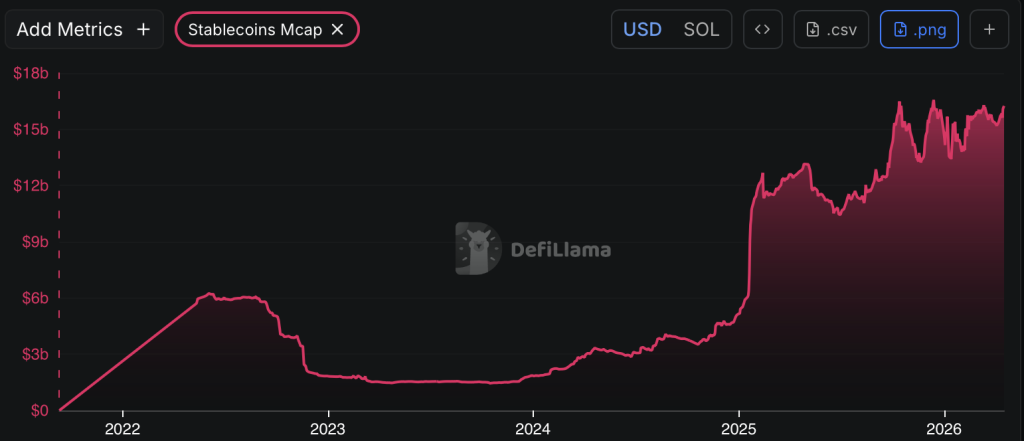
Zooming out a bit, this launch feels like part of a broader shift. Stablecoins are slowly moving from being niche crypto tools into something more… foundational in finance. SGB already processes over $2 billion in monthly fiat transactions, so even a small portion of that volume moving into stablecoins could have a noticeable impact.
On top of that, the bank’s recent integration with the Bank of New York’s correspondent network adds another layer of credibility and infrastructure. It means smoother dollar settlements, better connectivity, and overall, a more complete system.
It’s not a flashy move, but it’s a meaningful one. And sometimes, those are the developments that end up mattering most over time.
Disclaimer: BlockNews provides independent reporting on crypto, blockchain, and digital finance. All content is for informational purposes only and does not constitute financial advice. Readers should do their own research before making investment decisions. Some articles may use AI tools to assist in drafting, but every piece is reviewed and edited by our editorial team of experienced crypto writers and analysts before publication.





 English (US) ·