
 5 months ago
74
5 months ago
74
- The White House called the talks “productive,” but no agreement was reached
- Banks want strict limits on yield-bearing stablecoins to protect deposits
- Crypto firms view yield as essential for adoption and won’t budge
Washington just wrapped another round of stablecoin discussions with polite language and zero resolution. Officials described the talks as constructive, but banks and crypto firms walked away exactly where they started. The core dispute is painfully simple: should stablecoins be allowed to pay yield, and if so, under what rules.
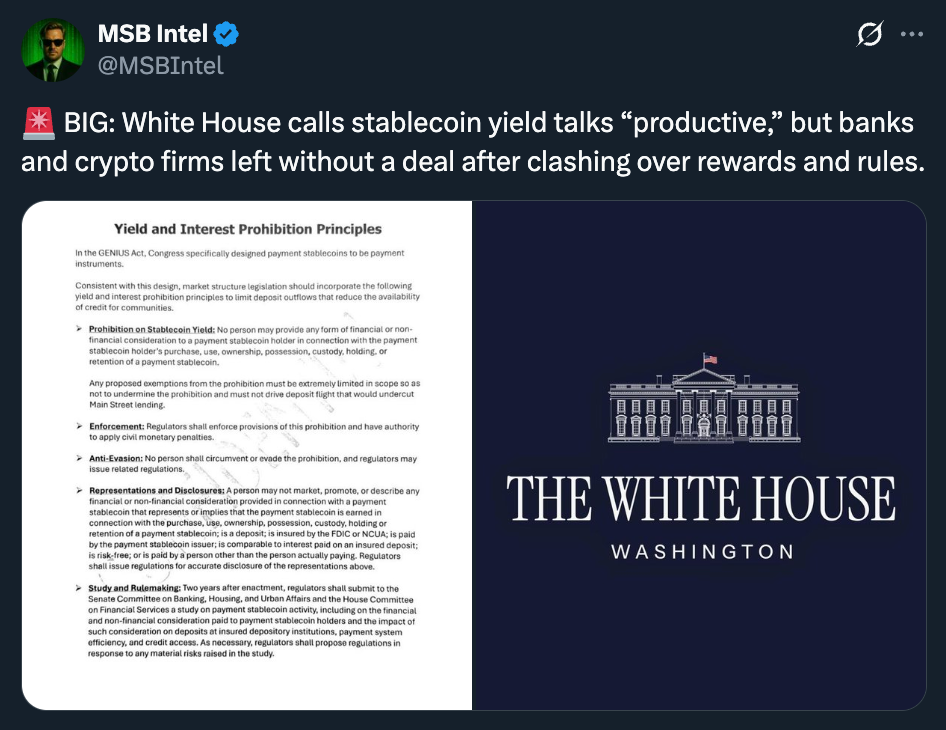
Regulators want guardrails. Banks want protection. Crypto wants to keep doing what users actually want. Everyone is acting rationally from their own position, which is exactly why this gridlock is so hard to break.
Why Banks Are Digging In
From the banking side, yield-bearing stablecoins look like deposit substitutes wearing a tech costume. If a dollar-backed token can pay interest without the same balance-sheet constraints, capital requirements, and regulatory burdens, it threatens traditional funding models. That isn’t theoretical. Deposits are how banks fund lending, manage liquidity, and keep their cost of capital stable.
Banks argue that allowing yield without bank-style oversight opens systemic risk, distorts competition, and drains liquidity out of insured deposits. Their stance isn’t ideological. It’s defensive, and it’s also predictable. No industry voluntarily allows a new product to undercut its core business without trying to shape the rules.
Why Crypto Won’t Budge
Crypto firms see yield as table stakes. Users expect their capital to earn something, especially after years of DeFi conditioning the market to treat idle dollars as wasted dollars. Onchain treasuries, tokenized money markets, and stablecoin reward models have already taught users to demand returns.

Strip yield away and stablecoins become glorified payment rails with little reason to hold them long-term. From crypto’s view, banning yield doesn’t reduce risk. It just pushes activity offshore or into murkier structures that regulators can’t monitor as effectively. And in crypto, the market always routes around restrictions, usually faster than lawmakers expect.
The Real Issue Is That Both Sides Are Right
This is what makes the fight so sticky. Banks are right that yield-bearing stablecoins can compete directly with deposits. Crypto is right that yield is one of the strongest adoption drivers in digital finance. Regulators are right that some of these models can create hidden fragility if they aren’t properly supervised.
But none of that produces a clean compromise. The moment you allow yield, you’re implicitly deciding who is allowed to act like a bank. The moment you ban it, you’re deciding that the US will not host one of the most popular stablecoin use cases domestically.
Why This Isn’t Ending Anytime Soon
Calling the talks “productive” feels like a way to buy time and keep negotiations alive. The reality is that neither side has a strong incentive to concede. Banks can stall because the status quo protects them. Crypto can stall because the market will keep innovating regardless, even if it means moving outside US jurisdiction.
This is not just policy debate. It’s a turf war over the future of money. And until lawmakers decide whether they want stablecoin innovation at home or safely exported elsewhere, these meetings will keep ending the same way.
Conclusion
Stablecoins sit directly on the fault line between old finance and programmable money. Yield is the pressure point because it forces everyone to admit what stablecoins really are: not just payment tools, but financial products competing for capital. Until that truth is addressed directly, these talks will keep producing the same result, smiles, statements, and no deal.
Disclaimer: BlockNews provides independent reporting on crypto, blockchain, and digital finance. All content is for informational purposes only and does not constitute financial advice. Readers should do their own research before making investment decisions. Some articles may use AI tools to assist in drafting, but every piece is reviewed and edited by our editorial team of experienced crypto writers and analysts before publication.






 English (US) ·