
 3 months ago
95
3 months ago
95
Tether AI just released TurboQuant as open-source software, delivering a tool that compresses the memory footprint of large language model inference by up to five times. The technology targets a specific bottleneck called the key-value (KV) cache, which is essentially the working memory that transformer models use to keep track of context during a conversation.
What TurboQuant actually does
The algorithm behind TurboQuant originated from Google Research, which published the initial details on March 24, 2026. What Tether AI has done is take that research paper and turn it into something developers can actually deploy in production. Tether’s release includes a full quantization pipeline, framework adapters, and comprehensive documentation.
Quantization is a technique that reduces the precision of numbers used in neural network computations. Instead of storing values as 16-bit or 32-bit floating point numbers, you compress them down to 4-bit or even 2-bit representations. TurboQuant handles this for the KV cache specifically.
No model retraining or fine-tuning is required. Developers can apply TurboQuant to existing models and existing inference frameworks without starting from scratch.
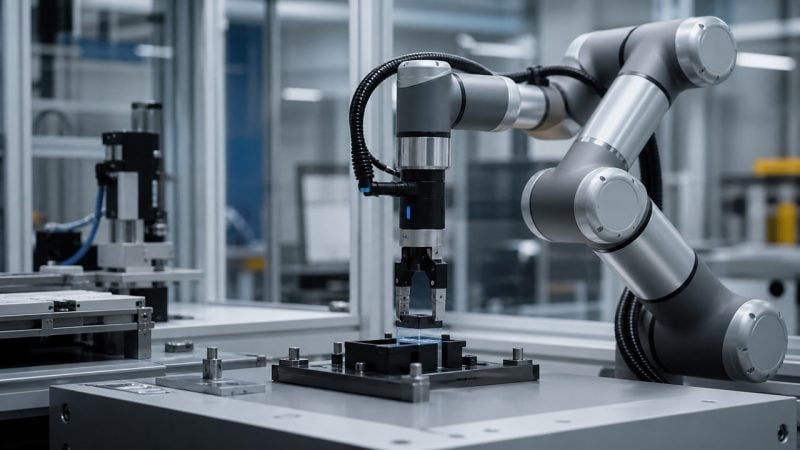
The release arrived as part of QVAC SDK version 0.12.0, which also includes new capabilities like text-to-video generation and robot control. QVAC is Tether’s broader platform aimed at supporting decentralized AI across consumer hardware.
Why a stablecoin company is building AI infrastructure
Tether has been aggressively expanding beyond its USDT stablecoin, and AI represents one of its biggest bets. CEO Paolo Ardoino has positioned the company’s AI efforts around a specific thesis: that high-quality language models should run locally on consumer devices like phones and laptops, rather than depending on centralized cloud services.
The memory problem is the core obstacle to that vision. A model that needs 16 GB of memory for its KV cache alone isn’t going to fit on most consumer devices. Cut that to 3.2 GB and suddenly the math starts working.
Ardoino has emphasized that TurboQuant brings efficient local AI closer to reality by addressing the memory constraints that transformer models face on consumer hardware.
The QVAC platform builds on several prior quantization techniques, including PolarQuant and Quantized Johnson-Lindenstrauss. Tether’s AI team has been stacking multiple compression methods together, each targeting different parts of the efficiency problem, and TurboQuant is the latest layer in that stack.
What this means for investors
The open-source nature of the release means any developer can grab the code, integrate it into their inference pipeline, and immediately benefit from the memory savings. That is a strategic play to grow the ecosystem around QVAC and position Tether’s platform as the default toolkit for decentralized AI applications.
Google Research published the underlying algorithm. Nothing stops Google itself, or any other well-resourced lab, from releasing their own production implementation. The inclusion of text-to-video and robot control features in the same SDK update suggests the team is iterating quickly.
Watch whether independent benchmarks confirm the 5x compression claim holds across different model architectures and context lengths, as quantization techniques sometimes degrade in real-world usage with longer conversations or more complex reasoning tasks.
Disclosure: This article was edited by Editorial Team. For more information on how we create and review content, see our Editorial Policy.






 English (US) ·