
 1 month ago
55
1 month ago
55
- Thailand’s central bank and securities regulator have begun auditing high-value stablecoin transactions to combat illicit finance.
- Authorities are using advanced data analytics to monitor suspicious USDT transfers that may bypass traditional financial controls.
- The initiative is part of a broader crackdown on money laundering, online gambling, and other underground financial activities.
Thailand is stepping up its oversight of the cryptocurrency market after the Bank of Thailand (BOT) and the country’s Securities and Exchange Commission (SEC) launched a joint review of large stablecoin transactions.
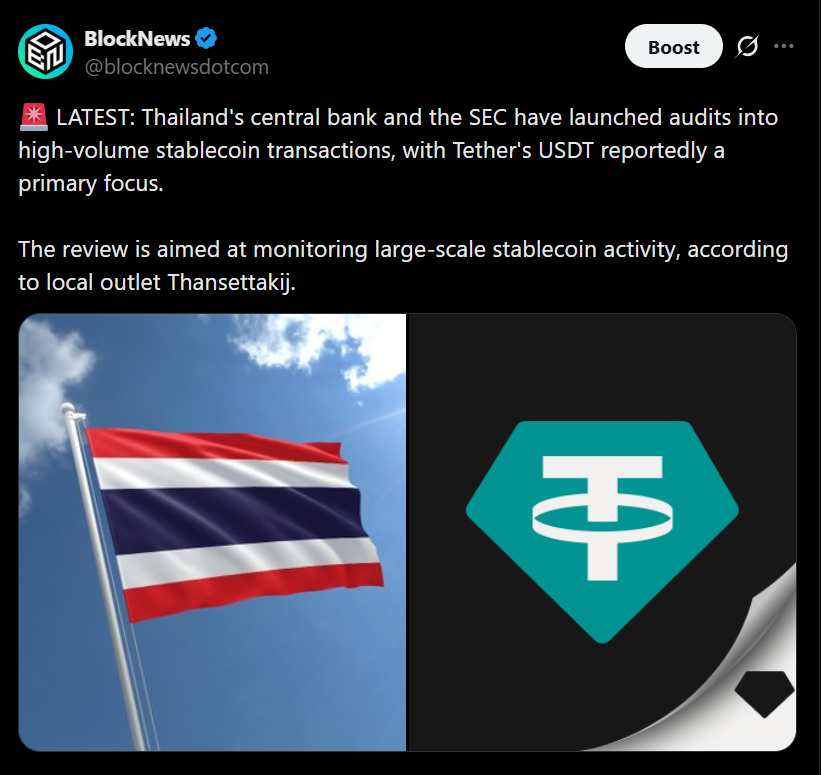
According to local reports, regulators are using advanced analytics to identify unusual trading activity involving stablecoins, with a particular focus on Tether’s USDT, as authorities continue tightening efforts against money laundering and the country’s growing shadow economy.
Regulators Increase Stablecoin Oversight
Bank of Thailand Governor Vitai Ratanakorn said the central bank and the SEC have begun analyzing high-volume stablecoin transactions for signs of suspicious activity.
The review focuses primarily on identifying transfers that may have been structured to avoid disclosure requirements or circumvent traditional banking systems. Authorities have reportedly already detected several transactions that warrant further investigation.
Regulators are now working together to determine what enforcement actions or additional oversight may be appropriate as the investigation continues.
Part of a Broader Financial Crackdown
The stablecoin review is one element of Thailand’s wider campaign against illicit financial activity.
Officials are simultaneously introducing stricter oversight of large cash deposits and withdrawals, gold trading, and financial accounts suspected of being connected to illegal online gambling operations.

According to the Bank of Thailand, these measures are intended to create a stronger and more transparent financial system rather than serve as temporary enforcement actions.
Crypto Money Laundering Remains a Concern
The latest regulatory effort follows a recent investigation in which Thai authorities uncovered a sophisticated cryptocurrency money-laundering network tied to romance scams.
Investigators alleged that criminals used multiple cryptocurrencies and cross-chain token swaps to conceal the movement of illicit funds. Authorities reported that one suspect’s digital wallet processed more than $122.5 million over a ten-month period, highlighting the growing scale of crypto-related financial crime.
The case has reinforced regulators’ concerns about how stablecoins and blockchain technology can be exploited to move funds across jurisdictions while making transactions more difficult to trace.
Stablecoins Face Increasing Global Scrutiny
Thailand joins a growing list of countries increasing oversight of stablecoins as regulators seek to balance innovation with financial security.
While stablecoins such as USDT play a critical role in cryptocurrency trading and cross-border payments, governments worldwide are placing greater emphasis on anti-money laundering compliance, transaction monitoring, and customer identification.
As digital asset adoption continues expanding, regulatory scrutiny of stablecoin activity is expected to remain a key focus for financial authorities across global markets.
Disclaimer: BlockNews provides independent reporting on crypto, blockchain, and digital finance. All content is for informational purposes only and does not constitute financial advice. Readers should do their own research before making investment decisions. Some articles may use AI tools to assist in drafting, but every piece is reviewed and edited by our editorial team of experienced crypto writers and analysts before publication.








 English (US) ·