
 16 hours ago
16
16 hours ago
16
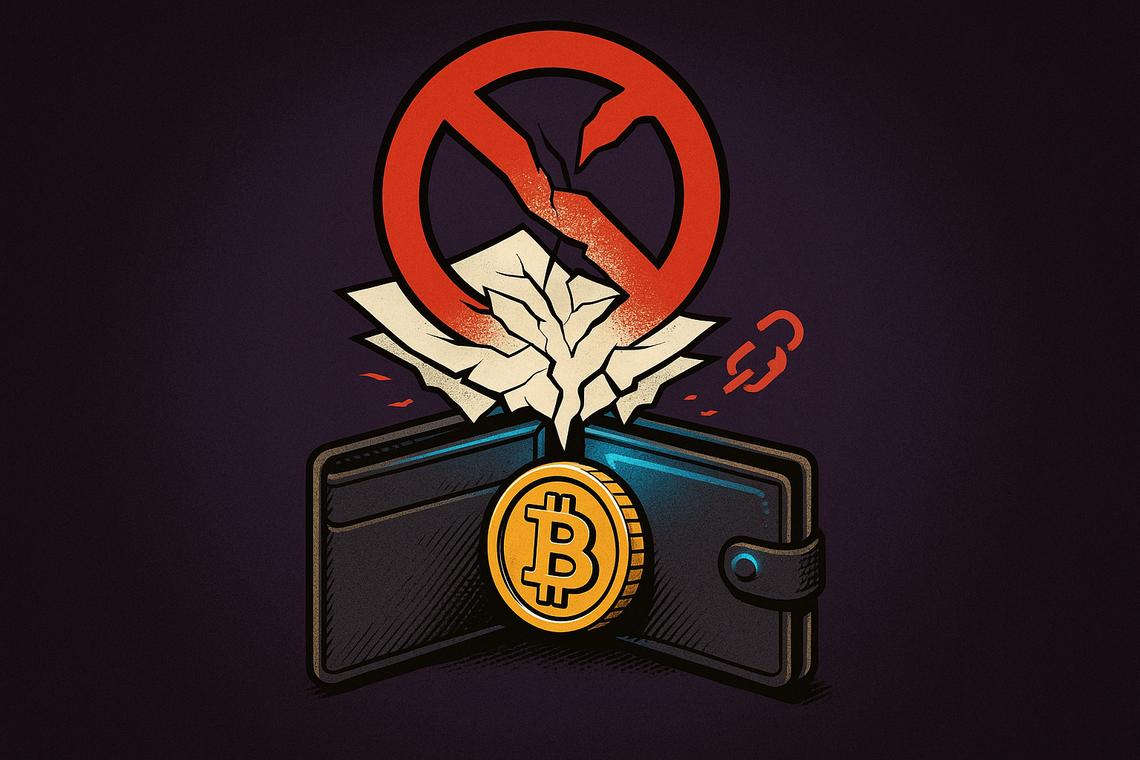
When bitcoin sits at roughly half its late-2025 peak while equities and gold trade near record highs, the natural instinct for many investors is to stay away. Onramp, a bitcoin-focused financial services firm, is making the opposite argument — and it has published a research report to back it up. Released in July 2026, the “Back to Basics” report makes a pointed case for owning actual spot bitcoin rather than the paper claims that most people hold without fully realizing it.
Key takeaways
- Onramp’s “Back to Basics” report, published July 2026, argues the current drawdown is the shallowest in bitcoin’s history and a compelling accumulation window.
- Bitcoin’s supply is capped at 21 million coins — a limit any participant can independently verify.
- Paper bitcoin instruments such as ETF shares, exchange balances, and structured products carry counterparty risks that direct ownership eliminates.
- Historical bitcoin drawdowns of 50% or more have each been followed by recoveries to new all-time highs.
- Onramp recommends dollar cost averaging on a schedule rather than market timing, with holdings kept in custody the owner directly controls.
Onramp Report Advocates Spot Bitcoin Ownership
Report Release and Market Context
The puzzle the report opens with is hard to ignore. Bitcoin is down roughly 50% from its late-2025 high while the S&P 500 sits within about 1% of its all-time high, the Nasdaq within roughly 4%, and gold within about 24% of its own peak, according to Onramp’s figures. For most assets, that kind of divergence would signal something broken. For a fixed-supply asset in an early adoption phase, the report argues, it signals something different: an opening.
What makes this drawdown notable, according to the report, is its relative shallowness. Prior bitcoin cycles saw peak-to-trough declines of 93% in 2011, 85% from 2013 to 2015, 83% in 2017 to 2018, and 77% from 2021 to 2022. Each one ended at a new all-time high. The current cycle’s roughly 50% decline is the shallowest on record by that standard, arriving at a moment when the Fear and Greed Index had fallen to 22 — deep into extreme-fear territory — at the time of writing, per Onramp.
“The fundamentals have not changed. The price has,” said Brian Cubellis, Chief Strategy Officer at Onramp, in the report’s accompanying materials.
Onramp’s Custody Platform and Services
Onramp has raised $12.5 million to scale its multi-institution custody platform, which combines bitcoin, cash, and gold into a single account structure. The model is built on a 2-of-3 key arrangement spread across independent institutions, meaning no single party can move coins and no single failure can result in a loss. Alongside the report, the firm is offering 50% off trading fees on every bitcoin buy and sell through September 7, 2026, for both new and existing clients, plus no-cost recurring buys — a feature that lets investors dollar-cost average automatically on a self-set schedule.
Bitcoin Fundamentals Support Scarcity and Security
Fixed Supply and Monetary Integrity
The report’s first section grounds everything in a core monetary argument. Fiat currencies, Onramp writes, are designed to lose purchasing power — the expansion of a money supply benefits those who receive new units first, while existing holders absorb the cost through a weaker currency. Bitcoin’s architecture inverts that dynamic.
The 21 million coin supply cap is not a policy promise; it is a rule any participant can independently verify by running a full node. That distinction — verifiable scarcity versus promised scarcity — sits at the center of the report’s case for bitcoin’s monetary integrity. The fixed issuance schedule and the halving mechanism reinforce that the supply cannot be changed unilaterally, and the report notes that past attempts to alter the protocol’s core rules have failed because authority rests with users, not with miners or firms.
Proof of Work and Decentralization
Proof of work and decentralization are presented as the two structural pillars that make the rules credible over time. Because no central party controls the network, the supply cap is not a matter of trust — it is a matter of code enforced by thousands of independent nodes. That combination, the report argues, is what separates bitcoin’s scarcity from any other asset’s scarcity claim.
Risks of Paper Bitcoin and the Value of Direct Ownership
Definition and Risks of Paper Bitcoin
The sharpest section of the report takes on what Onramp calls “paper bitcoin” — and the argument is structural rather than alarmist. A large share of what trades under bitcoin’s name, the firm writes, is not bitcoin itself but a derivative claim on its price. The range is wide: ETF shares, exchange balances, structured yield products, and shares in bitcoin-holding companies all fall into this category.
Each step away from the underlying asset adds a counterparty. A balance at an exchange is an obligation of a platform that may have lent the coins elsewhere. A fund share is a claim on a fund that holds a claim with a custodian. A yield-bearing product passes a borrower’s risk to the holder in the form of a return. Every layer can fail independently of bitcoin’s price — and for reasons entirely unrelated to the asset itself. The report ties this observation directly to strain seen among bitcoin-linked credit products.
According to Michael Tanguma, Founder and CEO of Onramp: “We find that a meaningful share of people who consider themselves bitcoin owners actually hold a paper claim against it. You get the price exposure, but not the asset itself.”
Bearer Ownership and Counterparty Risk Elimination
Direct ownership of spot bitcoin addresses this structurally. Controlling the private keys means ownership in full — no account to approve, no party able to freeze the position, no administrator standing between the holder and the asset. The report frames this as preserving bitcoin’s bearer quality: the same property that makes physical cash or gold bars different from a bank account or a futures contract.
This is more than a philosophical point. The removal of counterparty risk is one of bitcoin’s core design features, and paper exposure reintroduces the very risk the asset was built to eliminate. That tension is what makes the ownership distinction consequential rather than academic.
Market Timing and Investment Strategy Recommendations
Bitcoin’s Historical Volatility and Recovery Patterns
Volatility is the most common argument against bitcoin, and the report addresses it directly. Rather than minimizing the drawdowns, Onramp frames them as a pattern: declines of 50% or more have occurred multiple times across bitcoin’s history, and each one gave way to a recovery that exceeded the prior peak. The current cycle sits approximately seven months past its peak and near half below it — an earlier and shallower stage than comparable points in past cycles, according to the report’s data.
That framing matters because it recontextualizes volatility. An asset moving through a monetization process is not the same as a mature asset experiencing distress. The two look identical in a chart at the bottom, but they carry different implications for what comes next.
Mechanical Buying and Onramp’s Investment Advice
On strategy, the report avoids a price forecast entirely. Instead, it advocates a mechanical buying approach — purchasing on a fixed schedule rather than trying to call a bottom. Dollar cost averaging during price dips is the specific method favored, allowing accumulation to occur regardless of short-term sentiment. The firm pairs that recommendation with a clear instruction on storage: hold what you accumulate in custody you control, spread across independent institutions.
The report’s commercial offer reinforces this message. The recurring buys feature, launched alongside the report, automates the dollar-cost-averaging process at no extra cost. Combined with the 50% fee discount running through September 7, Onramp is effectively building its campaign around the same behavior it recommends in the report.
The report also marks the expansion of Onramp Media, the company’s editorial arm, including the debut of a new weekly show called Signal vs. Noise and a dedicated editorial news desk covering money and markets.
What the report ultimately does not resolve is the question of when the recovery arrives — deliberately so. The absence of a price target is a feature of the argument, not a gap in it. By anchoring the case entirely on fundamentals, historical patterns, and ownership structure, Onramp sidesteps the forecasting game and bets instead that the mechanics of fixed supply and expanding adoption will eventually close the gap between where bitcoin trades and where everything else already sits.
FAQ
What is the main argument of Onramp’s “Back to Basics” report?
The report advocates holding actual spot bitcoin rather than paper claims such as ETF shares, exchange balances, or structured products. It emphasizes bitcoin’s fixed 21 million coin supply, its network security through proof of work and decentralization, and the counterparty risks that indirect ownership introduces.
Why does Onramp consider current bitcoin price levels a buying opportunity?
Because bitcoin is trading at roughly 50% below its late-2025 peak — the shallowest drawdown in the asset’s history by its own historical standard — while equities and gold are near record highs. Onramp’s data shows that every prior drawdown of comparable or greater magnitude ended in a new all-time high.
What are the risks of holding “paper bitcoin” according to Onramp?
Paper bitcoin instruments carry counterparty risks that are entirely separate from bitcoin’s price performance. A fund share, an exchange balance, or a yield product can fail due to platform insolvency, custodian failure, or borrower default — reasons unrelated to the underlying asset. Each layer of intermediation adds an additional party that can fail independently.
How does Onramp recommend investors approach bitcoin accumulation?
By using a mechanical strategy such as dollar cost averaging — buying on a fixed schedule rather than attempting to time the market — and holding accumulated bitcoin in custody the owner directly controls, ideally spread across independent institutions through a multi-institution custody model.
Article produced with the assistance of artificial intelligence and reviewed by the editorial team.



 English (US) ·