
 4 months ago
59
4 months ago
59
- Senate signals April progress, but key issues remain unresolved
- Stablecoin yield rules are the main point of conflict with banks
- The outcome could reshape how crypto competes with traditional finance
The long-awaited U.S. crypto market structure bill is showing signs of movement again, with lawmakers pointing to a potential markup in April. That alone signals progress after earlier delays, especially following internal disagreements that stalled momentum earlier this year.
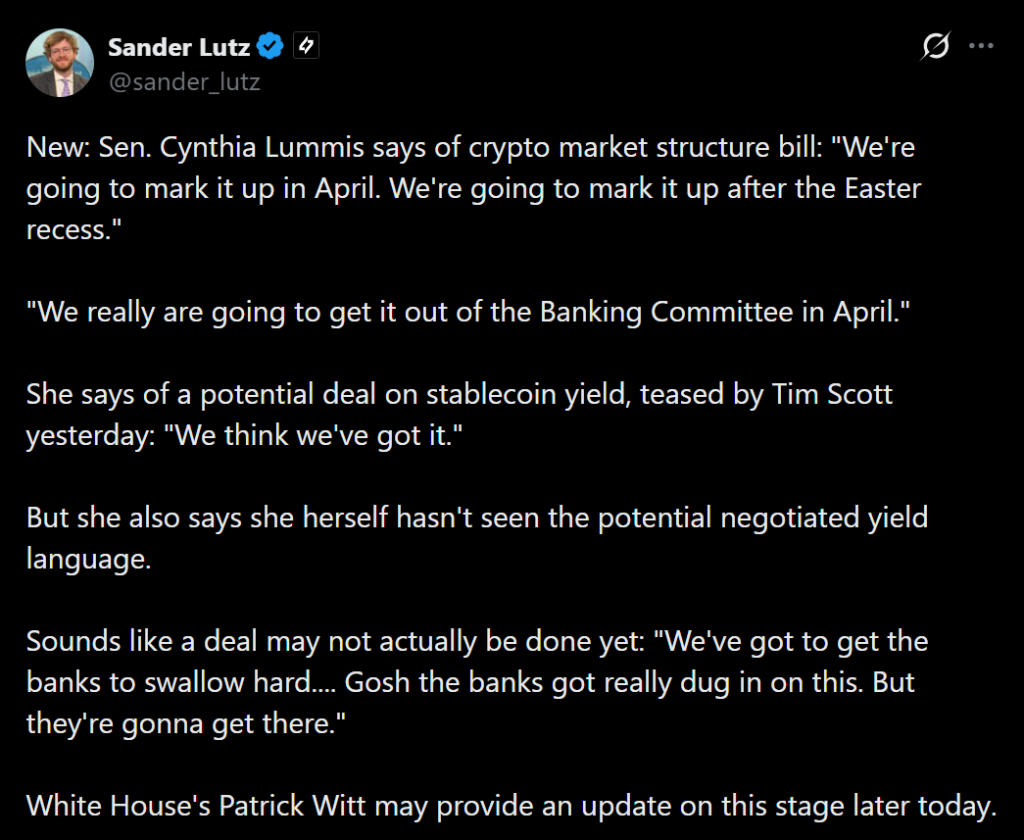
But the bill is far from finalized. Behind the scenes, negotiations are still ongoing, and the most contentious issue hasn’t been resolved yet. In fact, it’s become the central bottleneck holding everything together.
Stablecoin Yield Is the Core Battle
At the heart of the debate is a single question: should stablecoins be allowed to offer yield?
Crypto firms generally support it. Yield makes stablecoins more attractive, giving users a reason to hold digital dollars rather than traditional bank deposits. But that’s exactly why banks are pushing back.
If stablecoins begin offering competitive returns at scale, deposits could start shifting away from banks. That would directly impact how banks fund lending and manage liquidity. So from their perspective, this isn’t just policy… it’s survival.
Draft Rules Lean Toward Restrictions
Early versions of the bill suggest lawmakers may be leaning toward limiting how stablecoin yield works. Rather than allowing passive earnings, proposals focus on restricting rewards to specific use cases like collateral or active participation.
That kind of compromise tries to balance innovation with financial stability. But it also risks reducing one of the strongest advantages stablecoins currently offer.
And because of that, neither side appears fully satisfied.
Progress Doesn’t Mean Finality
Even with April discussions on the horizon, uncertainty remains high. Some lawmakers have indicated a deal may be close, but at the same time, not everyone involved has seen the final version of the bill.

That’s usually a sign that negotiations are still fluid. Key details could change quickly, and outcomes may look different from current expectations.
In other words, movement doesn’t equal resolution.
A Defining Moment for Crypto and Banking
What’s happening here goes beyond a single piece of legislation. It reflects a broader tension between traditional finance and crypto-native systems.
Stablecoins sit right in the middle of that conflict. They function like digital dollars but operate outside the traditional banking framework.
If the final bill favors banks, stablecoins may lose some of their competitive edge. If it favors crypto, the balance of financial power could begin to shift.
What to Watch Next
April’s markup won’t end the debate, but it will offer a clearer signal of direction. It may show which side is gaining influence and how policymakers are thinking about the future of digital finance.
For now, the bill is moving… just not settled.
Disclaimer: BlockNews provides independent reporting on crypto, blockchain, and digital finance. All content is for informational purposes only and does not constitute financial advice. Readers should do their own research before making investment decisions. Some articles may use AI tools to assist in drafting, but every piece is reviewed and edited by our editorial team of experienced crypto writers and analysts before publication.






 English (US) ·