
 1 month ago
28
1 month ago
28
- TRON now hosts over $85.3 billion in USDT, surpassing Ethereum
- Weekly stablecoin transfer volume on the network has doubled to $160 billion
- TRON processed about $7.9 trillion in stablecoin transactions during 2025
In 2026, TRON continues to quietly cement its role as one of the most important networks for stablecoin activity — especially when it comes to Tether’s USDT. The amount of USDT circulating on TRON has now climbed past $85.3 billion, marking a new record for the network.
That milestone pushes TRON ahead of Ethereum in terms of USDT supply, reinforcing its position as a key infrastructure layer for stablecoin transfers. And it’s not slowing down. At the same time, new developments around AI-powered payment systems could potentially add another layer of demand for TRX.
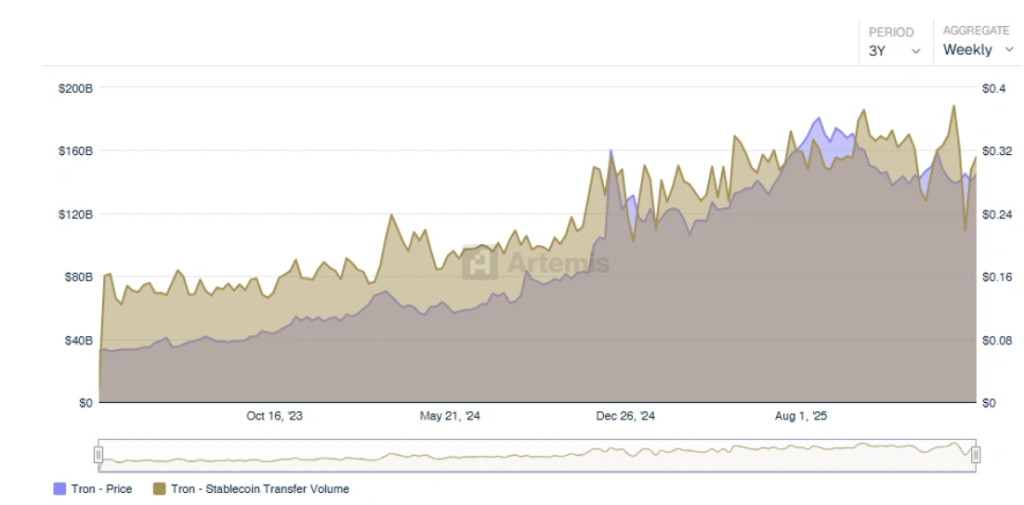
Stablecoin Transfers Surge to $160 Billion Weekly
The most recent boost came after Tether minted an additional 1 billion USDT directly on the TRON network. That pushed the circulating supply to roughly $85.3 billion, helping the network surpass Ethereum in total USDT issuance.
Overall stablecoin activity on TRON has grown rapidly. The combined market cap of stablecoins on the network has now crossed $86.6 billion — the highest level it has ever reached.
Data from Artemis Analytics highlights just how quickly the ecosystem has expanded. Weekly stablecoin transfer volume has doubled over the past three years, rising from under $80 billion to about $160 billion.
That’s a massive jump. And it hasn’t gone unnoticed.
Stablecoin Growth Has Fueled TRX Demand
Interestingly, TRX’s price has tended to move alongside this growth in stablecoin usage. As transfer volumes expanded, demand for the token also increased.
The connection makes sense once you look at how TRON’s system works.
Unlike Ethereum, which relies on traditional gas fees, TRON uses a resource system built around something called Bandwidth and Energy. These resources determine how transactions are processed on the network.
To access additional Bandwidth or Energy, users need to burn TRX tokens. That includes anyone transferring stablecoins like USDT.
So the more stablecoin activity the network handles… the more TRX ends up being consumed.
In 2025 alone, TRON processed around $7.9 trillion in stablecoin transaction volume. Not billion — trillion. It’s one of the largest payment rails in crypto right now.
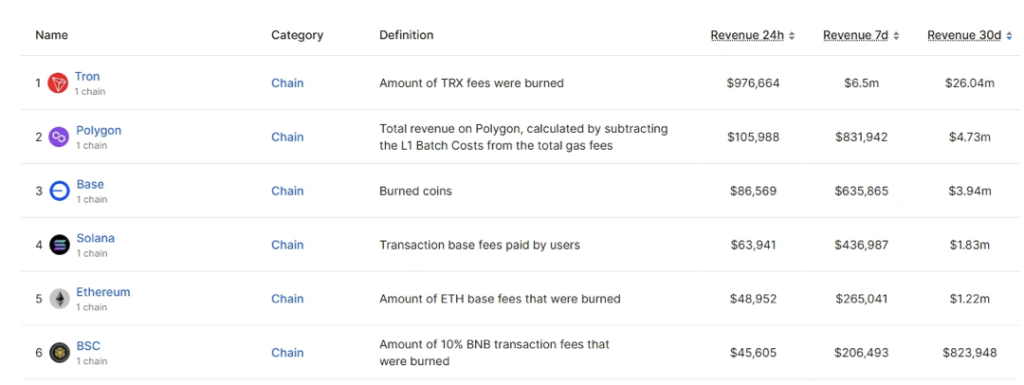
TRON Leads Blockchain Revenue Rankings
This massive transaction flow has also translated into significant network revenue.
According to data from DeFiLlama, TRON currently leads the blockchain industry in revenue generated from transaction activity. That revenue is measured by the amount of TRX burned as users pay fees to execute transactions.
Across the past 24 hours, the last week, and even the last month, TRON has consistently outpaced other major chains. That includes networks like Ethereum, Solana, BNB Chain, and Base.
In short, stablecoin transfers have become the engine powering TRON’s economic activity.
AI Payments and Legal Clarity Could Boost TRX
Beyond stablecoins, TRON is also starting to position itself in emerging technologies. The TRON DAO recently joined the Agentic AI Foundation — a Linux Foundation initiative focused on building infrastructure for autonomous AI systems.
The idea behind agentic AI is that autonomous software agents could execute tasks, interact with services, and even make payments on their own.
Justin Sun, TRON’s founder, summarized the concept simply: AI systems need instant financial settlement, and stablecoins can provide that.
If autonomous systems begin using stablecoins for payments at scale, networks like TRON — already handling huge transaction volumes — could become critical infrastructure.
Another important development arrived earlier this year as well. The long-running lawsuit filed by the U.S. Securities and Exchange Commission against the Tron Foundation and Justin Sun has officially ended. A judge approved the final ruling and dismissed the case with prejudice, closing the matter entirely.
That removes a legal cloud that had been hanging over TRON since 2023.
TRX Price Still Faces Market Pressure
Despite these positive developments, TRX hasn’t been immune to the broader altcoin market slowdown. The token has fallen roughly 20% since August of last year and currently trades near $0.29.
Investors remain cautious across the altcoin sector, especially with ongoing macro uncertainty affecting crypto markets.
Still, the fundamentals behind TRON continue to strengthen. Stablecoin usage is growing rapidly, AI infrastructure could introduce new use cases, and regulatory pressure has eased.
If those trends continue, they may eventually absorb selling pressure and help TRX regain momentum.
Disclaimer: BlockNews provides independent reporting on crypto, blockchain, and digital finance. All content is for informational purposes only and does not constitute financial advice. Readers should do their own research before making investment decisions. Some articles may use AI tools to assist in drafting, but every piece is reviewed and edited by our editorial team of experienced crypto writers and analysts before publication.








 English (US) ·