
 4 hours ago
24
4 hours ago
24
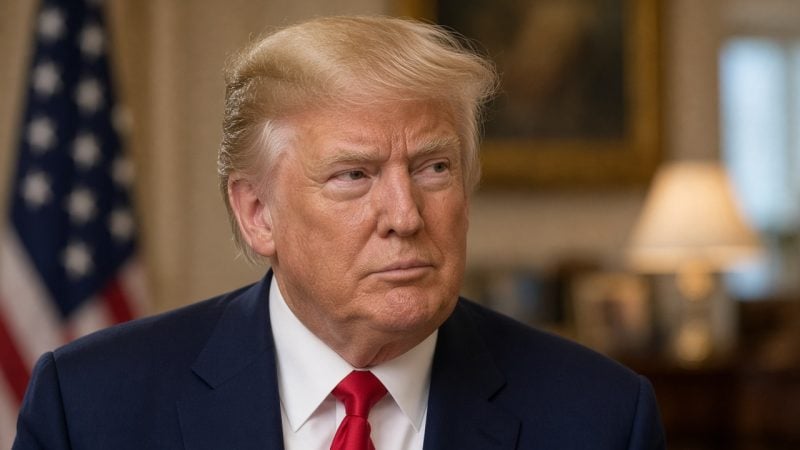
The world’s two largest economies are sitting down to talk about the technology that could define the rest of the century. Presidents Donald Trump and Xi Jinping are meeting in Washington on September 23-24, 2026, with artificial intelligence at the top of an already crowded agenda.
Trump has framed the AI race in characteristically blunt terms, declaring that “whoever wins AI, wins” and claiming the US leads China “by a lot.” He’s also called AI’s impact “bigger than the industrial revolution.” Xi, for his part, has positioned AI as central to China’s economic and geopolitical strategy while pushing a narrative of cooperation to prevent the rivalry from spiraling into outright confrontation.
The stakes behind the handshake
This isn’t the first time the two leaders have broached the subject. Back in May 2026, Trump and Xi met in Beijing to discuss AI guardrails. That conversation produced no formal agreement.
US Treasury Secretary Scott Bessent met with Chinese Vice Premier He Lifeng ahead of this week’s summit, working to finalize an AI dialogue channel between the two governments. One concrete item on the table: incident notification protocols, essentially a hotline-style system for flagging serious problems that emerge from AI development before they become international crises.
The guest list for the Washington meeting underscores how blurred the line between diplomacy and industry has become. Elon Musk, Sam Altman, and Jensen Huang are all expected to attend, putting the CEOs of Tesla, OpenAI, and Nvidia in the same room as the leaders negotiating the rules of the game their companies are playing.
Competition dressed as cooperation
The US has maintained strict export controls on high-performance chips, including Nvidia’s H200, designed to choke off China’s access to the most advanced hardware needed to train frontier AI models.
China has responded by pouring resources into domestic alternatives. Chinese AI models like DeepSeek have occasionally matched the performance of top US systems, with analysts describing the gap as narrow, often just a few percentage points.
What this means for the global tech landscape
The European Union has already moved aggressively on AI regulation with its own framework, and smaller nations are watching the US-China dynamic closely to determine where they’ll align.
The export control regime on advanced chips remains the sharpest tool in Washington’s arsenal, and any signals about tightening or loosening those restrictions could ripple through semiconductor markets. Nvidia, which finds itself at the center of this geopolitical chess match, has watched its fortunes rise and fall partly based on the temperature of US-China relations.
Investors watching the summit should pay attention to the specific language around incident notification protocols. If both sides agree to a formal mechanism, it would represent the first concrete bilateral AI safety agreement between the two countries. The May 2026 meeting in Beijing produced no agreement. Whether Washington does any better will depend on whether either side has decided that a thin layer of cooperation is worth more than the political cost of appearing to concede ground to a rival.
Disclosure: This article was edited by Editorial Team. For more information on how we create and review content, see our Editorial Policy.




 English (US) ·