
 3 weeks ago
62
3 weeks ago
62
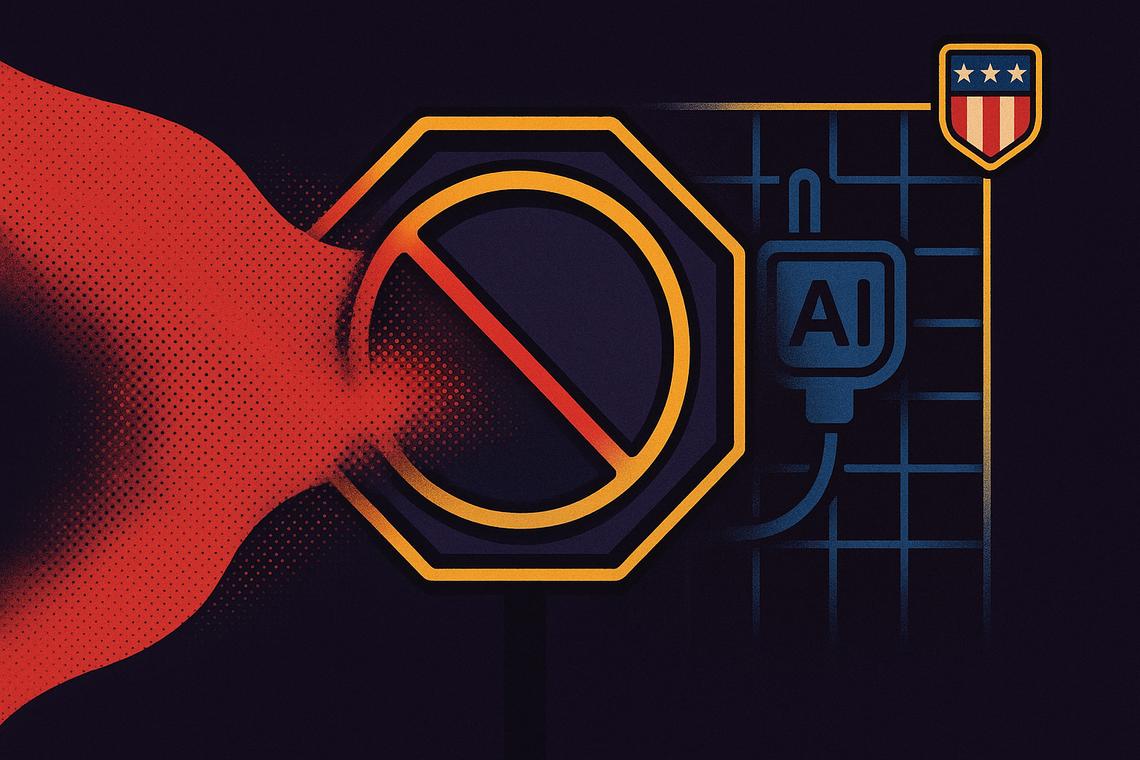
Washington is building what looks less like a ban and more like a slow-motion squeeze. The Trump administration’s push to impose US measures on Chinese AI models has been quietly gathering momentum since 2025, and the approach being shaped inside federal agencies is deliberately designed to wound without leaving obvious fingerprints.
Key takeaways
- The Trump administration is considering measures against Chinese AI models that could effectively function as a ban, without requiring one outright.
- The Department of Commerce, NSA, and White House have all explored options including sanctions, security warnings, and executive orders targeting US companies that host Chinese models.
- Draft supply chain protection rules were reportedly written as early as summer 2025, though early internal resistance slowed their progress.
- The release of China’s Kimi K3 AI model helped tip internal White House debates toward tighter restrictions.
- Rather than a formal prohibition, the likely strategy involves procurement rules, liability exposure, and deliberate regulatory uncertainty — what strategists call a “FUD” approach.
US Government’s Approach to Chinese AI Model Restrictions
The clearest signal that something has shifted is the convergence of agencies around the issue. According to Axios, the Department of Commerce, the NSA, and the White House have each been exploring options, ranging from placing Chinese AI labs on a sanctions list to issuing formal security warnings and using executive orders to impose security requirements and liability on US companies that host or deploy Chinese models. That three-pronged institutional alignment rarely happens by accident.
Timeline and Draft Rules
The policy groundwork started earlier than most observers realized. The Commerce Department reportedly drafted rules as early as summer 2025 specifically aimed at protecting domestic supply chains from Chinese open-source AI models. Those early efforts hit internal resistance from advisers who preferred a lighter regulatory touch. For a time, that faction held.
What changed the calculus was a combination of personnel shifts inside the White House and the emergence of a specific Chinese model that concentrated minds.
Shift in Regulatory Support Following Kimi K3
The release of China’s Kimi K3 model appears to have been something of a turning point. Its arrival, combined with changes in who holds influence inside the administration, helped supporters of tighter restrictions regain the upper hand in internal debates. The model’s competitive profile made the abstract threat feel concrete and immediate, accelerating conversations that had previously stalled.
Regulatory Strategy and Commercial Considerations
A direct ban, it turns out, may never be necessary. A source close to the government told Axios that “what’s actually happening is slower and more durable” — a phrase that captures the essential character of the strategy taking shape. Procurement rules, sanctions threats, and coordinated public pressure campaigns against US companies that use Chinese models can effectively discourage adoption without the legal and diplomatic complications of an explicit prohibition.
The “FUD” Strategy and What It Actually Does
This is where Dean W. Ball, a strategist at OpenAI, offered the sharpest analytical framing. Ball predicted a regulatory playbook built around fear, uncertainty, and doubt — soft guidelines and public warnings engineered to make regulated enterprises back away from Chinese models without any binding rule ever being written.
“You just create enough regulatory risk that every regulated enterprise backs off,” Ball wrote. “You probably don’t want to create so much regulatory risk that you scare off the hyperscalers from serving Chinese models; this will just drive startups to sketchier providers. There’s a happy middle ground here.”
That passage deserves careful reading. Ball is essentially describing a policy that works through perceived risk rather than legal prohibition — a thermostat rather than a switch. The goal is to discourage use among large, compliance-sensitive companies while stopping well short of measures that would push smaller actors toward unvetted, unmonitored alternatives. The collateral damage from overcorrection is treated as a real constraint on how hard regulators can push.
Economic Motives Protecting US AI Leaders
The commercial dimension of this push is hard to separate from the security narrative. US companies have been increasingly turning to Chinese open-source models because they are cheaper and, in many benchmarks, nearly as capable as their American counterparts. That trend directly threatens the market positions of Google, OpenAI, and Anthropic — the three dominant players in the US AI sector.
The AI industry has also been a significant driver of US equity market performance under the Trump administration. If Chinese models meaningfully eroded the commercial footing of major domestic providers, the downstream effects on markets could be substantial. That creates a political incentive to act that goes well beyond purely national security considerations.
Cybersecurity and Market Implications of Restricting Chinese AI Models
Cybersecurity Risks and the Open-Source Complication
The security argument against Chinese AI models centers on the possibility of backdoors and exploitable flaws. That risk is real. But open-source models present a structural problem for anyone who wants to eliminate the threat entirely: once weights are downloadable, a formal US ban does little to prevent access. The model is already out of the box.
Compounding that tension, Hugging Face has argued that open models can actually outperform commercial alternatives at cyber defense tasks. The implication is that restricting access to Chinese open-source AI could degrade the defensive capabilities of US organizations even as it attempts to reduce offensive exposure. It is a genuine policy dilemma, not a rhetorical one.
Why Indirect Pressure Creates Its Own Risks
The FUD strategy may be politically elegant, but it carries market distortions of its own. If large, regulated enterprises retreat from Chinese models under liability pressure while smaller startups continue using them through less supervised channels, the result could be a two-tier AI ecosystem — one visible and compliant, the other operating in a regulatory shadow. That outcome would satisfy neither the security hawks nor the market efficiency advocates.
What makes this story unusual is that the most candid description of the administration’s probable strategy came from someone inside one of the companies that would directly benefit from it. Ball’s “FUD” framing was analytical, not critical — which itself says something about how openly the commercial logic of these restrictions is now being discussed inside the US AI industry.
FAQ
What specific measures is the US government considering against Chinese AI models?
According to reporting by Axios, agencies including the Department of Commerce, the NSA, and the White House have explored placing Chinese AI labs on a sanctions list, issuing formal security warnings, and using executive orders to impose security requirements and legal liability on US companies that host or use Chinese models. Procurement rules and public pressure campaigns are also under consideration.
Why might the Trump administration avoid a direct ban on Chinese AI models?
A direct ban is considered unnecessary because slower and more durable measures — such as regulatory risk, procurement restrictions, and public warnings — can effectively deter adoption by large, compliance-sensitive enterprises without the legal and diplomatic complications of a formal prohibition. The downloadable nature of open-source model weights also makes an outright ban difficult to enforce in practice.
What is the “FUD” regulatory strategy mentioned in relation to Chinese AI models?
FUD stands for fear, uncertainty, and doubt. As described by OpenAI strategist Dean W. Ball, it involves generating enough perceived regulatory risk that regulated enterprises voluntarily back away from Chinese AI models, without any binding legal rule requiring them to do so. Soft guidelines and public security warnings are the primary instruments.
How could US commercial interests influence these restrictions on Chinese AI?
Chinese open-source models are increasingly attractive to US companies because of their lower cost and competitive capabilities. Restrictions would protect the market positions of dominant US providers including Google, OpenAI, and Anthropic. Given that the AI sector has driven significant US equity market gains, the administration also has a financial incentive to shield domestic players from Chinese competition.
Article produced with the assistance of artificial intelligence and reviewed by the editorial team.


 English (US) ·