
 1 hour ago
23
1 hour ago
23
President Donald Trump wants AI companies to stop freeloading off the grid. His “Ratepayer Protection Pledge” calls on tech giants to generate their own electricity for data centers rather than leaning on existing infrastructure, a move designed to shield everyday consumers from power bill increases.
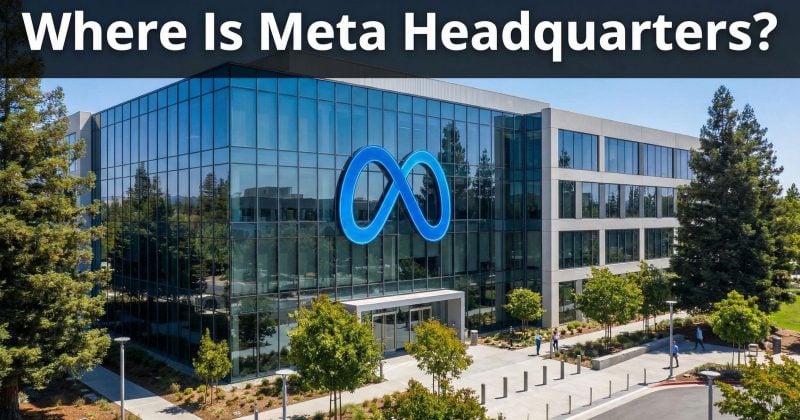
Amazon, Google, Meta, Microsoft, OpenAI, Oracle, and xAI have all signed on. The commitment means these companies will invest in new power generation facilities and cover the infrastructure costs themselves, rather than passing those expenses along to residential ratepayers.
The scale of the problem
Trump noted that AI technologies may require access to double the current US energy capacity. Without intervention, utility companies would need to massively expand infrastructure, and those costs would inevitably land on consumer electricity bills.
Speaking directly to leaders including Meta’s Mark Zuckerberg and Amazon’s Jeff Bezos, Trump emphasized the necessity of private power plants. Gas-fired facilities are squarely in the mix, with over 70 gas-fired power plants currently planned across the US specifically to serve private data centers.
The Federal Energy Regulatory Commission voted in June 2026 to enable quicker grid connections for AI data centers without burdening ratepayers. The pledge was announced in March 2026 during Trump’s State of the Union remarks.
Where crypto enters the picture
AI data centers and cryptocurrency mining operations have something fundamental in common: they both consume staggering amounts of electricity, and they’re increasingly competing for the same supply in the same regions.
Texas sits at the epicenter of this collision. The state’s deregulated energy market and relatively cheap power have made it a magnet for both Bitcoin miners and AI infrastructure builders. Marathon Digital and Riot Platforms, two of the largest publicly traded Bitcoin miners, both operate significant facilities in Texas. Any shift in the regional energy landscape directly affects their bottom line.
If AI companies build their own generation capacity rather than competing on the open grid, it could free up existing supply for other high-consumption users, including crypto mining operations. However, AI companies have deeper pockets than most mining operations, and if they’re building private gas plants and locking up energy contracts, they could still crowd out miners who can’t match that kind of capital expenditure.
Some companies are exploring dual-use facilities that can flex between AI workloads and crypto mining depending on energy availability and pricing.
The geopolitical angle
Trump’s energy push is explicitly framed as a competitiveness play against China, which has been aggressively building its own AI infrastructure. The fast-track permitting processes included in the initiative are designed to cut through the bureaucratic delays that typically slow US energy projects. Getting a new power plant permitted and connected in the US can take years, while China’s data center capacity has grown rapidly without such constraints.
What this means for investors
The immediate beneficiaries are energy companies positioned to build and operate the private power plants that AI firms need. Natural gas producers and power plant developers should see increased demand for their services.
For crypto-native investors, Bitcoin miners operating in energy-competitive regions face both opportunity and risk. New generation capacity coming online could eventually lower electricity costs, but the transition period could see AI companies locking up the best energy deals. Mining companies that secure long-term power purchase agreements or invest in their own generation will be better positioned than those relying on spot energy markets.
Disclosure: This article was edited by Editorial Team. For more information on how we create and review content, see our Editorial Policy.






 English (US) ·